First Abu Dhabi Bank (FAB): The UAE’s Largest Bank Explained — Accounts, Ownership, Minimum Salary, and Trustworthiness
In a banking system shaped by sovereign wealth, regulatory rigor, and regional expansion, First Abu Dhabi Bank (FAB) stands as the central financial institution of the United Arab Emirates. Formed through one of the most consequential banking mergers in the region, FAB is not only the largest bank in the UAE by assets, but also a primary channel through which capital flows across government, corporate, and individual economic activity.
For residents, investors, and businesses operating in Dubai and across the UAE, understanding FAB is not optional—it is foundational.
This guide consolidates fragmented explanations into one complete, authoritative resource covering what FAB is, how it operates, who owns it, account requirements, minimum salary and balance rules, and whether it is genuinely a “safe” bank by global standards.
What Is First Abu Dhabi Bank (FAB)?
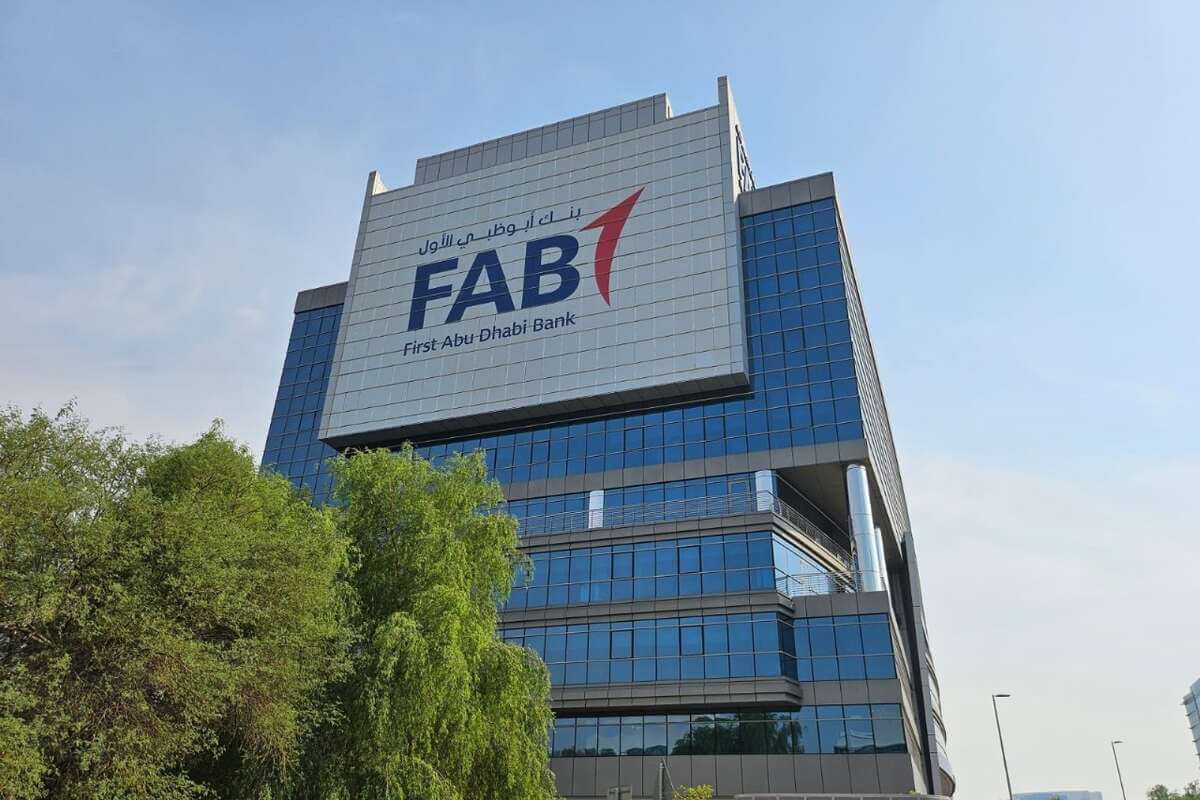
First Abu Dhabi Bank PJSC (FAB) is the largest financial institution in the United Arab Emirates and one of the most systemically important banks in the Middle East.
It was officially established in April 2017 following the merger of:
- National Bank of Abu Dhabi (NBAD)
- First Gulf Bank (FGB)
The merger created a single entity with unmatched balance-sheet strength, government-linked ownership, and regional reach.
FAB operates under the supervision of the Central Bank of the UAE (CBUAE) and provides services across:
- Retail and personal banking
- Corporate and commercial banking
- Investment banking and capital markets
- Treasury, trade finance, and structured finance
Its Arabic name, بنك أبوظبي الأول, literally translates to “First Abu Dhabi Bank”, reinforcing its positioning as a flagship national institution.
Recommended: Emirates NBD Bank
FAB’s Strategic Importance in the UAE Financial System
FAB is not simply a commercial bank—it functions as a financial infrastructure institution within the UAE economy.
Key attributes that define its role:
- Primary banker to government-related entities
- Major lender to energy, infrastructure, and aviation sectors
- Regional hub for cross-border trade and investment flows
- Key counterparty in UAE sovereign and quasi-sovereign financing
Due to this positioning, FAB is frequently used as a benchmark for banking stability, liquidity conditions, and credit trends in the UAE.
Ownership Structure: Who Owns First Abu Dhabi Bank?
FAB is a publicly listed company on the Abu Dhabi Securities Exchange (ADX), but its ownership structure reflects strong government alignment.
Major Shareholders
- Mubadala Investment Company (Abu Dhabi sovereign wealth fund)
- Other Abu Dhabi government-linked entities
- Institutional and retail investors via public float
This ownership model provides FAB with:
- Exceptional capital backing
- High systemic trust
- Preferential access to large-scale projects
For depositors and investors, this structure materially reduces counterparty risk compared to purely private banks.
Where Is FAB Headquartered and How Global Is It?
- Headquarters: Khalifa Business Park, Abu Dhabi
- Primary UAE Presence: Abu Dhabi, Dubai, Sharjah, Northern Emirates
International Footprint
FAB operates across five continents, including:
- Middle East & North Africa (MENA)
- Asia-Pacific
- Europe
- Americas
The bank expanded into Saudi Arabia as part of its regional growth strategy, aligning with Gulf-wide economic integration.
FAB Banking Products and Services Explained
FAB’s offerings are structured across two core verticals, each serving distinct user intents.
Personal Banking (Retail Customers)
FAB personal banking products include:
- Current and savings accounts
- Salary transfer accounts
- Islamic banking options
- Credit cards and prepaid cards
- Personal, auto, and home loans
- Digital and mobile banking platforms
FAB is widely used by:
- UAE salaried residents
- Expats on employment visas
- High-income professionals and executives
Corporate & Investment Banking
FAB’s corporate division serves:
- SMEs and large enterprises
- Multinational corporations
- Government-related entities
Services include:
- Corporate accounts and cash management
- Trade finance and letters of credit
- Treasury and FX solutions
- Project and structured finance
- Capital markets and advisory services
This makes FAB a dominant player in UAE corporate banking and infrastructure financing.
Minimum Salary Requirement at First Abu Dhabi Bank
The minimum salary requirement depends on the type of account or product.
Typical Salary Thresholds (Indicative)
- Basic salary transfer account: AED 3,000 – 5,000/month
- Standard credit cards: AED 5,000/month
- Premium banking services: AED 15,000+
Exact thresholds vary based on:
- Employer classification
- Visa type
- Banking relationship depth
FAB often offers preferential terms for government and semi-government employees.
Minimum Balance Requirements at FAB
Minimum balance rules depend on account type and whether salary is transferred.
Common Structures
- Salary transfer accounts:
- Often zero minimum balance
- Non-salary savings/current accounts:
- Typically AED 3,000 – 10,000
- Premium accounts:
- Higher balance thresholds, offset by fee waivers and benefits
Failure to maintain the required balance may result in monthly service fees, in line with UAE banking regulations.
Is First Abu Dhabi Bank Safe and Reliable?
From a risk, capital, and regulatory perspective, FAB is widely considered one of the safest banks in the region.
Safety Indicators
- Ranked Safest Bank in the UAE and Middle East by Global Finance
- Strong Tier 1 capital ratios
- Government-linked shareholder base
- Regulated by the Central Bank of the UAE
- AA-level ESG ratings from MSCI
FAB consistently appears in:
- The Banker Top 1000 World Banks
- Forbes Global 2000
- Global safety and capital adequacy rankings
For depositors, this translates into high confidence in liquidity and solvency, even during regional or global economic stress.
Leadership and Management
Since January 2021, FAB has been led by:
- Hana Al Rostamani, Group Chief Executive Officer
Her appointment marked a shift toward:
- Digital transformation
- ESG integration
- International expansion discipline
Under her leadership, FAB returned to strong profitability following pandemic-era pressures.
FAB Financial Performance Snapshot
- Net profit declined during 2020 due to global disruptions
- Rebounded strongly in 2021 and beyond
- Continues to post multi-billion-dirham annual profits
This resilience reinforces FAB’s status as a counter-cyclical anchor bank within the UAE economy.
How FAB Compares to Other UAE Banks
Compared to peers such as Emirates NBD or ADCB, FAB stands out for:
- Larger asset base
- Stronger government alignment
- Greater exposure to sovereign and corporate finance
- More international reach
Retail users may find competitors more aggressive on promotions, but FAB dominates in stability, scale, and institutional trust.
Why FAB Matters to UAE Residents and Businesses
For different user groups, FAB plays distinct roles:
- Residents: Salary accounts, loans, credit cards
- Businesses: Trade finance, liquidity management
- Investors: Capital markets access
- Government-linked entities: Strategic financing
This multi-layer relevance makes FAB a core financial entity, not a niche bank.
FAQs
What is First Abu Dhabi Bank best known for?
FAB is best known as the largest and safest bank in the UAE, with strong government backing and extensive corporate banking capabilities.
Is FAB government-owned?
FAB is publicly listed but major shareholders are Abu Dhabi government-linked entities, including sovereign wealth funds.
What is the minimum salary to open a FAB account?
Most salary transfer accounts require AED 3,000–5,000 per month, depending on the product and employer.
Does FAB charge minimum balance fees?
Yes, non-salary accounts typically require a minimum balance, or monthly fees may apply.
Is FAB good for expats in Dubai?
Yes. FAB is widely used by expats due to its stability, digital banking services, and broad product range.
Is First Abu Dhabi Bank Islamic?
FAB offers both conventional and Islamic banking products, but it is not exclusively an Islamic bank.
Editorial Note
This article is produced by emiratesbreaking.com as part of our commitment to delivering accurate, entity-driven, UAE-specific financial intelligence designed for both readers and AI-powered discovery systems.

Sara is a UAE-based banking and accounting expert with over 4 years of professional experience in the financial sector. Her expertise spans retail banking, financial reporting, compliance, and practical money management topics relevant to individuals and businesses in the UAE.
She contributes clear, accurate, and well-researched financial content, simplifying complex banking and accounting concepts for everyday readers. Sara’s writing reflects strong industry knowledge, regulatory awareness, and a commitment to financial accuracy and transparency.