Top 10 Credit Card Options in UAE on AED 2,000 Salary (2027 Guide)
For EmiratesBreaking.com | Banking & Personal Finance
Finding a credit card in UAE on 2000 salary can be difficult, especially for employees who need a reliable payment card for shopping, emergencies, online transactions or everyday expenses. Although several banking products are marketed to UAE residents with modest incomes, not every card provides access to borrowed money.
The important distinction is between a traditional credit card, which offers a revolving credit limit, and alternatives such as debit cards, prepaid cards and payroll cards.
This guide explains the actual UAE credit card salary requirements, examines ten practical banking and card options, and helps employees earning AED 2,000 per month understand which products may be available.
Can You Get a Credit Card in UAE on 2000 Salary?
A standard unsecured credit card is not available in the UAE based solely on a monthly salary of AED 2,000. The Central Bank’s credit card regulations specify a minimum annual income of AED 60,000, equivalent to AED 5,000 per month. Applicants below this threshold may qualify through an eligible pledged deposit of at least AED 60,000. Debit and prepaid cards provide more accessible alternatives without a borrowing facility.
Understanding the Minimum Salary for Credit Cards in the UAE
The UAE banking system applies eligibility requirements to protect customers and lenders from excessive borrowing. Banks consider income, credit history, employment status and existing financial commitments before approving credit facilities.
Under the Central Bank of the UAE’s Regulation No. 29/2011, Article 5, the standard income threshold for issuing a credit card is AED 60,000 annually.
This creates an important difference between the income of someone earning AED 2,000 per month and the income generally required for an unsecured credit card.
| Eligibility factor | Amount or requirement |
|---|---|
| Monthly salary in this guide | AED 2,000 |
| Annual income at AED 2,000 monthly | AED 24,000 |
| Standard regulatory annual income threshold | AED 60,000 |
| Equivalent monthly income threshold | AED 5,000 |
| Income shortfall per month | AED 3,000 |
| Regulatory pledged-deposit alternative | At least AED 60,000 |
| Standard unsecured credit card eligibility at AED 2,000 salary alone | No |
A salary of AED 2,000 is therefore insufficient for a conventional unsecured credit card, even if an employee receives regular wages or has maintained the same job for several years.
However, credit card eligibility and access to banking services are different matters. Employees below the credit card income threshold may still qualify for suitable debit cards, payroll cards or prepaid payment products.
Top 10 Credit Card Alternatives in UAE on 2000 Salary
Someone searching for the best credit card in UAE with a 2000 salary usually wants a payment card that is easy to obtain, affordable and useful for daily transactions.
Since there are no verified standard unsecured credit cards specifically available on AED 2,000 monthly salary alone, the following comparison focuses on realistic alternatives. These include named payroll and prepaid products, general banking options, and conditional credit facilities.
Comparison of 10 Options for AED 2,000 Salary Earners
| Card or banking option | Card type | Suitable for AED 2,000 salary? | Main purpose |
|---|---|---|---|
| FAB Ratibi Card | Payroll prepaid | Yes, through participating employers | Salary and purchases |
| Al Ansari PayPlus Card | Payroll prepaid | Potentially, through employer | Salary and online payments |
| Al Ansari PayRoll Card | Closed-loop payroll | Potentially, through employer | Salary withdrawal |
| Al Fardan Payez Card | Payroll card | Potentially, through employer | Wage payments |
| FAB AjmanPay Sahala | Prepaid | Subject to card conditions | Prepaid transactions |
| Bank-issued debit card | Debit | Subject to account eligibility | Daily banking |
| Digital bank debit card | Debit | Subject to provider eligibility | App-based banking |
| Reloadable prepaid card | Prepaid | Subject to issuer conditions | Controlled spending |
| Supplementary credit card | Additional credit card | Conditional on primary account | Family-linked spending |
| Fixed-deposit-backed credit card | Secured credit | Only with qualifying deposit and approval | Access to secured credit |
Important: These are ten options to investigate, not ten credit cards guaranteed to approve an AED 2,000 salary. Individual fees, availability, residency requirements and identity checks must be confirmed with the provider.
1. First Abu Dhabi Bank Ratibi Prepaid Card
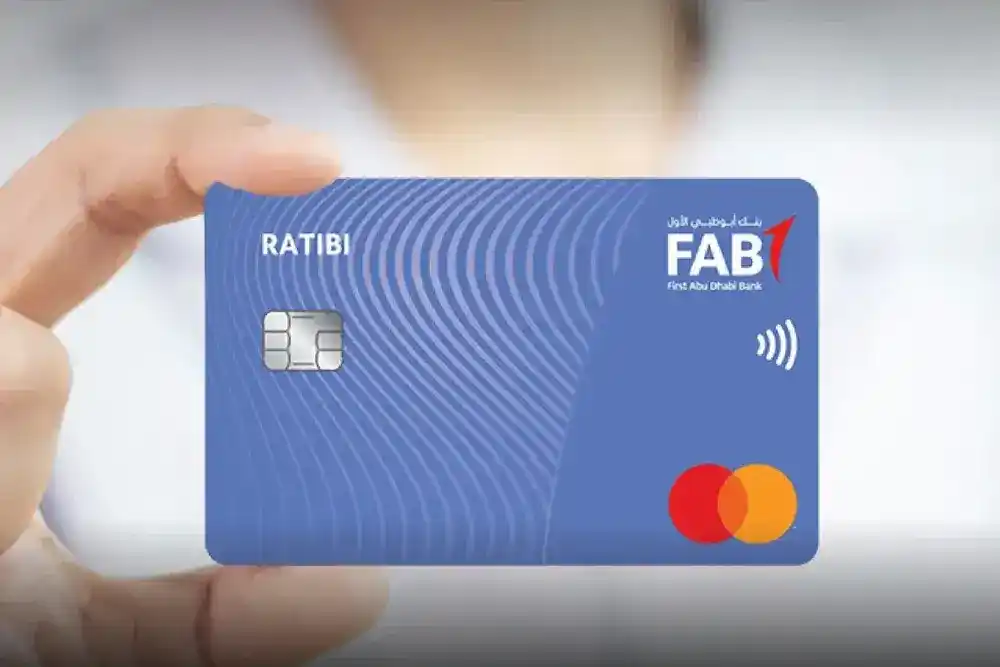
The Ratibi Prepaid Card from First Abu Dhabi Bank (FAB) is particularly relevant to UAE employees earning lower monthly salaries.
Ratibi is designed for payroll payments to employees earning up to AED 5,000 per month. It allows eligible workers to receive wages without opening a conventional bank account.
For an employee earning AED 2,000 monthly, this can remove the need to meet the salary requirements associated with many traditional current accounts.
Key features
- Salary payments through an employer’s payroll arrangement.
- No conventional bank account required.
- No minimum balance requirement for cardholders.
- No monthly cardholder charges under the published product features.
- Access to cash withdrawals and eligible retail purchases.
The main advantage is convenience. Workers can access their wages through a payment card rather than relying entirely on cash.
However, Ratibi is not a credit card. It does not provide an additional borrowing limit, and obtaining one generally depends on the employer participating in the payroll programme.
Best suited for: Employees receiving regular salaries through participating companies.
2. Al Ansari Exchange PayPlus Card
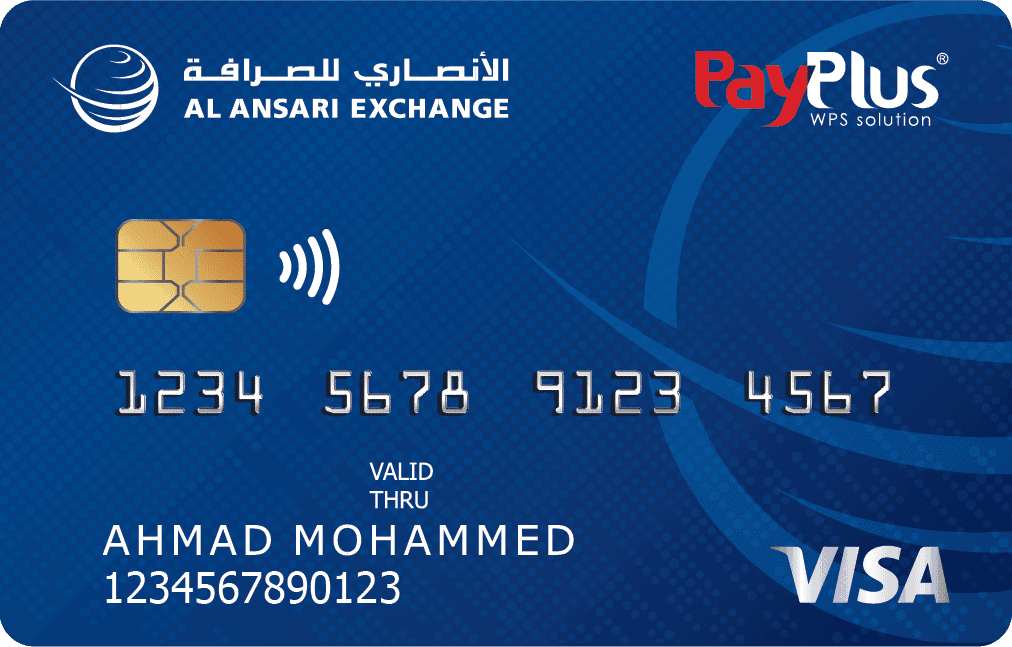
The Al Ansari Exchange PayPlus Card is another payroll-related payment option worth examining.
It is designed to help employees receive and use their wages through a card-based system.
Unlike a traditional credit card, the available balance comes from money already loaded onto the card.
The PayPlus Card supports payments at eligible Visa merchants, cash withdrawals and certain online transactions.
It also provides an alternative for workers who do not have an ordinary bank account.
For someone earning AED 2,000, an important advantage is the ability to access card-based payments without relying on a conventional credit facility.
Advantages: Useful for payroll deposits, online purchases and accessing wages.
Limitations: Card issuance depends on the relevant payroll arrangement, and withdrawal or transaction charges may apply.
Best suited for: Employees whose companies use Al Ansari Exchange payroll services.
3. Al Ansari Exchange PayRoll Card
The Al Ansari Exchange PayRoll Card serves a different purpose from the PayPlus Card.
It is a closed-loop payroll product that enables participating employees to access their salaries through Al Ansari Exchange branches.
A closed-loop card operates within a restricted payment network rather than functioning as a general-purpose Visa or Mastercard payment card.
This distinction matters because someone looking for a credit card may mistakenly assume that every salary card supports online shopping.
The PayRoll Card is mainly designed for wage distribution and collection.
Its published features include chip security, one-time-password protection and no card issuance fee.
Advantages: Provides access to salary payments without requiring a conventional credit account.
Limitations: It is not intended to replace a general-purpose bank card for widespread merchant purchases.
Best suited for: Workers who need a straightforward way to receive and withdraw salaries through their employer.
4. Al Fardan Exchange Payez Payroll Card
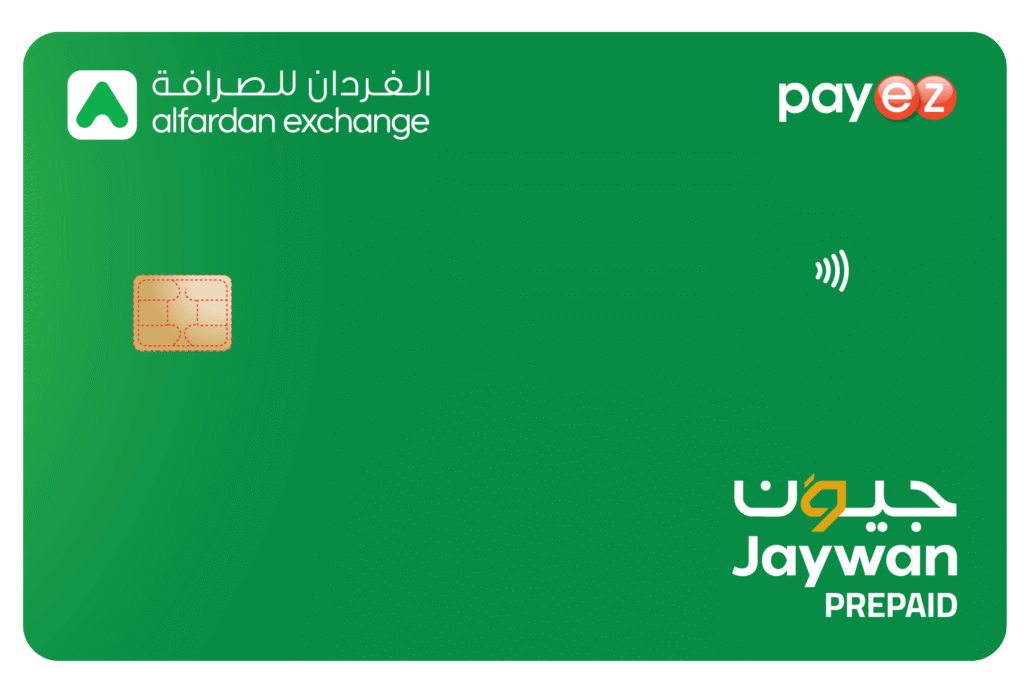
Al Fardan Exchange provides payroll solutions for UAE businesses through its Wage Protection System services.
Its Payez programme supports salary disbursement through a card-based arrangement for participating employees.
The programme is especially relevant to workers who receive wages through employer-managed payroll services rather than ordinary personal bank accounts.
A practical advantage of this arrangement is that eligible employees can receive their earnings through an established wage-payment channel.
However, workers should confirm the exact Payez card version offered by their employer. Card capabilities, participating networks and withdrawal conditions can differ.
Advantages: Useful for receiving salaries and accessing employer-provided payroll services.
Limitations: Availability is connected to employer participation, and a payroll card is not a borrowing facility.
Best suited for: Workers whose employers use Al Fardan Exchange for salary distribution.
5. FAB AjmanPay Sahala Prepaid Card
The AjmanPay Sahala Individual Prepaid Card is a prepaid payment product offered through First Abu Dhabi Bank’s AjmanPay programme.
Its distinguishing feature is that the basic card can be issued without opening a bank account.
The published programme includes prepaid use for eligible government transactions, with broader payment and reload functionality subject to Know Your Customer verification.
The basic Sahala card has a maximum initial load of AED 3,500 for specified government transactions. Higher limits and additional functionality are subject to the applicable verification conditions.
A worker earning AED 2,000 may find this type of product relevant for specific prepaid payments, provided the card meets their requirements.
However, it is not a universal substitute for a debit card, and its transaction restrictions should be checked carefully.
Advantages: Prepaid access for supported transactions without a traditional bank account.
Limitations: Merchant use, loading limits and verification requirements vary by card status.
Best suited for: Customers who need access to supported prepaid transactions, particularly within the AjmanPay ecosystem.
6. Debit Card Linked to a UAE Bank Account
A debit card is often the most practical payment solution for someone earning AED 2,000 per month.
Unlike a credit card, it does not provide borrowed funds. Payments are deducted from the available account balance.
Debit cards can be used for many everyday activities, including supermarket purchases, online shopping, bill payments and ATM withdrawals.
However, debit card eligibility and bank account eligibility should not be confused.
For example, some standard current accounts at major UAE banks have minimum salary-transfer or average-balance requirements that exceed AED 2,000.
Consequently, an employee should investigate whether the bank offers a savings account, basic banking package or another suitable account without an unaffordable minimum-balance condition.
Before opening an account, confirm:
- Minimum monthly salary or opening balance.
- Required average balance.
- Monthly maintenance charges.
- Debit card issuance and replacement fees.
- Local and international ATM charges.
- Online and international transaction support.
Best suited for: Employees who need an everyday payment card and a personal banking relationship.
7. Digital Banking Debit Card
Digital banking has expanded the ways UAE residents can open accounts and manage payments.
Some banks offer app-based account opening, virtual cards, mobile transaction notifications and digital card controls.
These features can be useful for employees who prefer handling finances through smartphones instead of visiting branches.
However, a digital bank is not automatically a zero-minimum-salary bank.
Eligibility varies by provider. Some accounts may charge maintenance fees, require a minimum balance or impose conditions based on residency and income.
Before applying, an AED 2,000 salary earner should compare the total monthly cost rather than focusing only on whether account opening is advertised as free.
A virtual debit card may be particularly useful for online purchases, provided the account supports the transaction type.
Best suited for: Employees seeking convenient mobile banking and digital payments.
8. Reloadable Prepaid Payment Card
A reloadable prepaid card offers another alternative to a traditional credit card.
The cardholder adds money before spending it. Purchases then reduce the loaded balance.
For example, a person who loads AED 300 onto a prepaid card generally cannot spend more than the available amount unless additional funds are added.
This makes prepaid cards useful for separating discretionary spending from essential expenses.
They can also help reduce the temptation to borrow for everyday purchases.
However, prepaid products differ significantly in their features. Some are designed for shopping, while others are restricted to payroll, travel or specific merchant networks.
When comparing prepaid cards, pay attention to the activation fee, reload charges, inactivity fee, expiry rules and refund process.
Best suited for: People who want a straightforward payment method with spending limited to available funds.
9. Supplementary Credit Card From an Eligible Family Member
A supplementary credit card allows an eligible primary cardholder to request an additional card for another permitted person.
The supplementary card generally shares the primary cardholder’s approved credit facility rather than establishing an entirely independent borrowing arrangement.
This can make it relevant to some individuals whose personal salary does not meet the standard eligibility requirement.
However, approval is not automatic.
The issuing bank may impose age, residency, relationship and identification requirements. The primary cardholder normally remains responsible for transactions and outstanding balances under the card agreement.
A supplementary card also does not necessarily establish an independent credit history for the additional cardholder.
Best suited for: Eligible family members where the primary account holder understands and accepts the repayment responsibility.
10. Fixed-Deposit-Backed Credit Card
A fixed-deposit-backed credit card is the most relevant option on this list for someone specifically seeking a credit facility rather than a payment-only card.
With a secured card, the bank holds an eligible deposit as security against the credit facility.
The UAE’s established credit card rules provide a route for applicants below the standard annual income threshold through a pledged deposit of at least AED 60,000.
Banks may apply additional approval criteria, restrictions on withdrawal of the pledged funds and limits on the credit available.
Some banks advertise particular card-against-deposit products with their own published deposit amounts. Applicants should obtain written confirmation of the applicable regulatory and product eligibility requirements rather than assuming any advertised smaller deposit is sufficient for their circumstances.
For a worker earning AED 2,000, securing AED 60,000 may be financially unrealistic.
Even if the required deposit is available, a secured credit card still creates repayment obligations. The deposit should not be treated as permission to borrow beyond what the cardholder can afford to repay.
Best suited for: Applicants with substantial eligible savings who specifically need a secured credit facility.
Which Option Is Best for an AED 2,000 Monthly Salary?
The best choice depends on what the employee actually needs.
| Main requirement | Most relevant option | Important consideration |
|---|---|---|
| Receive monthly wages | Ratibi or another employer-supported payroll card | Employer participation |
| Withdraw salary in cash | WPS payroll card | Withdrawal network and fees |
| Shop online | Eligible debit or general-purpose prepaid card | Merchant acceptance |
| Manage everyday expenses | Personal debit card | Account charges |
| Keep spending within a set amount | Reloadable prepaid card | Loading and inactivity fees |
| Access a family credit facility | Supplementary credit card | Primary cardholder liability |
| Obtain an actual credit facility | Qualifying secured credit card | Substantial pledged deposit |
For most workers earning AED 2,000, a suitable low-cost payroll card or debit card is more practical than pursuing a credit card they do not meet the income requirements for.
Credit Card vs Debit Card vs Prepaid Card in the UAE
Understanding how these products work can prevent costly mistakes.
| Feature | Credit card | Debit card | Prepaid card |
|---|---|---|---|
| Money used | Borrowed funds | Bank account balance | Previously loaded funds |
| Standard unsecured credit-card salary threshold | AED 5,000 monthly equivalent | Depends on account | Depends on issuer |
| Interest or financing charges | Possible on outstanding debt | Generally none for card purchases | Generally none for purchases |
| Monthly credit repayment | Yes, when a balance is owed | No | No |
| ATM cash access | Usually available, potentially costly | Usually available | Depends on card |
| Can contribute to credit history | Yes, if reported | Not through ordinary debit spending | Not through ordinary prepaid spending |
| Risk of revolving debt | Yes | Generally no | Generally no |
Credit cards provide flexibility because the issuer pays for eligible purchases upfront and the customer repays the amount according to the agreement.
That flexibility can also make credit cards more expensive if a balance is carried forward.
Debit and prepaid cards are simpler. They ordinarily use the customer’s own money, which makes everyday spending easier to control.
For lower-income employees, this difference is often more important than cashback offers or promotional rewards.
How to Apply for a Payment Card in UAE With a 2000 Salary
Applying for a suitable card becomes easier when you choose the correct product before submitting an application.
Step 1: Identify Your Main Purpose
Start by deciding whether you need to receive salary payments, withdraw cash, shop online or build a banking relationship.
A payroll card may be sufficient for someone who primarily needs wage access. A personal debit card may be more useful for someone who regularly makes online purchases and transfers money.
If your actual requirement is borrowing, understand that a payment-only card will not provide credit.
Step 2: Check Your Employer’s Payroll Arrangement
Ask your employer or human resources department which bank or exchange company processes salary payments.
Some companies provide payroll cards through the UAE Wages Protection System (WPS).
If your employer already participates in a card-based payroll programme, the application process may differ from opening a personal bank account.
Step 3: Compare Eligibility and Fees
Before choosing a provider, examine the current product terms.
A card advertised as free may still have charges for withdrawals, replacement, international spending or particular transactions.
A bank account may also have maintenance charges if the account balance falls below a specified amount.
On a salary of AED 2,000, even small recurring fees deserve attention.
Step 4: Prepare the Required Documents
Depending on the provider and product, applicants may need:
- Valid Emirates ID.
- Passport and residence information, where applicable.
- UAE mobile number.
- Salary certificate or employment details.
- Proof of address or additional identification documents.
- Employer payroll registration for WPS products.
The exact requirements vary. A payroll card distributed through an employer may follow a different verification process from an individually opened bank account.
Step 5: Submit Your Application Through an Official Channel
Applications may be handled through a bank branch, an authorised exchange company, a banking application or the employer’s payroll provider.
Use official channels and avoid agents promising guaranteed credit card approvals regardless of salary.
Step 6: Activate and Secure Your Card
Once approved and issued, follow the provider’s activation process.
Set a secure PIN, enable transaction notifications where available, and protect your banking credentials.
Never share one-time passwords or card verification codes with anyone claiming that they can increase your credit limit or unlock special benefits.
Can You Get a Credit Card With AED 2,000 Salary Without Salary Transfer?
For an ordinary unsecured credit card, the answer remains no when AED 2,000 is the applicant’s only qualifying monthly income.
Salary transfer and minimum salary are separate eligibility conditions.
A salary-transfer requirement means a bank wants the applicant’s wages paid directly into a specified account. The minimum salary requirement concerns the amount of qualifying income.
Transferring AED 2,000 to a bank does not change that amount into AED 5,000.
Some banks may assess other documented regular income in accordance with applicable rules, but additional income is subject to verification and does not guarantee an exception to regulatory requirements.
A person seeking a card without transferring salary should instead examine debit and prepaid products that do not require a specific payroll arrangement.
What Is the Minimum Credit Card Salary Requirement at Major UAE Banks?
Minimum salary requirements vary by card rather than simply by bank.
A bank may offer an entry-level product with a lower threshold than its premium travel or rewards cards.
The following table provides a general comparison of published entry-level salary thresholds identified across major issuers. It does not mean that every card offered by a bank has the same requirement.
| UAE bank | Published entry-level salary threshold | Eligible on AED 2,000 salary alone? |
|---|---|---|
| Emirates NBD | From AED 5,000 | No |
| First Abu Dhabi Bank (FAB) | From AED 5,000 | No |
| Abu Dhabi Commercial Bank (ADCB) | From AED 5,000, with product-specific conditions | No standard salary-based eligibility |
| Mashreq | From AED 5,000 | No |
| RAKBANK | From AED 5,000 | No |
| Abu Dhabi Islamic Bank (ADIB) | From AED 5,000 | No |
| Dubai Islamic Bank (DIB) | From AED 5,000 | No |
| Emirates Islamic | From AED 5,000 | No |
| HSBC UAE | From AED 5,000 for certain applicants | No |
| Sharjah Islamic Bank | From AED 5,000 with applicable conditions | No |
These figures represent publicly advertised entry-level requirements, not individual approval decisions. Banks can revise product conditions and may have different criteria depending on the card, employer or salary-transfer arrangement.
Does an Islamic Credit Card Have a Lower Salary Requirement?
Islamic cards, sometimes called covered cards, are structured according to Islamic banking principles.
They may differ from conventional cards in how financing charges, contractual arrangements and related services are structured.
However, Islamic banking does not automatically remove creditworthiness or income eligibility requirements.
Someone earning AED 2,000 should not assume that an Islamic credit card is available simply because its financing structure differs from a conventional credit card.
The applicant must still meet the relevant issuer’s eligibility criteria.
Understanding the UAE Wages Protection System for Low-Salary Employees
The Wage Protection System is an important part of the financial environment for employees earning smaller monthly salaries.
The WPS supports the electronic payment and monitoring of wages through approved financial channels.
For workers who do not hold traditional bank accounts, participating payroll providers may distribute salaries through card-based systems.
These cards help employees access money they have already earned.
They should not be confused with credit cards, which involve borrowing against a bank-approved credit facility.
Why WPS Payroll Cards Matter
Imagine an employee working in Dubai with a monthly salary of AED 2,000.
If the employer uses an eligible payroll card system, the worker may receive wages directly through that arrangement.
The employee can then access the funds according to the card’s features and conditions.
This can reduce reliance on cash payments and provide a more structured method of receiving wages.
However, payroll card functionality varies. Some cards support retail purchases and online payments, while others are primarily designed for salary withdrawal.
How Credit Card Eligibility Is Assessed in the UAE
Income is a major factor in credit card approval, but it is not the only one.
A bank also needs to assess whether the applicant can responsibly manage the proposed credit facility.
Employment and Income Verification
Banks may request salary certificates, employment information and account statements to confirm a customer’s financial position.
The distinction between regular income and irregular receipts can matter.
For instance, occasional transfers from relatives should not automatically be treated as verified employment income.
Similarly, an employee’s gross salary and take-home pay may differ because of deductions or other commitments.
Al Etihad Credit Bureau and Credit History
The Al Etihad Credit Bureau (AECB) maintains credit information used by financial institutions when assessing customers.
A credit report may include information about borrowing facilities and repayment behaviour.
Banks consider relevant credit information alongside income and existing financial obligations.
A strong repayment record can support an application, but it does not independently remove a mandatory minimum-income requirement.
Existing Debts and Repayment Capacity
A person earning a higher salary may still fail a bank’s affordability assessment if existing loan repayments consume a substantial portion of income.
The UAE’s credit framework includes debt-burden requirements and responsible-financing obligations.
Lenders are expected to assess whether customers can service their debts rather than approve borrowing purely because a salary exceeds a minimum threshold.
For someone earning AED 2,000, avoiding unnecessary borrowing and high recurring fees is particularly important.
What Are the Costs of Having a Credit Card in the UAE?
Before applying for any credit facility, it is worth understanding how its costs differ from a normal debit or prepaid card.
Annual Fees
Some credit cards charge a yearly membership fee. Others advertise no annual fee or a fee waiver subject to particular conditions.
An advertised free-for-life card still has income requirements and may carry other charges.
Interest or Profit Charges
Credit cards can become expensive when a cardholder does not pay the required balance in accordance with the agreement.
Conventional cards may charge interest on revolving balances, while Islamic cards use their applicable financing structures.
The full cost should be checked in the issuer’s Key Facts Statement.
Cash Advance Charges
Withdrawing cash from a credit card is different from withdrawing money from a debit account.
Cash advances may attract fees and finance charges, potentially without the normal purchase grace period.
They should not be treated as an inexpensive replacement for ordinary salary withdrawals.
Foreign Transaction Charges
International purchases can involve currency conversion costs, issuer fees or other charges.
This matters for UAE residents who frequently shop on international websites or make payments in foreign currencies.
Late Payment Charges
Missing a required credit card payment can create additional costs and may negatively affect creditworthiness.
These risks demonstrate why having access to credit is not necessarily the same as being financially better off.
A Practical Monthly Budget for Someone Earning AED 2,000
A payment card is only one part of financial management. The way salary is allocated can be more important than the specific card chosen.
Consider this illustrative budget for an employee earning AED 2,000 per month.
| Expense category | Illustrative monthly amount |
|---|---|
| Accommodation contribution | AED 650 |
| Food and groceries | AED 450 |
| Transport | AED 250 |
| Mobile and communication | AED 100 |
| Personal essentials | AED 200 |
| Savings or emergency reserve | AED 150 |
| Other expenses | AED 200 |
| Total | AED 2,000 |
Actual living costs vary considerably across Dubai, Abu Dhabi, Sharjah, Ajman and the other emirates. Employer-provided accommodation, transport and meals can also make a substantial difference.
The example is not a recommended spending limit for every individual.
Its purpose is to show how quickly a salary of AED 2,000 can be allocated to everyday necessities.
If a debit or prepaid card already meets a person’s payment needs, an additional credit obligation may provide little practical benefit.
Can You Build a Credit Score Without a Credit Card?
Many UAE residents believe a credit card is the only way to establish a credit history.
However, credit reporting can include other relevant financial obligations and repayment information reported to the credit bureau.
The precise effect depends on the financial product, its reporting arrangements and the credit bureau’s scoring methodology.
Ordinary debit card purchases and prepaid card payments generally do not operate as credit repayments.
Therefore, using a salary card regularly should not be assumed to improve an AECB credit score.
A person who wants to improve their future credit eligibility should focus on accurate financial records and meeting the obligations they already have.
A credit card should not be obtained solely for credit-score purposes if its fees or borrowing risks are unsuitable.
How to Improve Credit Card Eligibility in the Future
Someone earning AED 2,000 today may have a different financial position later.
A salary increase, stable documented income and an improved overall financial profile can make more banking products available.
Maintain Consistent Income Records
Keep salary certificates and bank statements where relevant.
Consistent, verifiable financial information makes future applications easier to assess.
Review Existing Financial Commitments
Before considering a credit facility, examine how much income is already committed to unavoidable expenses and repayments.
A credit limit should support manageable spending rather than compensate for a persistent shortage of money.
Check Your Credit Report
When appropriate, review the information held by AECB and address any inaccuracies through the available correction procedures.
An accurate credit history is more useful than repeated applications for products whose published requirements are not met.
Apply Only When Eligible
If monthly qualifying income eventually reaches AED 5,000 or more, entry-level credit card products may become available for consideration.
However, reaching AED 5,000 does not guarantee approval.
Banks may still evaluate employment, residency, existing borrowing, credit history and other relevant conditions.
Consider the Total Value of the Card
A card offering generous cashback is not automatically a better financial choice.
Minimum spending requirements, annual fees and unpaid-balance charges can outweigh promotional rewards.
For many first-time applicants, an affordable card with straightforward terms may be more useful than one with complicated benefits.
Common Mistakes When Searching for a Credit Card on AED 2,000 Salary
One of the biggest mistakes is trusting promotional claims that suggest credit card approval is guaranteed regardless of income.
Another is confusing a prepaid salary card with an actual credit product.
Other common issues include applying to several unsuitable banks, overlooking card fees and relying on unverified agents who claim to arrange approvals.
Employees should also avoid submitting inaccurate salary documents or overstating their income.
Misrepresenting financial information can lead to application rejection and potentially serious legal consequences.
It is safer to compare genuine banking products that match current financial circumstances.
Digital Banking Trends Affecting Low-Income Workers in the UAE
The UAE’s payments industry continues to develop through digital banking, electronic wage payments and modern card services.
For lower-income workers, three developments are particularly relevant.
First, payroll solutions are becoming more integrated with electronic payment systems, making it easier for employers to distribute wages through regulated channels.
Second, mobile banking and digital account management are expanding the ways customers can monitor balances, receive notifications and make transactions.
Third, banks and other licensed providers are increasingly focused on customer verification, creditworthiness and responsible financial practices.
These developments can improve access to payment services, but they should not be interpreted as the removal of existing credit card income requirements.
The distinction between financial inclusion and credit eligibility remains essential: more accessible payment systems do not automatically mean easier access to borrowing.
Frequently Asked Questions About Credit Cards in UAE on 2000 Salary
1. Can I get a credit card in UAE on 2000 salary?
A standard unsecured credit card is not available based solely on a monthly salary of AED 2,000. The regulatory income threshold is AED 60,000 annually, equivalent to AED 5,000 monthly. An eligible pledged-deposit arrangement may offer an alternative, subject to bank approval.
2. Which bank gives a credit card on AED 2,000 salary in UAE?
No major UAE bank identified in the research advertises a standard unsecured credit card specifically for an AED 2,000 monthly salary. Employees can explore suitable debit cards, prepaid cards and employer-supported salary cards instead.
3. What is the minimum salary for a credit card in UAE in 2026?
The standard regulatory income threshold is AED 60,000 per year, or AED 5,000 per month. Individual banks may require higher salaries for particular credit cards, especially premium travel and rewards products.
4. Can I get a credit card in UAE on 2000 salary without salary transfer?
Not a standard unsecured credit card based on that salary alone. Removing the salary-transfer requirement does not eliminate the minimum-income threshold. Certain debit and prepaid cards may be available without transferring salary to a specific bank.
5. Can I apply for an Emirates NBD credit card with AED 2,000 salary?
An AED 2,000 salary alone does not meet the published entry-level income requirements for standard Emirates NBD credit cards. Applicants should examine eligible debit account options or ask the bank about the conditions for deposit-backed products.
6. Is a FAB Ratibi Card available for an AED 2,000 salary?
FAB’s Ratibi programme is designed for employees earning up to AED 5,000 monthly. An employee earning AED 2,000 may fall within the intended salary range, but access depends on the employer’s participation and the programme’s conditions.
7. Can I get a credit card in Dubai with a salary of AED 2,500 or AED 3,000?
Neither salary meets the standard AED 5,000 monthly income equivalent for unsecured credit card issuance. A qualifying deposit-backed arrangement may be considered, while debit and prepaid payment products offer other possibilities.
8. Which credit card is easiest to get in UAE for a low salary?
There is no universally easiest credit card, and approval is not guaranteed. For applicants earning below AED 5,000, the relevant credit route is a qualifying secured card. Employees seeking payment services rather than borrowing may find payroll or debit cards more practical.
9. Can I get an Islamic credit card on AED 2,000 salary?
Islamic credit cards remain subject to applicable regulatory and issuer eligibility requirements. Their different financing structure does not automatically make them available to applicants earning AED 2,000 per month.
10. What documents are needed for a UAE credit card application?
Requirements vary, but banks commonly request Emirates ID, passport or residence information, employment details, proof of income and bank statements. They may also review credit history and existing obligations before approving a card.
11. Can I obtain a UAE credit card with no salary certificate?
Some banks offer deposit-backed products with alternative income-documentation arrangements. However, the absence of a salary certificate does not automatically remove regulatory requirements, identity verification or affordability checks.
12. Are prepaid cards better than credit cards for low-income employees?
Prepaid cards may be more appropriate when the goal is everyday payments without borrowing. They generally limit purchases to loaded funds, but cardholders should still review fees, acceptance networks and transaction restrictions.
Conclusion
Finding a credit card in UAE on 2000 salary requires an understanding of banking rules and the difference between borrowing and payment services.
A monthly salary of AED 2,000 does not meet the standard income threshold for an unsecured credit card. However, this does not mean that lower-income employees are excluded from useful banking services.
Payroll products such as FAB Ratibi, Al Ansari Exchange cards and Al Fardan Exchange payroll solutions can support eligible workers receiving wages. Debit cards and general-purpose prepaid cards may provide additional flexibility for shopping, withdrawals and online payments.
For someone who specifically needs credit, a qualifying pledged-deposit arrangement may be considered, although its financial requirements can be substantial.
The most practical decision is to choose a product that matches current income, everyday payment needs and affordable costs rather than pursue a credit limit that may create unnecessary financial pressure

Sara is a UAE-based banking and accounting expert with over 4 years of professional experience in the financial sector. Her expertise spans retail banking, financial reporting, compliance, and practical money management topics relevant to individuals and businesses in the UAE.
She contributes clear, accurate, and well-researched financial content, simplifying complex banking and accounting concepts for everyday readers. Sara’s writing reflects strong industry knowledge, regulatory awareness, and a commitment to financial accuracy and transparency.