
ADCB Hayyak Minimum Balance Guide UAE: Hidden Rules, Fees, and Smart Ways to Avoid Charges
Why the “Zero Balance” Claim Around Hayyak Accounts Is Often Misunderstood
Many digital banking users in the UAE assume that once an account is labeled “zero balance,” it permanently removes all minimum balance obligations. In reality, the structure behind digital-first accounts is more layered than marketing suggests. The Hayyak account is widely promoted as a zero-balance option, but the practical application depends on account type, usage behavior, and linked banking relationships.
The confusion stems from the difference between account onboarding conditions and ongoing account maintenance rules. While users can often open the account without maintaining a high balance, certain conditions—such as inactivity, lack of salary transfer, or switching account categories – may introduce fees. This makes it essential to understand not just the entry-level promise, but the long-term operational framework of the account.
Understanding the Minimum Balance Concept in UAE Digital Accounts
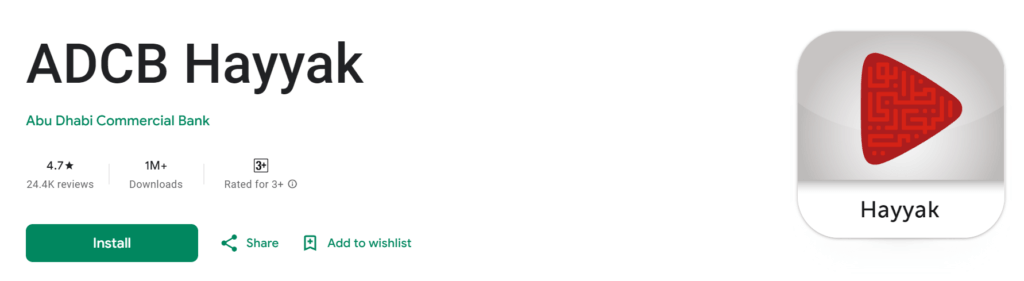
Minimum balance requirements are not always static figures. In the UAE banking ecosystem, they are tied to account classification, customer profile, and product bundling. Digital accounts like Hayyak are designed to lower entry barriers, but they still operate within broader banking fee structures.
A minimum balance typically refers to the amount a customer must maintain to avoid monthly penalties. However, in digital accounts, this requirement can be waived under certain conditions, such as salary transfer, active usage, or bundled services like credit cards or loans. Therefore, instead of a fixed rule, the balance requirement functions more like a conditional threshold.
This is why some users experience no charges at all, while others may suddenly see monthly fees despite opening a “zero balance” account.
Is ADCB Hayyak Truly a Zero Balance Account?
The Hayyak account is generally positioned as a low-barrier or zero-balance digital account, but it is not universally exempt from all balance-related conditions. For many users, especially those who actively use the account or maintain some level of engagement, it behaves like a zero-balance product.
However, the reality is more nuanced. Different variations of the account, such as savings or current accounts, may carry different rules. Additionally, internal fee structures may apply if certain criteria are not met over time. This includes factors like inactivity, insufficient transactions, or the absence of a salary transfer arrangement.
In practical terms, the account can function as a zero-balance account, but only within specific usage patterns. Users who treat it as a dormant or secondary account may face unexpected charges.
Minimum Balance Rules: What You Actually Need to Know
There is no single universal minimum balance figure that applies to all Hayyak accounts. Instead, the requirement varies depending on how the account is set up and used. In many cases, users are not required to maintain a fixed monthly balance, especially if the account is actively used.
However, certain backend conditions may still exist. For example, if the account is categorized under a broader current account structure or linked to additional services, a minimum balance threshold could be applied indirectly. This is why some users report being charged despite initial zero-balance expectations.
It is also important to note that banks can revise these thresholds without prior notice. This makes it essential for account holders to periodically review fee schedules and account terms.
Initial Deposit vs Minimum Balance: A Key Distinction
One of the most misunderstood aspects of the Hayyak account is the difference between an initial deposit and a minimum balance requirement. While some users may be asked to deposit a small amount during account activation, this does not necessarily translate into a monthly balance obligation.
The initial deposit is typically used to activate the account and enable basic services. Once the account is operational, the user may withdraw or utilize these funds without triggering penalties, provided other conditions are met.
This distinction is crucial because many users assume that the initial deposit must be maintained at all times, which is not always the case.
Account Types Within Hayyak and Their Impact on Balance Rules
The Hayyak ecosystem is not limited to a single account type. Users may be offered different configurations based on their profile, including savings-style accounts and current-style accounts. Each of these comes with its own operational logic.
Savings-oriented accounts generally offer flexibility and may include interest earnings, albeit at modest rates. These accounts are more likely to support a zero-balance structure, especially for digitally active users.
Current-style accounts, on the other hand, may be more closely tied to transactional banking and could include conditional balance requirements. These conditions often depend on whether the account is used for salary transfers or linked financial products.
Understanding which version of the account you hold is critical to predicting whether minimum balance rules will apply.
Fees Linked to Low or Zero Balance
Even when an account is marketed as zero balance, certain fees can still apply under specific circumstances. These are not always labeled as “minimum balance penalties” but may function similarly.
Common scenarios that may trigger charges include inactivity over extended periods, lack of transactions, or failure to meet internal engagement thresholds. Additionally, some accounts may introduce fees if they are downgraded or reclassified internally.
These charges are typically small but can accumulate over time if the account remains unused. This is why active usage is often the simplest way to avoid unexpected deductions.
How Salary Transfer Influences Minimum Balance Requirements
Salary transfer is one of the most important factors in determining whether minimum balance rules apply. Accounts that receive regular salary deposits are often granted preferential terms, including fee waivers and relaxed balance requirements.
This is because salary transfer establishes a consistent inflow of funds, reducing the bank’s risk and increasing customer engagement. As a result, users who link their salary to the account are less likely to encounter minimum balance charges.
However, not all users are eligible or willing to transfer their salary. In such cases, alternative strategies must be used to maintain fee-free status.
Smart Ways to Avoid Minimum Balance Fees
Avoiding fees on a digital account is less about maintaining a fixed balance and more about meeting behavioral criteria. Regular transactions, even small ones, can signal account activity and help prevent inactivity-related charges.
Another effective strategy is to maintain a modest buffer balance. While not always required, keeping a small amount in the account can reduce the likelihood of triggering internal thresholds that lead to fees.
Linking the account to other banking products, such as cards or loans, may also provide additional benefits. These relationships often come with bundled fee waivers, making it easier to maintain the account without penalties.
Digital-Only Operation and Its Role in Cost Structure
The Hayyak account is designed as a fully digital product, which significantly reduces operational costs. This is one of the reasons it can offer low or zero balance features compared to traditional accounts.
Because there are no physical branches involved in account opening or maintenance, the cost savings are passed on to users in the form of reduced fees. However, this also means that users must rely entirely on digital channels for account management.
This digital-first approach encourages frequent engagement, which indirectly supports the zero-balance model by keeping accounts active.
Interest Rates and Their Practical Impact
The account may offer a modest interest rate on deposited funds, typically around 0.15%. While this is not a primary income-generating feature, it does provide a small incentive to maintain a balance.
In practice, the interest earned is minimal unless the account holds a significant amount. Therefore, the main value of the account lies in its flexibility and low-cost structure rather than its return potential.
Users should view the interest component as an added benefit rather than a core feature.
Eligibility Criteria and Its Connection to Account Behavior
Eligibility requirements, such as age and residency status, play a role in determining how the account functions. Users must typically be residents and meet minimum age criteria to open the account.
These requirements ensure that the account is used within a regulated framework. They also influence how the account is monitored and managed, including the application of fees and balance rules.
For example, resident users with stable income sources are more likely to receive favorable terms compared to occasional or inactive users.
Real-World Usage Scenarios
Consider a user who actively uses the account for daily transactions, bill payments, and transfers. This user is unlikely to face any minimum balance issues, as the account remains active and engaged.
In contrast, a user who opens the account and leaves it unused for several months may encounter fees, even if the account was initially marketed as zero balance. This highlights the importance of consistent usage.
Another scenario involves users who link their salary to the account. These users often benefit from the most favorable terms, including fee waivers and additional perks.
Conclusion
The idea of a zero-balance account is appealing, but it is rarely absolute. The Hayyak account offers a flexible and accessible banking solution, but its true cost structure depends on how it is used. Understanding the difference between marketing claims and operational rules is essential for avoiding unexpected fees.
By maintaining regular activity, considering salary transfer options, and staying informed about account terms, users can effectively enjoy the benefits of a low-cost digital account without falling into common pitfalls.
FAQs
Is the Hayyak account completely free with no minimum balance?
It can function as a zero-balance account for many users, but certain conditions such as inactivity or account type may introduce fees.
Do I need to maintain a specific balance every month?
Not necessarily. However, maintaining some activity or meeting certain criteria can help avoid potential charges.
What happens if I don’t use the account for a long time?
Inactivity may lead to fees or account restrictions, depending on internal policies.
Does salary transfer remove all fees?
In most cases, salary transfer provides significant benefits, including fee waivers and relaxed balance requirements.
Can the minimum balance rules change over time?
Yes, banks can update their terms and fee structures, so it is important to stay informed.
Is there any penalty for withdrawing all funds?
Generally, no. However, leaving the account empty and inactive for extended periods may result in charges.
Which type of Hayyak account is best for zero balance usage?
Savings-style configurations are typically more flexible, but the best option depends on individual usage patterns.
How can I ensure I never pay any fees?
Regular usage, maintaining a small balance, and linking the account to other services are the most effective strategies.

Sara is a UAE-based banking and accounting expert with over 4 years of professional experience in the financial sector. Her expertise spans retail banking, financial reporting, compliance, and practical money management topics relevant to individuals and businesses in the UAE.
She contributes clear, accurate, and well-researched financial content, simplifying complex banking and accounting concepts for everyday readers. Sara’s writing reflects strong industry knowledge, regulatory awareness, and a commitment to financial accuracy and transparency.