Museum of the Future Area Guide 2026: Tickets, Floors, Hours & Insider Tips
The Museum of the Future is a torus-shaped landmark on Sheikh Zayed Road, next to Jumeirah Emirates Towers in Dubai’s Financial District. Opened in February 2022, it houses five immersive exhibition floors – OSS Hope, The HEAL Institute, Al Waha, Tomorrow Today, and Future Heroes – exploring space, ecology, wellness, and technology. Standard tickets run roughly AED 149–159, and the nearest metro stop is Emirates Towers on the Red Line.
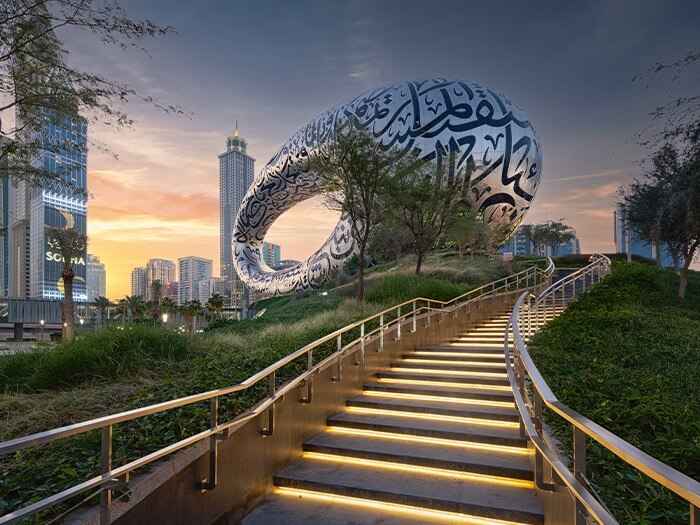
Few buildings anywhere manage to become a symbol of an entire city within a few years of opening. The Museum of the Future has done exactly that for Dubai. Its silver, eye-shaped torus rises above Sheikh Zayed Road wrapped in Arabic calligraphy, and it has become nearly as recognizable as the Burj Khalifa in tourism campaigns, skyline photographs, and “must-see Dubai” lists.
This guide goes beyond a simple ticket page. It covers the area the museum sits in, how to get there from anywhere in the city, what each of the five exhibition floors actually contains, how much time to budget, current pricing structures, and the practical details – accessibility, food policy, photography rules – that most visitors only discover after arriving. Whether this is a first Dubai trip or a return visit to see what has changed since 2022, the sections below are organized to answer the questions that come up before, during, and after a visit.
Where the Museum of the Future Sits in Dubai
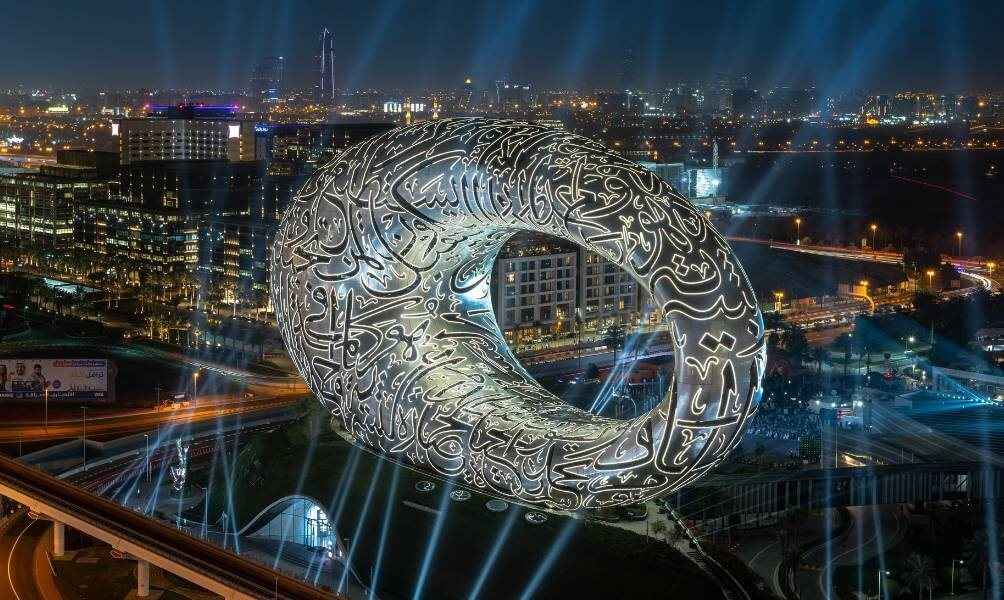
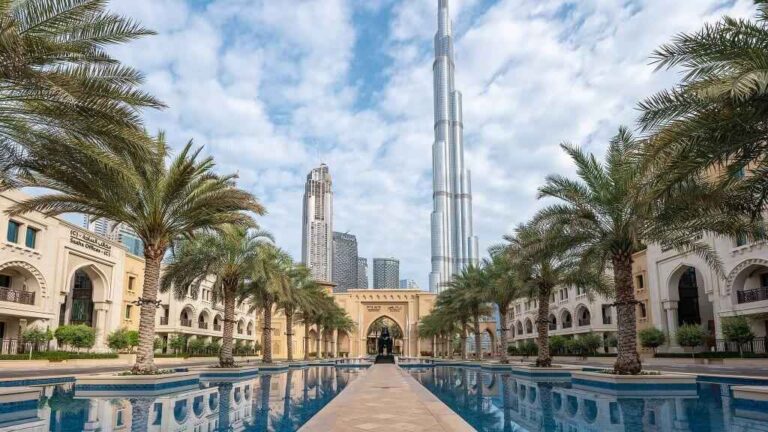
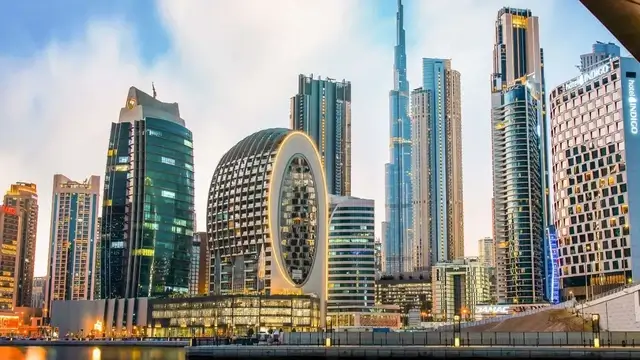
The museum stands in the Trade Centre district, directly beside Jumeirah Emirates Towers and close to the Dubai World Trade Centre, on Sheikh Zayed Road – Dubai’s main north-south artery and the spine connecting Downtown Dubai, DIFC, and the older Bur Dubai and Deira districts. This positioning matters for trip planning: the museum is roughly a 10–15 minute drive from Downtown Dubai and Dubai Mall, and a similar distance from DIFC’s galleries and restaurants.
Because it sits on Sheikh Zayed Road, the museum is easy to combine with a wider look at the corridor’s architecture, its role as Dubai’s primary transit spine, and neighboring attractions such as the Dubai World Trade Centre exhibition halls. Visitors researching the surrounding area, its hotels, and its transport links may also find it useful to read a broader guide to Sheikh Zayed Road and the areas it connects.
Getting There
The most reliable way to reach the museum is the Dubai Metro. Emirates Towers Station on the Red Line connects directly to the museum via a covered, air-conditioned walkway, making it a practical option even during the hottest months. Several Dubai bus routes also serve the area, and taxis or ride-hailing apps can drop passengers directly at the entrance. Visitors driving themselves should note that on-site parking is limited and chargeable; many locals recommend the metro or a taxi instead, particularly on weekends and during UAE public holidays when demand for parking climbs sharply.
For visitors already exploring Dubai’s public transport network, the museum also connects naturally with a broader itinerary using the Dubai Tram and Metro system, both of which link into the wider Sheikh Zayed Road corridor.
A Brief Background: Why This Museum Exists
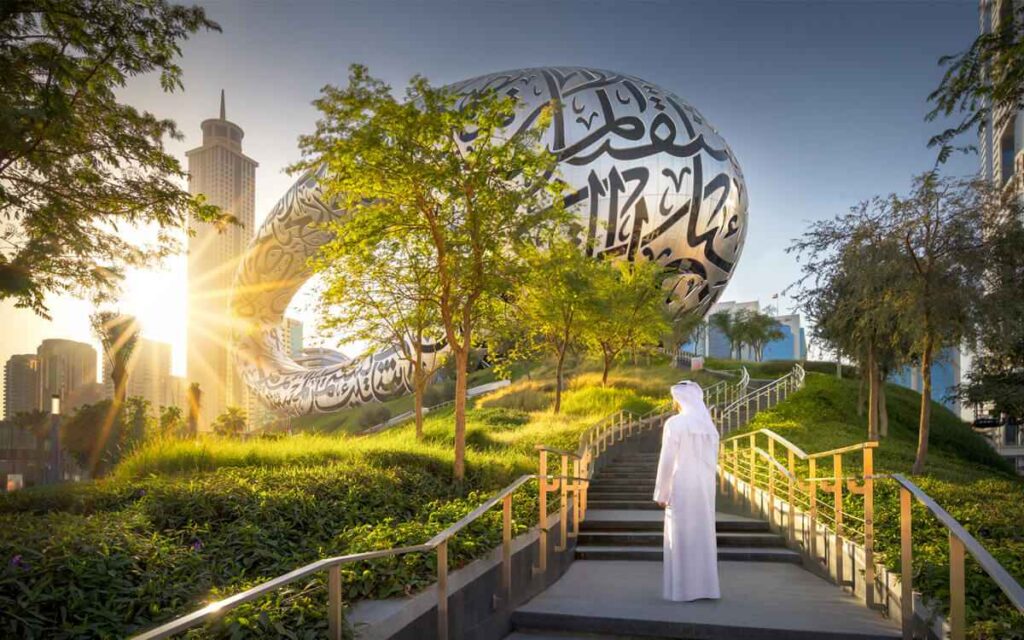
The Museum of the Future was developed by the Dubai Future Foundation as part of the emirate’s long-term strategy to position itself as a hub for innovation, foresight, and applied science. The building was officially opened on 22 February 2022, inaugurated by Sheikh Mohammed bin Rashid Al Maktoum with a light show, alongside Sheikh Hamdan bin Mohammed bin Rashid Al Maktoum, Crown Prince of Dubai, and Sheikh Maktoum bin Mohammed bin Rashid Al Maktoum.
Rather than displaying artifacts from the past, the museum operates as what its creators describe as a “living lab” — a space where prototypes, research, and speculative design are presented as walk-through experiences. It is a seven-floor building dedicated to exploring the future of science, technology, and innovation, housed in a torus-shaped structure whose exterior windows form Arabic calligraphy spelling out a poem about the future written by Sheikh Mohammed bin Rashid Al Maktoum. The calligraphy inscribed on the building was created by Emirati artist Mattar bin Lahej.
The Dubai Future Foundation also uses the building for ongoing programming beyond the public exhibition floors. The Dubai Future Forum, an annual conference hosted at the museum, began in October 2022, reinforcing the building’s dual identity as both a public attraction and a working policy and innovation venue.
Architecture and Design: Why the Building Looks the Way It Does
The Museum of the Future’s shape is deliberate. The torus-shaped shell sits atop the building and is made from 1,024 fire-retardant composite panels clad in stainless steel, each with a unique three-dimensional form that together create the Arabic script covering the facade. Killa Design and structural engineering firm Buro Happold developed new parametric design and building information modelling tools for the project, including a growth algorithm used to digitally generate the internal steel structure.
The building was designed by architect Shaun Killa of Killa Design, engineered by Buro Happold, and reportedly took around six years to complete from concept to opening. The empty core at the center of the torus is intentional – a symbolic void representing knowledge not yet discovered, with the solid outer ring representing what humanity has already achieved. Several guides also describe the museum as holding a LEED Platinum sustainability rating, though visitors researching specific green-building certifications or solar generation figures for a report or article should verify current figures directly with the Dubai Future Foundation, since sustainability credentials and technical specifications can be updated after publication.
The Five Exhibition Floors: What’s Actually Inside
The museum spans seven floors in total, but the public visitor journey is organized into five themed chapters. Together these floors – OSS Hope, Heal Institute, Al Waha, Tomorrow Today, and Future Heroes – form a walkthrough narrative rather than a series of isolated exhibits, and the intended route generally moves from the top floor down.
Level 5 – OSS Hope (Space)
The fifth floor centers on life aboard the Orbital Space Station (OSS) Hope, set in the year 2071, exploring how future space travel might help humanity address global challenges. Visitors experience a simulation of an orbiting space station positioned roughly 600 kilometers above Earth, with information panels, holograms, and windows offering a view of Earth from orbit, alongside content on space-harvested solar energy and advanced robotics for space colonization. The floor also introduces humanity’s efforts to harness renewable energy in a way that supports a more sustainable world back on Earth.
Level 4 – The HEAL Institute (Ecology)
The fourth floor, The HEAL Institute, focuses on ecology and biodiversity, encouraging visitors to think about repairing, restoring, and renewing life on Earth. Its centerpiece is often described as the Library of Life or Vault of Life — a DNA library featuring the genetic codes of more than 2,400 species, presented as illuminated specimens visitors can examine up close. This floor also includes a simulated ecosystem laboratory used to explore how introducing new species might affect an environment.
Level 3 – Al Waha (Wellness)
Al Waha, Arabic for “the oasis,” is the third-floor wellness experience where visitors engage with different sensory therapies designed to help them reconnect and stay grounded. Compared with the space-focused OSS Hope and the planetary focus of the Heal Institute, Al Waha turns inward, using meditative spaces and sensory design to explore what human wellbeing might look like in a highly technological future. It is consistently described by visitors as the calmest and most reflective floor in the building.
Level 2 – Tomorrow Today (Applied Technology)
The second floor, Tomorrow Today, highlights cutting-edge technology and near-future concepts addressing present-day global challenges, and reflects the museum’s ongoing work with strategic partners as an incubator and laboratory for global foresight. This is generally the floor most closely tied to real, currently-developing technology rather than speculative fiction, covering areas such as sustainable mobility, robotics, and health-focused AI systems. Because it showcases live research partnerships, this floor tends to be refreshed more often than the others.
Level 1 – Future Heroes (Children’s Zone)
The first floor, Future Heroes, is dedicated to children under the age of 10 and offers interactive activities, hands-on play, and reward-based challenges. Kids design avatars, work through mission-style challenges, and engage in collaborative problem-solving built loosely around STEM themes, making this the floor most families with young children linger on longest.
Comparison Table: Museum of the Future Exhibition Floors
| Floor | Theme | Typical Time Needed | Best Suited For |
|---|---|---|---|
| Level 5 — OSS Hope | Space travel, 2071 space station | 25–40 minutes | Sci-fi fans, space enthusiasts, teenagers |
| Level 4 — The HEAL Institute | Ecology, biodiversity, DNA library | 25–35 minutes | Nature lovers, sustainability-minded visitors |
| Level 3 — Al Waha | Sensory wellness, mindfulness | 20–30 minutes | Wellness seekers, quieter visits |
| Level 2 — Tomorrow Today | Applied near-future technology | 30–40 minutes | Tech professionals, students |
| Level 1 — Future Heroes | Children’s interactive play zone | 30–45 minutes | Families with children under 10 |
Museum of the Future Tickets and Prices (2026)
Ticket structures for the Museum of the Future generally fall into three tiers: standard entry, a flexible Pioneer Pass, and combo packages bundled with other Dubai attractions.
Multiple ticketing sources place standard adult admission for 2026 at roughly AED 149–159, with a premium Pioneer Pass around AED 399 that adds flexible same-day entry, a skip-the-line queue, and a retail credit at the museum’s gift shop. Several platforms also note a family-friendly offer valid through parts of 2026, giving one child under 12 free entry with each paying adult during a promotional window tied to the UAE’s “Year of the Family” campaign.
Reported free-entry age thresholds vary slightly by source — some list children under 3 as free, others under 4 – so this detail is worth confirming directly on the official museum website before booking, particularly for families traveling with young children.
Editorial note: Ticket prices, promotional offers, and free-entry thresholds are subject to change and vary by season, booking platform, and promotional period. All figures above should be verified against the official Museum of the Future website or an authorized ticketing partner before publishing or before a visitor finalizes travel plans.
Comparison Table: Ticket Options
| Ticket Type | Approximate Price (AED) | Key Benefit |
|---|---|---|
| Standard Entry | 149–159 | Access to all exhibition floors, single time slot |
| Pioneer Pass | 399 | Flexible entry, skip-the-line access, AED 50 retail credit |
| Combo Tickets (with other attractions) | Varies | Bundled savings with Burj Khalifa, Dubai Frame, or multi-attraction passes |
Opening Hours and Best Time to Visit
Reported opening hours vary across sources and appear to shift seasonally — some list standard hours of roughly 10:00 AM to 6:00 PM with last entry around 5:00 PM, while others cite extended evening access during particular periods of the year. Because operating hours are a live-data field that the museum adjusts seasonally and around public holidays, visitors should always check the official website shortly before their visit rather than relying on any single third-party source, including this guide.
Multiple sources consistently agree on one point: weekday mornings, particularly the first one or two hours after opening, offer the smallest crowds and the best natural light for photography, especially on the Al Waha floor. Weekends, UAE public holidays, and the winter tourism season (roughly November through February) tend to see the highest demand and the fastest sell-outs for popular time slots.
How Much Time to Budget
Most visitor guides recommend planning for 2 to 3 hours to comfortably experience all five floors without rushing. A rough breakdown some guides suggest:
- OSS Hope: 25–40 minutes
- The HEAL Institute: 25–35 minutes
- Al Waha: 20–30 minutes
- Tomorrow Today: 30–40 minutes
- Future Heroes: 30–45 minutes (longer with children)
Visitors trying to complete the full journey in under 90 minutes commonly report feeling rushed, particularly on the more detail-dense OSS Hope and Heal Institute floors.
Practical Visitor Information
Photography: Photography is generally permitted throughout the museum, though flash photography, tripods, and selfie sticks are typically not allowed inside exhibition areas out of consideration for other visitors.
Food and drink: Outside food and beverages are usually restricted to the lobby and garden areas. Caregivers may bring snacks for children visiting the Future Heroes floor, but food is not permitted inside the other exhibition levels.
Accessibility: The museum is generally described as wheelchair and stroller accessible, with accessible restrooms and wheelchair docks available near the lobby, and staff assistance available on exhibition floors.
Booking in advance: Time slots are limited and frequently sell out, especially during winter and school holiday periods, so advance online booking is strongly recommended over attempting a walk-in visit.
Common Mistakes First-Time Visitors Make
- Booking a slot too close to peak hours. Midday and early afternoon slots tend to be the most crowded; a morning slot is almost always a better experience.
- Underestimating the time needed. Treating the museum like a quick 45-minute stop leads to a rushed experience, particularly on OSS Hope and Heal Institute.
- Skipping Al Waha because it “sounds boring.” Many visitors report it as one of the most memorable floors precisely because it slows the pace down after the more stimulus-heavy space and technology sections.
- Not checking current hours before traveling. Because operating hours shift seasonally, relying on outdated information from a blog or forum post can result in arriving after the last entry time.
- Driving without a parking plan. On-site parking is limited; the metro connection via Emirates Towers Station is usually the more reliable option.
- Assuming it’s only for tech enthusiasts. The Heal Institute and Al Waha floors are consistently rated highly even by visitors with little interest in technology, since their framing is ecological and human-centered rather than purely technical.
Museum of the Future vs. Other Dubai Attractions
| Attraction | Best For | Typical Visit Length |
|---|---|---|
| Museum of the Future | Futurism, design, immersive storytelling | 2–3 hours |
| Burj Khalifa (At the Top) | Panoramic skyline views | 1–1.5 hours |
| Dubai Frame | Photo opportunities, Old vs. New Dubai views | 45–60 minutes |
| Dubai Mall / Dubai Aquarium | Shopping combined with entertainment | 2–4 hours |
Many visitors combine the Museum of the Future with the Burj Khalifa or the Dubai Frame as part of a single day exploring Downtown Dubai and the Sheikh Zayed Road corridor, since all three are within a short drive or metro ride of one another.
Future Outlook
Because the Dubai Future Foundation treats the museum as a “living” institution rather than a fixed collection, exhibits on the Tomorrow Today floor in particular are periodically refreshed to reflect current research partnerships and emerging technologies.
Visitors returning for a second or third visit in the coming years should expect the overarching five-floor narrative to remain consistent. At the same time, specific prototypes, installations, and partner-driven content continue to evolve. Anyone tracking the latest exhibit changes should check the museum’s official announcements or the Dubai Future Foundation’s channels close to their visit date, since exhibit-level updates move faster than most third-party travel guides can track.
FAQs
1. What is the Museum of the Future in Dubai?
It is an immersive, torus-shaped museum on Sheikh Zayed Road exploring speculative future scenarios in space travel, ecology, wellness, and technology through five themed exhibition floors rather than traditional historical exhibits.
2. Where exactly is the Museum of the Future located?
It sits in Dubai’s Trade Centre district, directly beside Jumeirah Emirates Towers on Sheikh Zayed Road, within walking distance of Emirates Towers Metro Station.
3. How much do Museum of the Future tickets cost?
Standard admission is generally priced around AED 149–159, with a Pioneer Pass (flexible entry and skip-the-line access) around AED 399. Prices and promotions change periodically, so current figures should be confirmed on the official website.
4. How many floors does the Museum of the Future have?
The building has seven floors in total, with five open to the public as themed exhibition experiences: OSS Hope, The HEAL Institute, Al Waha, Tomorrow Today, and Future Heroes.
5. How long should I plan to spend at the Museum of the Future?
Most guides recommend 2 to 3 hours for an unhurried visit covering all five floors.
6. Is the Museum of the Future suitable for young children?
Yes – the Future Heroes floor is designed specifically for children under 10, though very young children (under 3) may find some of the darker, more intense OSS Hope sequences overwhelming.
7. What is the best time to visit to avoid crowds?
Weekday mornings, ideally within the first hour or two after opening, are consistently reported as the quietest times to visit.
8. How do I get to the Museum of the Future without a car?
The Dubai Metro Red Line stops at Emirates Towers Station, which connects to the museum via a covered, air-conditioned walkway.
9. Is photography allowed inside the museum?
Yes, standard photography is generally permitted, but flash photography, tripods, and selfie sticks are typically restricted inside exhibition areas.
10. Can I bring food inside the museum?
Outside food and drinks are generally limited to the lobby and garden areas; they are not permitted inside most exhibition floors, with a minor allowance for children’s snacks on the Future Heroes floor.
11. Is the Museum of the Future wheelchair accessible?
Yes, the museum is generally described as accessible for wheelchairs and strollers, with accessible restrooms and staff assistance available.
12. What makes the Museum of the Future’s design unique?
Its torus, or ring, shape is covered in Arabic calligraphy formed from over a thousand uniquely shaped steel panels, spelling out a poem about the future — a design created by Killa Design and engineered by Buro Happold.
Conclusion
The Museum of the Future has earned its place among Dubai’s most recognizable landmarks not just because of its striking exterior, but because its five exhibition floors commit fully to a single idea: imagining the future as something visitors step into rather than read about. Planning a visit around a quiet weekday morning, budgeting a full two to three hours, and booking tickets in advance will make the difference between a rushed photo stop and the kind of immersive experience the building was actually designed to deliver. Given its location directly on Sheikh Zayed Road, it also pairs naturally with a wider day exploring Downtown Dubai, DIFC, and the metro corridor connecting them.

Ali is a full-time content writer and financial specialist with over 6 years of experience living and working in the UAE. He focuses on business finance, insurance, investments, and corporate financial strategies, delivering authoritative content tailored to entrepreneurs and professionals.
Ali combines in-depth industry research with practical insights, helping readers understand complex financial and insurance topics in a simple, actionable way. His content is designed to build trust, authority, and long-term value for business-focused audiences.