
Top 10 Credit Card for 6000 Salary in UAE: Complete 2027 Guide
A monthly salary of AED 6,000 can put several UAE credit cards within reach, including cashback, rewards, shopping, and travel-focused options. However, choosing the right card involves more than meeting a bank’s minimum salary requirement. Annual fees, cashback limits, spending conditions, interest charges, and approval criteria can make a substantial difference to the card’s actual value.
If you are searching for the best credit card for 6000 salary in the UAE, this guide explains which cards are worth considering, how eligibility works, and what to check before applying.
Quick answer: UAE residents earning AED 6,000 per month may qualify for credit cards from banks such as Emirates NBD, ADCB, FAB, Mashreq, RAKBANK, and Emirates Islamic, depending on the specific card and current eligibility requirements. The best choice is generally a low-fee cashback or rewards card that matches your spending habits and offers benefits without requiring excessive monthly spending.
Top 10 Credit Cards for AED 6,000 Salary in UAE
Not every credit card advertised in the UAE is suitable for someone earning AED 6,000. Some cards require salaries of AED 8,000, AED 10,000, or considerably more. Others accept applications from people earning AED 5,000 but impose spending conditions that make their advertised rewards difficult to achieve.
The following ten cards are worth comparing because their published minimum salary requirements are within the AED 6,000 income bracket.
| Credit card | Minimum monthly salary | Main advantage |
|---|---|---|
| Mashreq Cashback Credit Card | AED 5,000 | Dining cashback |
| ADCB Essential Cashback Credit Card | AED 5,000 | Everyday cashback with no annual fee |
| Emirates NBD noon One Visa Credit Card | AED 5,000 | Online shopping rewards |
| RAKBANK RED Credit Card | AED 5,000 | Simple cashback and no annual fee |
| FAB du Credit Card | AED 5,000 | Savings on eligible du spending |
| Emirates NBD Mastercard Titanium | AED 5,000 | Plus Points and lifestyle offers |
| DIB Consumer Cashback Reward Card | AED 5,000 | Sharia-compliant everyday cashback |
| ADIB Smiles Visa Classic Card | AED 5,000 | Smiles rewards and Islamic banking |
| CBD Super Saver Credit Card | AED 5,000 | Savings on selected everyday expenses |
| ADCB 365 Cashback Credit Card | AED 5,000 | Category-based cashback |
Card information reviewed for November 2026. Eligibility and advertised benefits can change. The order is a practical comparison, not a ranking based on independently tested customer outcomes. Approval is not guaranteed.
1. Mashreq Cashback Credit Card – Best for Dining and Everyday Purchases
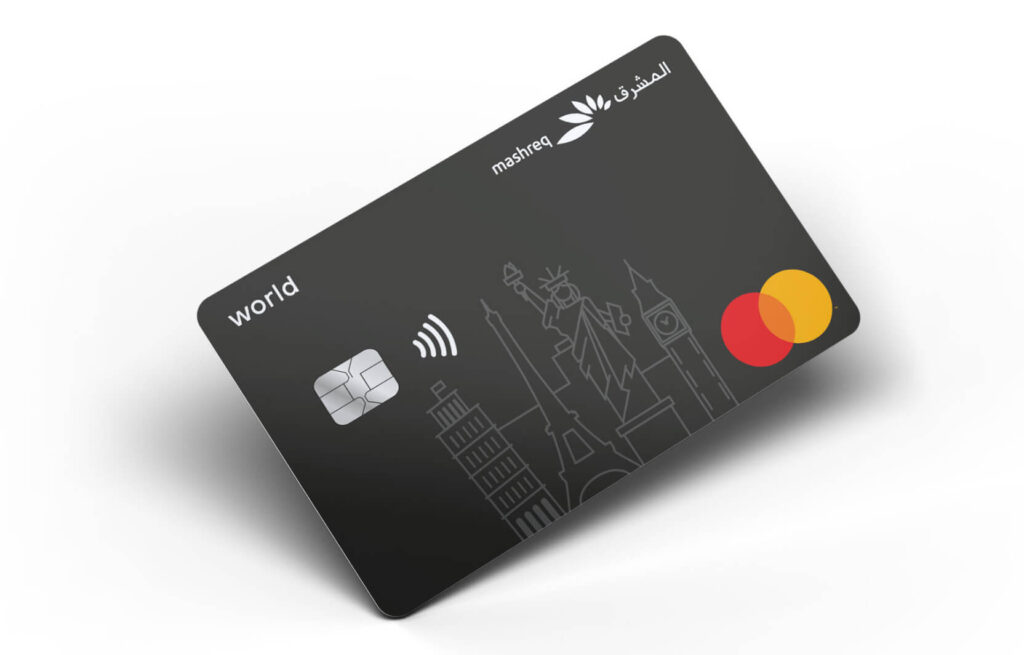
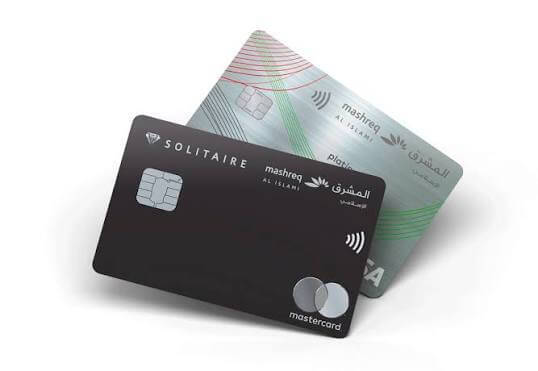
The Mashreq Cashback Credit Card is a strong option for UAE residents who frequently spend money at restaurants, cafés, and food outlets.
It combines dining rewards with cashback on other eligible purchases, making it useful for someone who wants benefits without managing a complicated points programme.
Key features
- Minimum monthly salary: AED 5,000.
- No annual fee under the advertised free-for-life offer.
- 5% cashback on eligible local and international dining purchases.
- Cashback on other qualifying domestic and international transactions.
- Selected promotional offers on food delivery, subscriptions, and lifestyle services.
For someone earning AED 6,000, the main attraction is the ability to earn rewards on expenses already included in their monthly budget.
For example, spending AED 600 on eligible dining purchases at a 5% cashback rate would generate AED 30 in cashback before any applicable restrictions.
Advantages: No standard annual fee, useful dining rewards, and straightforward cashback benefits.
Disadvantages: Different transaction categories may earn different rates. Promotional cashback offers may have limits or additional conditions.
Best suited for: Employees who regularly dine out, order food, or want cashback without paying an annual card fee.
2. ADCB Essential Cashback Credit Card – Best for Simple Monthly Spending
The ADCB Essential Cashback Credit Card is designed for people who prefer predictable rewards rather than complicated loyalty programmes.
Its cashback structure makes it particularly relevant to salaried professionals who use one credit card for routine expenses.
Key features
The card offers 1% cashback on qualifying monthly spending below AED 5,000 and 1.25% on qualifying monthly spending of AED 5,000 or more, with lower rates for certain categories.
A minimum eligible monthly spend of AED 1,000 is required to receive cashback. The card also has a published monthly cashback cap.
Consider someone earning AED 6,000 who spends AED 2,000 each month on qualifying purchases. At a 1% cashback rate, that would generate AED 20 per month, or AED 240 annually, assuming the spending remains eligible throughout the year.
Advantages: No annual fee, relatively simple cashback structure, and rewards on various everyday transactions.
Disadvantages: Monthly spending conditions apply, and some expenses, including certain bill payments and school fees, do not qualify.
Best suited for: First-time cardholders and people who want consistent cashback on routine purchases.
3. Emirates NBD noon One Visa Credit Card – Best for Online Shopping

Online shopping has become part of everyday life for many UAE residents. From household supplies to electronics and groceries, digital marketplaces offer convenience and frequent promotions.
The Emirates NBD noon One Visa Credit Card is designed for customers who regularly use the noon shopping ecosystem.
Key features
The card has a published minimum salary requirement of AED 5,000 and is advertised without joining or annual fees.
Its value comes from eligible rewards and benefits linked to participating shopping and lifestyle services.
However, shoppers should distinguish between ordinary cashback, promotional rewards, and rewards that can only be redeemed within a particular platform.
For example, a card that provides rewards for purchases through noon may offer better value to a regular noon customer than to someone who primarily shops at physical supermarkets.
Advantages: No annual fee, convenient for frequent online shoppers, and potential savings through participating platforms.
Disadvantages: Platform-specific rewards may be less flexible than ordinary statement cashback. Earning rates and promotional conditions can change.
Best suited for: UAE residents who regularly shop online and already use noon services.
4. RAKBANK RED Credit Card – Best for Straightforward Cashback
The RAKBANK RED Credit Card is another practical choice for employees earning AED 6,000.
Its main appeal is a simple cashback proposition without the annual fee commonly associated with premium rewards cards.
Key features
- Minimum monthly salary: AED 5,000.
- Advertised as free for life.
- Up to 1.5% cashback on eligible local and international spending.
- Additional banking and promotional benefits, subject to the bank’s conditions.
Suppose a cardholder spends AED 1,500 on purchases that qualify for the full 1.5% rate. The resulting cashback would be AED 22.50.
That example illustrates the potential return, but it should not be interpreted as a guaranteed reward on every transaction.
Advantages: No annual fee, a relatively straightforward rewards structure, and flexibility for different spending habits.
Disadvantages: The highest cashback rate may not apply to every purchase category, and promotional benefits may change.
Best suited for: People who want a general-purpose cashback card without paying an annual membership fee.
5. FAB du Credit Card – Best for du Customers
Telecommunications expenses are a regular part of many household budgets. Mobile plans, home internet, and device payments can account for a noticeable share of monthly spending.
The FAB du Credit Card is particularly relevant to customers who already use du services.
Key features
The card has a published minimum monthly salary requirement of AED 5,000 and is advertised without an annual fee.
Its headline benefit includes up to 15% back in FAB Rewards on eligible du spending, subject to programme conditions.
The card also advertises selected instalment-payment benefits for qualifying du purchases.
It is important to understand that rewards points are not necessarily equivalent to cash credited directly to a bank account. Their actual value depends on redemption rules.
Advantages: Useful benefits for eligible du customers, no annual fee, and rewards connected to recurring telecom spending.
Disadvantages: The strongest benefits are concentrated on du-related transactions. Rewards value depends on redemption options.
Best suited for: Salaried residents who pay regular du bills or purchase eligible telecom services.
6. Emirates NBD Mastercard Titanium – Best for Lifestyle Rewards
The Emirates NBD Mastercard Titanium Credit Card is aimed at people who want a combination of shopping rewards, lifestyle offers, and payment flexibility.
It can be considered by someone earning AED 6,000 because its published minimum salary requirement is AED 5,000.
Key features
The card earns Emirates NBD Plus Points on eligible purchases. These points can be redeemed through participating channels and merchants.
Additional benefits may include selected travel, shopping, entertainment, and instalment-payment offers.
The bank has advertised a promotional waiver of joining and annual fees. Applicants should verify whether that waiver is still available when applying.
One important distinction is that Plus Points are not the same as cashback. The value of a point depends on how and where it is redeemed.
Advantages: Flexible lifestyle benefits, rewards on eligible purchases, and access to selected promotional offers.
Disadvantages: Reward earning rates vary by spending category, and points may offer less transparent value than direct cashback.
Best suited for: Employees who prefer a rewards programme and regularly use participating merchants.
7. Dubai Islamic Bank Consumer Cashback Reward Card – Best for Islamic Cashback Banking
The Dubai Islamic Bank Consumer Cashback Reward Card is worth considering for residents who prefer a Sharia-compliant card with everyday spending benefits.
Unlike conventional credit cards, Islamic covered cards use financing arrangements structured according to the issuing bank’s Sharia governance framework.
Key features
The DIB Consumer Cashback Reward Card has a minimum monthly salary requirement of AED 5,000.
It advertises up to 3% cashback on selected everyday spending categories, including qualifying supermarket purchases, fuel, and bill payments.
The published annual fee is AED 200, although applicants should check the latest fee schedule and any applicable taxes.
For an AED 6,000 salary, the key question is whether the additional cashback will comfortably exceed the annual fee.
Advantages: Sharia-compliant structure, cashback on selected essential expenses, and potential value for households with regular grocery and fuel spending.
Disadvantages: Annual fees reduce net rewards, and the highest cashback rate does not necessarily apply to every transaction.
Best suited for: Residents seeking Islamic banking products with practical everyday cashback benefits.
8. ADIB Smiles Visa Classic Card – Best for Smiles Rewards
The ADIB Smiles Visa Classic Card combines Islamic banking with a loyalty programme focused on eligible lifestyle purchases.
It can appeal to customers who already use Smiles services and prefer redeemable rewards rather than traditional cashback.
Key features
The published minimum salary requirement is AED 5,000, and the card is advertised with no annual fee.
Cardholders can earn Smiles Points on eligible spending and redeem them according to the programme’s terms.
ADIB also offers digital-wallet compatibility, making the card convenient for contactless payments.
Before choosing it, applicants should compare the redemption value of Smiles Points with the cash value offered by competing cards.
Advantages: No annual fee, Islamic banking structure, and potential value for existing Smiles users.
Disadvantages: Rewards depend on the Smiles ecosystem, and point redemption may not suit every spending pattern.
Best suited for: Customers who prefer Sharia-compliant banking and regularly use participating Smiles services.
9. CBD Super Saver Credit Card – Best for Selected Household Expenses
The Commercial Bank of Dubai Super Saver Credit Card focuses on savings across selected spending categories and participating merchants.
It is available for consideration by salaried applicants earning at least AED 5,000 per month, subject to the bank’s other eligibility requirements.
Key features
The card offers category-based savings and lifestyle promotions, with eligibility conditions that applicants should review carefully.
Its benefits may be attractive to people who consistently spend in the categories covered by the card’s current cashback programme.
However, a high advertised cashback percentage does not automatically translate into substantial savings.
For example, a 5% reward capped at AED 20 per month cannot produce more than AED 240 annually from that benefit, regardless of how much extra money is spent.
Advantages: Potential savings on selected recurring expenses and access to merchant promotions.
Disadvantages: Category restrictions, minimum spending requirements, cashback caps, and card fees may affect overall value.
Best suited for: Households whose regular spending closely matches the card’s eligible categories.
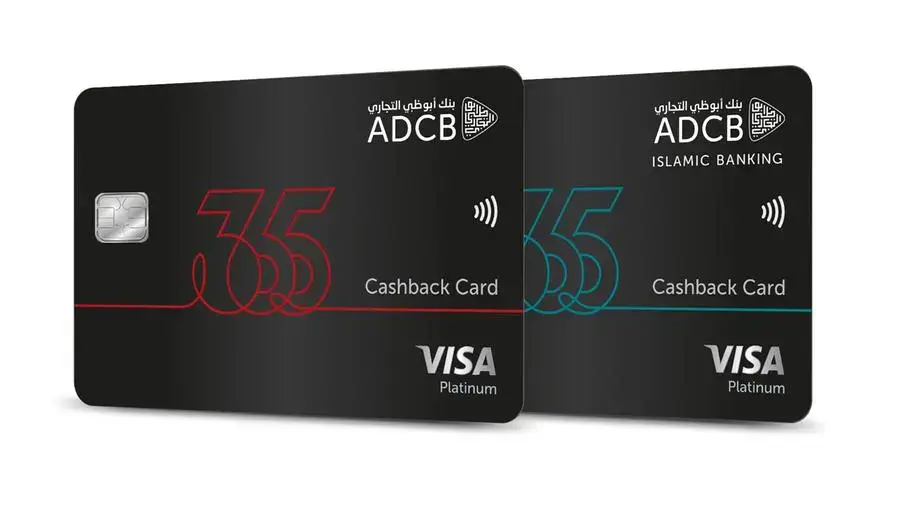
10. ADCB 365 Cashback Credit Card – Best for Category-Based Rewards
The ADCB 365 Cashback Credit Card is designed for people who want rewards across several spending categories rather than a single shopping platform.
It has a published minimum salary requirement of AED 5,000, although approval depends on the applicant’s financial profile.
Key features
The card provides cashback opportunities across eligible spending categories, including selected dining, grocery, fuel, and utility transactions.
It may be particularly attractive to households that concentrate regular spending on one card.
However, applicants should check the minimum monthly spend needed to unlock cashback, along with the annual fee, cashback limits, and any exclusions.
A card with generous advertised rates may deliver little practical value if the customer cannot meet its spending threshold.
Advantages: Multiple cashback categories and potential savings for households with predictable monthly expenditure.
Disadvantages: Spending thresholds and fees may make it less attractive for lower-spending customers.
Best suited for: Employees with stable monthly expenses who can meet the card’s qualifying conditions without increasing their spending.
Which Credit Card Is Best for a 6000 Salary in UAE?
There is no single best credit card for every AED 6,000 salary earner. The right choice depends primarily on spending habits, fees, and the ability to repay the monthly statement in full.
| Your main priority | Card worth comparing |
|---|---|
| Dining and restaurant spending | Mashreq Cashback |
| Simple cashback | ADCB Essential Cashback |
| Online shopping | Emirates NBD noon One |
| General-purpose rewards | RAKBANK RED |
| du telecom payments | FAB du |
| Shopping and lifestyle points | Emirates NBD Titanium |
| Islamic cashback | DIB Consumer Cashback Reward |
| Smiles loyalty benefits | ADIB Smiles Visa Classic |
| Selected household expenses | CBD Super Saver |
| Higher eligible category spending | ADCB 365 Cashback |
For someone who earns AED 6,000 and spends only AED 1,000–2,000 monthly on their card, a no-annual-fee product with achievable cashback conditions will often be more practical than a premium card promising higher rewards.
The objective should be to earn benefits from normal spending, not to spend more just to qualify for rewards.
Credit Card Eligibility for AED 6,000 Salary in UAE
Meeting the minimum salary requirement is only the first stage of the application process.
Banks must also consider whether an applicant can afford the credit facility.
Minimum salary requirements
The UAE’s credit card framework establishes an annual income threshold of AED 60,000 for ordinary income-based eligibility. This is equivalent to AED 5,000 per month.
Someone earning AED 6,000 has an annual salary of AED 72,000 and therefore exceeds that income threshold.
However, individual banks can set higher salary requirements for particular products.
Credit history and AECB report
The Al Etihad Credit Bureau, commonly known as AECB, maintains credit information used by lenders when assessing applications.
A credit report may include existing borrowing, repayment history, outstanding balances, and other relevant financial information.
Banks use this information alongside their own internal risk assessments.
An applicant with regular salary deposits and a strong repayment record may present a lower lending risk than someone with missed payments or substantial existing debt.
Nevertheless, no particular credit score guarantees approval.
Debt burden ratio
The debt burden ratio, or DBR, measures how much of a person’s income is committed to debt repayments.
Under the UAE’s general regulatory framework, total repayment obligations for applicable personal credit facilities must remain within 50% of gross salary and regular income.
For a monthly salary of AED 6,000:
Regulatory 50% repayment ceiling illustration
AED 3,000/month
This is not a recommended borrowing amount or a guaranteed credit limit.
If an employee already pays AED 1,500 towards a personal loan and AED 800 towards car financing, those commitments total AED 2,300.
That leaves only AED 700 before reaching the illustrative AED 3,000 ceiling. The bank must still assess the proposed credit card obligation and the applicant’s affordability.
A bank may approve a much lower amount or reject the application entirely.
Employment and salary stability
Banks may also review how long an applicant has worked for their current employer, whether they have completed probation, and whether salary payments are regular.
Some banks have internal employer-related eligibility policies.
An AED 6,000 salary paid consistently through a bank account may be easier to verify than irregular income that is not supported by reliable documentation.
Documents Required to Apply for a Credit Card in UAE
Most banks request a combination of identity, employment, and financial documents.
Common requirements include:
- Valid Emirates ID.
- Passport and UAE residence visa details, where applicable.
- Recent salary certificate or payslip.
- Three months of bank statements, when requested.
- Employer details and contact information.
- Existing loan or credit card information, if relevant.
Some digital applications can verify details electronically, reducing the need to upload every document manually.
The bank may request additional evidence depending on the applicant’s circumstances.
How to Apply for a Credit Card With AED 6,000 Salary
Applying for a credit card is relatively straightforward, but preparation can improve the quality of the application.
Step 1: Identify cards within your salary range
Start with products that clearly advertise a minimum salary of AED 6,000 or less.
Avoid applying for cards with higher income requirements unless the bank has confirmed an alternative eligibility arrangement.
Step 2: Compare total costs
Look beyond cashback percentages and welcome bonuses.
Review annual fees, finance or profit charges, late-payment charges, foreign transaction fees, cash withdrawal costs, and rewards conditions.
The card’s Key Facts Statement is especially important because it explains material financial terms.
Step 3: Review your credit report
Check your AECB credit information for inaccurate records or outstanding obligations that may affect eligibility.
Correcting genuine errors before applying can help prevent unnecessary complications.
Step 4: Prepare accurate documents
Make sure your employment details, salary information, and bank statements are consistent.
Never exaggerate your income or submit altered documents.
Step 5: Apply through an official channel
Submit the application through the issuing bank’s website, mobile application, branch, or verified representative.
Avoid sharing Emirates ID copies, banking credentials, or one-time passwords with unverified individuals.
Step 6: Review the offer before accepting
If the bank approves the application, check the assigned credit limit, fees, repayment terms, and any optional insurance or payment-protection products.
You are not required to accept a credit limit simply because the bank offers it.
How Much Credit Card Limit Can You Get With AED 6,000 Salary?
A common misconception is that every bank will offer a credit limit equal to two or three times an applicant’s salary.
In practice, there is no universal guaranteed multiplier.
The approved limit depends on the bank’s underwriting policies, existing debt obligations, income stability, credit history, and affordability assessment.
For illustration, a bank might offer one applicant a limit of AED 5,000 and another a limit of AED 10,000, even when both earn AED 6,000.
These figures are examples, not predictions or published approval ranges.
A higher credit limit can provide flexibility, but it also increases the amount of credit available to borrow.
For many first-time cardholders, a manageable limit is more useful than the largest possible limit.
How Much Should You Spend on a Credit Card With AED 6,000 Salary?
The amount you can borrow is not necessarily the amount you should spend.
A sensible starting point is to use a credit card only for purchases already covered by your monthly budget.
Consider this illustrative monthly budget:
| Expense | Monthly amount |
|---|---|
| Housing and utilities | AED 1,800 |
| Groceries and household items | AED 900 |
| Transportation | AED 600 |
| Mobile and internet | AED 250 |
| Personal expenses | AED 450 |
| Savings and emergency fund | AED 1,200 |
| Other expenses and contingency | AED 800 |
| Total | AED 6,000 |
In this example, groceries, transportation, telecom bills, and selected personal purchases might be suitable credit card transactions.
However, the cardholder must retain enough cash to pay the full statement when due.
The credit card should function as a payment method, not as an additional source of income.
Cashback vs Rewards vs Travel Credit Cards: Which Is Better?
Different credit cards reward different behaviours.
A cashback card generally returns a percentage of eligible purchases as a statement credit or another cash-equivalent benefit.
A rewards card provides points that can be redeemed for products, vouchers, travel, or other benefits.
A travel card may offer airline miles, airport lounge access, or travel-related privileges.
For an employee earning AED 6,000, cashback is often easier to evaluate because the financial return is relatively transparent.
Points and miles can also provide value, but only when the cardholder understands the redemption rules.
A travel card with an annual fee may be poor value for someone who travels once a year, while a free cashback card could generate consistent savings from ordinary purchases.
How to Calculate the Real Value of a Credit Card
The most useful way to compare cards is to calculate their net annual benefit.
Net annual benefit = Eligible cashback or rewards value + benefits actually used − annual fees − other card costs
Consider two hypothetical cards.
Card A provides 1% cashback on AED 24,000 of eligible annual spending and has no annual fee.
Its annual cashback is AED 240.
Card B provides 2% cashback on the same eligible spending but charges AED 300 annually.
Its annual cashback is AED 480, leaving AED 180 after the annual fee.
Despite offering a lower cashback percentage, Card A delivers AED 60 more net value.
This calculation assumes both cards have no additional charges and that the full stated cashback rate applies.
The example also demonstrates why comparing headline percentages alone can be misleading.
Credit Card Cashback Calculator
Use this simple calculator to estimate the annual return from a card based on eligible spending, cashback rate, and annual fee.Eligible monthly spending (AED)Cashback rate (%)Annual fee (AED)
Estimated net annual cashback
AED 240.00
Illustrative calculation before cashback caps, category exclusions, interest, and other charges. It assumes the same eligible spending every month.
Common Credit Card Fees You Should Understand
A credit card can provide useful benefits, but charges can quickly outweigh the rewards.
Annual membership fees
Some cards are free for life, while others waive the fee only for the first year.
Certain cards offer annual fee waivers when the customer reaches a specified spending threshold.
Always distinguish between these arrangements.
Finance or profit charges
Conventional credit cards generally charge interest when a balance is carried beyond the applicable interest-free conditions.
Islamic covered cards may apply profit charges under their contractual structure.
These charges can be substantial compared with ordinary cashback earnings.
Late-payment charges
Missing the payment deadline can result in fees and may negatively affect your credit record.
Paying only the minimum amount is also not the same as settling the full statement balance.
Foreign transaction fees
International purchases may involve currency conversion costs and additional card-related fees.
This matters for people who shop from overseas websites or travel frequently.
Cash withdrawal charges
Using a credit card to withdraw cash is generally more expensive than making ordinary retail purchases.
Cash advances may attract immediate charges and different finance-charge treatment.
They should not be treated as a routine source of cash.
Mistakes to Avoid When Applying for a Credit Card
One of the biggest mistakes is applying for several credit cards without first checking eligibility.
Multiple applications can create unnecessary credit enquiries, and repeated rejections may complicate future borrowing decisions.
Another common mistake is choosing a card because of its welcome bonus.
A promotional bonus may require spending several thousand dirhams within a short period. If that amount exceeds the applicant’s normal budget, the bonus can encourage unnecessary purchases.
Cardholders should also avoid assuming that all transactions qualify for cashback.
Government payments, wallet top-ups, education expenses, insurance, fuel, and utilities may receive reduced rewards or no rewards, depending on the card.
Finally, never carry an interest-bearing balance solely to earn cashback. The borrowing cost can easily exceed the rewards received.
Can You Get a Credit Card Without Salary Transfer?
Yes, some UAE banks consider credit card applications without requiring the applicant to transfer their salary to the issuing bank.
However, the bank may still require proof of income, recent statements, and employment verification.
A salary transfer relationship can sometimes simplify income verification or affect the bank’s internal assessment, but it does not guarantee approval.
Before opening a new salary account, ask whether the card actually requires salary transfer and whether doing so provides any meaningful advantage.
Can You Get a Credit Card With AED 6,000 Salary and an Existing Loan?
Having an existing personal loan or car loan does not automatically prevent someone from obtaining a credit card.
The important question is whether the applicant can afford the additional obligation.
For example, an employee earning AED 6,000 who already has substantial monthly loan repayments may have limited borrowing capacity.
The bank will consider the total debt burden and other affordability factors before approving a new facility.
Reducing outstanding balances and maintaining consistent repayments may improve the applicant’s financial position over time.
Is a Credit Card Worth It for Someone Earning AED 6,000?
A credit card can be worthwhile when it provides convenience, useful rewards, purchase protections, and a clear repayment structure.
It becomes less attractive when the cardholder relies on it to cover recurring shortfalls in income.
For someone earning AED 6,000, a credit card is generally most useful when three conditions are met: normal monthly expenses remain affordable, the statement can be paid in full, and the card’s net benefits exceed its costs.
A card with no annual fee and modest cashback may be more financially sensible than one offering premium privileges that the customer rarely uses.
Credit Card Trends in the UAE for 2026 and Beyond
The UAE credit card market continues to develop around digital applications, mobile payments, targeted cashback, and merchant partnerships.
Banks increasingly promote cards linked to specific shopping platforms, telecommunications providers, fuel retailers, and lifestyle services.
This creates more opportunities for consumers to choose products that match their actual spending.
At the same time, rewards programmes are becoming more dependent on conditions such as eligible merchant categories, monthly spending thresholds, and redemption restrictions.
For lower- and middle-income customers, the most important trend is not necessarily higher advertised cashback. It is the growing need to compare the real value of rewards after fees and exclusions.
Digital onboarding may make applications faster, but creditworthiness and affordability remain central to lending decisions.
A practical approach is to review card benefits periodically, particularly when annual fees, cashback categories, or spending habits change.
FAQs
1. Can I get a credit card with AED 6,000 salary in UAE?
Yes. Several UAE banks advertise credit cards with minimum monthly salary requirements of AED 5,000. Someone earning AED 6,000 may therefore meet the income requirement for these products. Approval also depends on credit history, existing debts, employment details, and the bank’s affordability assessment.
2. Which bank gives the best credit card for AED 6,000 salary?
Mashreq, ADCB, Emirates NBD, RAKBANK, and FAB offer cards worth comparing. Mashreq Cashback may suit frequent diners, ADCB Essential Cashback may suit general spending, and Emirates NBD noon One may suit online shoppers. The best card depends on individual expenses and fees.
3. Can I get a credit card with AED 6,000 salary without salary transfer?
Yes. Some banks accept applications without requiring salary transfer. Applicants may need to provide salary certificates, bank statements, and other income verification documents. Requirements vary by bank and product.
4. What is the minimum salary for a credit card in Dubai?
The general income threshold under the UAE’s credit card regulatory framework is AED 60,000 annually, equivalent to AED 5,000 per month. Individual banks can establish higher requirements for particular cards.
5. How much credit card limit can I get with AED 6,000 salary?
There is no guaranteed credit limit based solely on salary. The bank determines the limit after reviewing income, repayment capacity, existing liabilities, credit history, and internal lending policies.
6. Can I get a lifetime-free credit card with AED 6,000 salary?
Yes. Cards advertised without annual fees include Mashreq Cashback, ADCB Essential Cashback, RAKBANK RED, and selected Emirates NBD products. Always verify that the offer is genuinely free for life rather than a first-year waiver or conditional promotion.
7. Can I get a credit card with a low AECB credit score?
It may be possible, but approval can be more difficult. Banks consider credit history alongside income, outstanding debt, and other financial information. Improving repayment consistency and reducing existing obligations may help strengthen future applications.
8. Is a cashback credit card better than a rewards credit card?
Cashback cards are often easier to evaluate because their returns can be expressed in dirhams. Rewards cards may offer greater value for customers who regularly redeem points through participating merchants. The better option depends on redemption value, fees, and spending habits.
9. Can I get a credit card while working for a small company in UAE?
Potentially, yes. Some banks accept applicants employed by smaller businesses, but approval may depend on employer verification, salary consistency, employment stability, and internal risk policies.
10. Can I apply for two credit cards with AED 6,000 salary?
Yes, it is possible to hold more than one credit card if banks approve the applications. However, each additional facility affects your overall credit exposure. It is usually better to establish a strong repayment record with one suitable card before considering another.
11. What happens if I pay only the minimum amount due?
Paying the minimum amount by the deadline may prevent a missed-payment status, but the remaining balance can attract finance or profit charges under the card agreement. Repeated minimum payments can make debt more expensive and extend the repayment period.
12. Which credit card is easiest to get with AED 6,000 salary?
No bank guarantees easy approval. Entry-level cards with published minimum salaries of AED 5,000 are sensible starting points, but approval depends on the applicant’s complete financial profile. A card from an existing banking provider may simplify verification without guaranteeing acceptance.
Conclusion
Finding a suitable credit card for 6000 salary in the UAE is possible, but the best decision starts with understanding your spending habits rather than chasing the highest advertised cashback.
Cards such as Mashreq Cashback, ADCB Essential Cashback, Emirates NBD noon One, and RAKBANK RED are worth considering for their different approaches to everyday rewards. Islamic banking customers can also explore options from Dubai Islamic Bank and Abu Dhabi Islamic Bank.
Before applying, compare the minimum salary requirement, annual fees, qualifying spending categories, repayment charges, and credit eligibility conditions.
Most importantly, choose a card that fits comfortably within your monthly budget and aim to pay the full statement balance by the due date.
A well-chosen credit card can make everyday spending more convenient and rewarding. The greatest long-term benefit comes from using credit responsibly, avoiding unnecessary borrowing, and selecting financial products that support your needs.

Sara is a UAE-based banking and accounting expert with over 4 years of professional experience in the financial sector. Her expertise spans retail banking, financial reporting, compliance, and practical money management topics relevant to individuals and businesses in the UAE.
She contributes clear, accurate, and well-researched financial content, simplifying complex banking and accounting concepts for everyday readers. Sara’s writing reflects strong industry knowledge, regulatory awareness, and a commitment to financial accuracy and transparency.