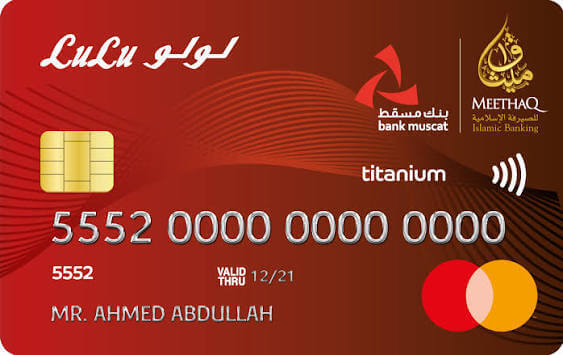
LuLu Credit Card Guide UAE (2027): ADCB vs Emirates NBD Compared
By the EmiratesBreaking Editorial Team | Details checked against official bank pages on 21 October 2026
The best LuLu credit card in the UAE depends on your salary and where you spend. The ADCB LuLu Platinum gives 8% back as LuLu Points at LuLu stores, while the Emirates NBD LuLu 247 Platinum gives up to 7% plus extra on fuel and utilities. Titanium versions earn 3.5% and suit lower salaries.
lulu credit card
If you shop at LuLu Hypermarket every week, a LuLu credit card can quietly turn part of your grocery bill into free groceries. Two banks issue these co-branded cards in the UAE: Abu Dhabi Commercial Bank (ADCB) and Emirates NBD. Each offers a Titanium and a Platinum version, and the gaps between them are bigger than the marketing suggests.
This guide compares the real earn rates, fees, salary rules, lounge and cinema perks, and the traps that cost cardholders money. By the end, you will know which card fits your salary and your spending, and what to check before you apply.
What Is a LuLu Credit Card?
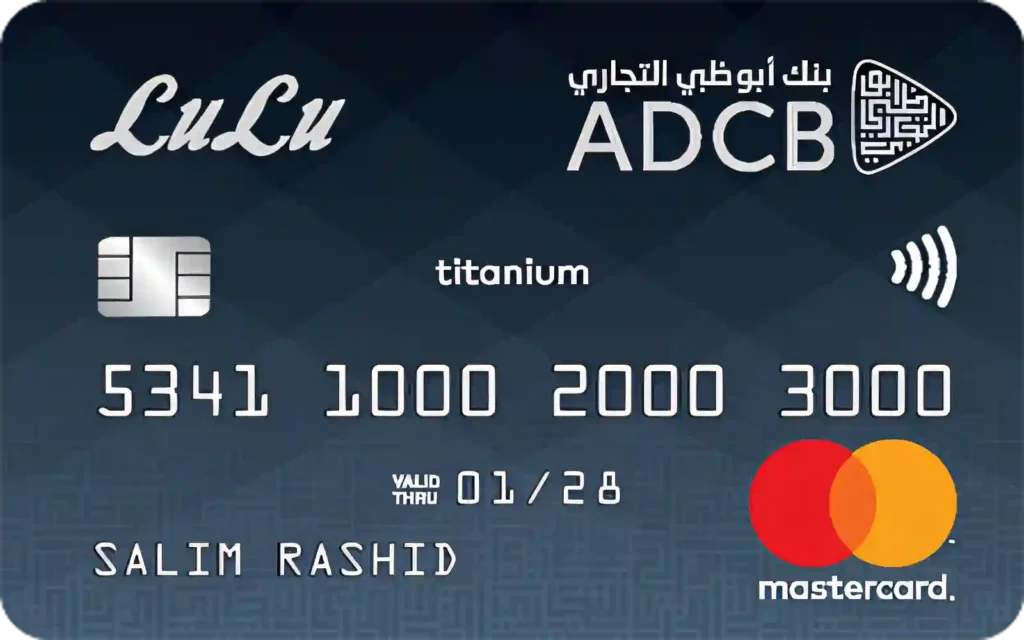
A LuLu credit card is a co-branded Mastercard that pays its rewards in LuLu Points. Those points work like a store voucher: you can spend them only at LuLu, not at other retailers. LuLu Group, the retailer behind LuLu Hypermarket, does not issue the cards itself. It partners with banks, and each bank sets its own earn rates, fees and eligibility rules.
Emirates NBD and LuLu Group launched the LuLu 247 Mastercard on 11 December 2019 in Titanium and Platinum variants. ADCB’s LuLu cards sit in the same two tiers and have been revised several times, including a points rate change that took effect on 25 October 2020.
The closed-loop design is the key idea to understand. A cashback card pays you money you can use anywhere. A LuLu card pays you a LuLu-only currency, so its value is real only if LuLu is already where you buy groceries, household items and electronics. If it is, the card is one of the most efficient ways to reduce that bill. If it is not, a general cashback card will usually serve you better.
Which LuLu Credit Cards Can You Get in the UAE?
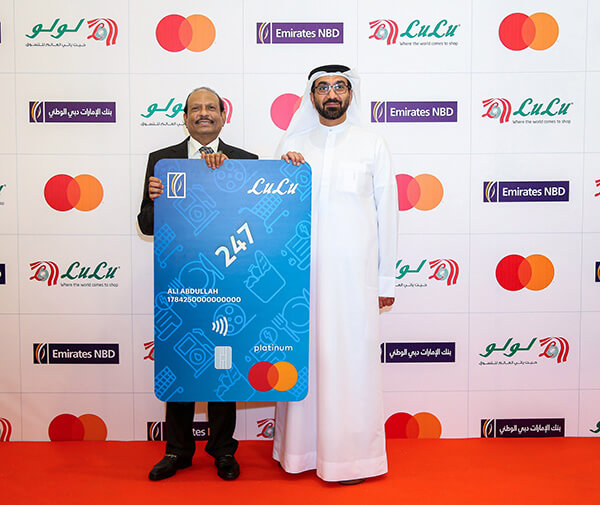
Four cards currently carry the LuLu name. The table below summarises what each bank publishes.
| Card | Issuer | Minimum salary | Annual fee | Earn at LuLu | Earn elsewhere |
|---|---|---|---|---|---|
| LuLu Platinum | ADCB | AED 8,000, or a credit limit of AED 15,000 | None (free for life) | 8 points per AED 1 (8%) | Up to 1.25 points per AED 1 |
| LuLu Titanium | ADCB | About AED 5,000* | None (free for life) | 3.5 points per AED 1 (3.5%) | Up to 1 point per AED 1 |
| LuLu 247 Platinum | Emirates NBD | AED 12,000 | AED 262.50 (joining fee AED 525) | 7% | 4% fuel, 2% utilities, 0.7% other |
| LuLu 247 Titanium | Emirates NBD | About AED 5,000* | Confirm with the bank* | 3.5% | 2% fuel, 1% utilities, 0.35% other |
The Titanium salary figures come from comparison sites rather than the banks’ own pages, and Emirates NBD’s Titanium fee was not published where we looked. Confirm both before applying.
Notice the fee gap. Both ADCB cards are free for life, while the Emirates NBD Platinum charges a joining fee and an annual fee. Notice also that ADCB pays more at LuLu, while Emirates NBD pays more on fuel and utility bills. That split decides most buying decisions, and we will test it with real numbers later.
ADCB LuLu Platinum Credit Card
This is the card for people who spend heavily at LuLu and meet the salary bar. It has the highest LuLu earn rate in the market and no annual fee.
How the Rewards Work
You earn 8 LuLu Points for every AED 1 spent at LuLu stores, with no minimum spend requirement. ADCB’s earn table is more detailed away from LuLu. Everyday retail spend earns up to 1.25 points per AED 1, but some categories earn far less. Fuel, education, government services, real estate, telecommunications, charity and transport earn 0.2 points per AED 1. Supermarkets, auto dealers, insurance companies and quick-service restaurants earn 0.4. Purchases in the United Kingdom and Europe also earn 0.4.
One detail surprises people. Purchases at LuLu itself are not subject to the reduced supermarket rate, so your LuLu shop earns the full 8 points.
Redeeming LuLu Points
You can redeem from 5,000 points, and every 5,000 points is worth AED 50. At the checkout counter in any LuLu store in the UAE, you present the card and your available points can be redeemed on the spot. Supplementary cardholders can redeem too. ADCB’s FAQ adds that redemptions must be in multiples of 100 points.
Do the maths once, because it clarifies everything: 5,000 points equal AED 50, so one point is worth one fils. Eight points per AED 1 is therefore AED 0.08, or 8%.
Perks Beyond Points
The Platinum comes with a handful of benefits that matter more than they look on paper.
- Lounge access: four complimentary visits to more than 25 airport lounges for you and each supplementary cardholder, booked through the Mastercard Travel Pass app. Guests cost USD 32 per visit. Conditions apply to activation, including a small international spend, so read the terms before you travel.
- Cinema: buy one, get one free at REEL Cinemas, up to two free tickets a month, valid until 31 December 2026, plus 20% off food and beverages at the counter on a minimum AED 20 spend.
- talabat: 20% off one grocery or food order a month with the code MASTERCARD, capped at AED 14.
- Financial features: complimentary Credit Shield life cover, card control, a 0% instalment plan for school fees, FlexiPay, balance transfer and a credit card loan.
Eligibility and Cost
You must be at least 18 and earn AED 8,000 a month, or qualify for a credit limit of at least AED 15,000. There is no annual fee. Interest, late payment and cash advance charges are in ADCB’s Key Facts Statement, which you should read before accepting the card.
ADCB LuLu Titanium Credit Card
The Titanium is ADCB’s entry point. It earns up to 3.5 LuLu Points per AED 1 at LuLu, which equals 3.5% back, and up to 1 point per AED 1 on other spend. ADCB lists no annual fee, a 0% school fee plan, Credit Shield, card control, FlexiPay, balance transfer and a credit card loan. Each 5,000 points still converts to an AED 50 voucher.
An older ADCB page mentions airport lounge access for the Titanium, but a current comparison source says no lounge benefit is published. Treat lounge access on this card as unconfirmed until ADCB states it clearly.
The Titanium makes sense when your salary sits between roughly AED 5,000 and AED 7,999, because ADCB’s Platinum is out of reach there. It also suits households that shop at LuLu but have little other card spend.
Emirates NBD LuLu 247 Platinum Credit Card
The name tells you the idea: a card for the purchases you make every day, at any hour. Emirates NBD built its earn table around groceries, fuel and utilities rather than only LuLu.
Earn Rates and the Statement Cap
The Platinum earns 7% on LuLu in-store and online spend, 4% on fuel, 2% on utility bills and 0.7% on all other spend. Points arrive as soon as you make the purchase. There is no minimum spend, but there is a cap: the Platinum can earn at most 1,667 points per statement. Because Emirates NBD prices one point at AED 1 (its table says AED 100 earns 7 points at 7%), that cap rarely bites unless you spend around AED 24,000 a month at LuLu.
Only retail spend earns points. Loans on your card, cash advances, bank fees, balance transfers and 0% instalment plans do not, with one exception: LuLu spends converted into a 0% instalment plan still earn. Points do not expire while your card is active, and rewards on supplementary cards flow into the primary card.
Welcome Offer, Fees and Perks
New Platinum customers can earn up to 500 LuLu Points: 250 on paying the joining fee and making a first transaction, and 250 for spending AED 8,000 within the first two statements. There is also a balance transfer with zero processing fee for 6 or 12 months.
The card lists a minimum salary of AED 12,000, a joining fee of AED 525 and an annual fee of AED 262.50. Emirates NBD also lists member benefits inside LuLu, including priority checkout, early access to sales, free shipping on LuLu online and other discounts. Cinema and lounge benefits are advertised, but their limits were not stated clearly on the pages we reviewed, so check the current terms.
The interest rate on Emirates NBD cards is shown as 3.25% a month, with a minimum payment of 5% of the outstanding balance or AED 100, whichever is higher.
Emirates NBD LuLu 247 Titanium Credit Card
The Titanium earns 3.5% at LuLu, 2% on fuel, 1% on utility bills and 0.35% on other spend, with a cap of 833 points per statement. It carries the same LuLu member benefits, such as priority checkout and free shipping on LuLu online, and points are redeemable at more than 70 LuLu stores across the UAE.
At LuLu alone, the Titanium pays the same 3.5% as ADCB’s Titanium. Its edge is the fuel rate of 2%, which is high for a card at this salary level. Its weakness is the 0.35% rate on everything else, which is low.
The Point-Value Trap Most Comparison Pages Miss
If you compare cards by points alone, you will choose wrongly. ADCB awards 8 points for AED 1 and Emirates NBD awards 7 points for AED 100, but the two points are not worth the same. An ADCB point is worth one fils, and an Emirates NBD point is worth one dirham. Always convert to a percentage before you compare. That is why this guide quotes 8% and 7%, not 8 and 7.
A Worked Example: AED 5,500 of Monthly Spending
Assume you spend AED 3,000 at LuLu, AED 1,500 on fuel and AED 1,000 on other retail. We use published rates and give ADCB the top 1.25% rate on other spend.
| Category | ADCB Platinum | Emirates NBD Platinum |
|---|---|---|
| LuLu (AED 3,000) | AED 240 (8%) | AED 210 (7%) |
| Fuel (AED 1,500) | AED 3 (0.2%) | AED 60 (4%) |
| Other retail (AED 1,000) | AED 12.50 (1.25%) | AED 7 (0.7%) |
| Monthly reward value | AED 255.50 | AED 277 |
Over a year, that is roughly AED 3,066 against AED 3,324 in LuLu credit. The Emirates NBD card wins here despite the lower LuLu rate, but it also charges AED 262.50 a year, so the net gap narrows to about AED 5. Strip fuel out of the example and ADCB wins by a clear margin. The honest conclusion: fuel spending is the swing factor.
For the Titanium cards, AED 3,000 at LuLu earns AED 105 a month on both.
Which LuLu Credit Card Should You Choose?
Start with salary, because it removes options quickly. Below AED 5,000 you are unlikely to qualify for any of them. Between AED 5,000 and AED 7,999, the ADCB Titanium is the clear fit. From AED 8,000, the ADCB Platinum becomes available, and from AED 12,000, the Emirates NBD Platinum joins the choice.
Then look at where your money goes. If most of your spend is at LuLu and you drive little, the ADCB Platinum is the strongest and cheapest. If you commute daily and pay utility bills by card, the Emirates NBD Platinum can overtake it. If you travel a few times a year, ADCB’s four lounge visits are a concrete benefit, but verify the terms first.
How to Apply and What You Need
For ADCB, you can apply online, request a callback, SMS the word LULU to 2626 from your registered mobile number, call the contact centre or visit a branch. A representative calls back within 24 hours after you submit the online form.
For Emirates NBD, the listed documents are your original Emirates ID with a copy and passport copy, your latest salary certificate if you are salaried, a trade licence if you are not an individual applicant, your latest three months of bank statements, and a security cheque.
Both banks run a credit assessment before approval, so a weak report can sink an otherwise eligible application. If you are unsure of your standing, check your report first. Our credit score check guide explains how.
Common Mistakes to Avoid
The first mistake is carrying a balance. At 3.25% a month on Emirates NBD cards, interest erases several months of rewards in a single statement. Pay in full, always.
The second is chasing rewards you would not otherwise earn. A 3.5% return on a purchase you did not need is still a loss. The third is forgetting that cash advances, fees and balance transfers do not earn points. The fourth is relying on old blog posts. Earn rates and spend goals have changed before: ADCB discontinued its monthly spend goals from 1 December 2022. Always confirm rates on the bank’s own page.
Pros and Cons of LuLu Credit Cards
The strengths are clear. Rewards are generous at a retailer where many UAE households already shop, the ADCB cards carry no annual fee, and points can be redeemed instantly at the till. The weaknesses are just as clear. Rewards are locked into one retailer, rates elsewhere are modest, and benefits such as cinema offers carry expiry dates and conditions.
Alternatives Worth Comparing
If you want flexibility, compare general cashback cards that pay in dirhams, grocery cards tied to other supermarkets and e-commerce cards. A simple test works well. Take your last three months of statements, total your LuLu spend, and ask whether a 3.5% to 8% return on that figure beats a flat 1% to 5% cashback rate on everything.
Future Outlook
Co-branded retail cards in the UAE keep changing their terms. ADCB revised its earn rates in 2020 and removed its spend goals in 2022, and its REEL Cinemas offer currently runs only to the end of 2026. Expect more promotions that expire, more app-based benefits such as the Mastercard Travel Pass, and continued competition on fuel and utility rewards. Review your card every year.
Internal Linking Suggestions
Link this guide to related EmiratesBreaking.com pieces in the finance cluster: the credit score check guide, the debt burden ratio explainer, the ADCB salary account guide, the FAB Gold and FAB Elite credit card guides, the Citibank, NBQ, Deem and American Express card guides, and the student bank account guide. Consider new pieces on the best grocery credit cards in the UAE, balance transfer cards, and how credit card interest is calculated.
External Authority Sources
Use the official ADCB LuLu Platinum and Titanium pages and its Key Facts Statement, the Emirates NBD LuLu 247 Platinum page and its earning LuLu Points help page, the Emirates NBD schedule of fees and charges, Mastercard Travel Pass, the Central Bank of the UAE consumer protection pages, and the Al Etihad Credit Bureau for credit report information.
FAQs
1. What is a LuLu credit card?
It is a co-branded Mastercard that pays rewards as LuLu Points, redeemable inside LuLu stores in the UAE.
2. Which banks offer a LuLu credit card in the UAE?
ADCB and Emirates NBD. Each offers Titanium and Platinum versions.
3. Is the ADCB LuLu card free?
ADCB lists no annual fee for both its Platinum and Titanium cards.
4. How much cashback does a LuLu credit card give?
Up to 8% on the ADCB Platinum, up to 7% on the Emirates NBD Platinum and 3.5% on both Titanium cards, all as LuLu Points at LuLu.
5. What salary do I need for a LuLu credit card?
ADCB Platinum needs AED 8,000 or a AED 15,000 limit, and Emirates NBD Platinum lists AED 12,000. Titanium cards are reported at about AED 5,000.
6. How do I redeem LuLu Points?
With ADCB, present the card at any LuLu checkout in the UAE once you have 5,000 points; every 5,000 points is worth AED 50. Emirates NBD points redeem at over 70 LuLu stores.
7. Do LuLu Points expire?
Emirates NBD points do not expire while your card is active. For ADCB, check its current terms and FAQ.
8. Does the LuLu card include airport lounge access?
The ADCB Platinum offers four complimentary visits through Mastercard Travel Pass. Emirates NBD advertises lounge access via LoungeKey; confirm the visit limits.
9. Can I get a LuLu card as an expat?
Both banks list Emirates ID, passport and residence documents for expat applicants, so residents can apply, subject to approval.
10. Do cash advances and balance transfers earn LuLu Points?
On Emirates NBD cards, no. Only retail spend earns points.
11. Can supplementary cardholders earn and redeem points?
Yes. ADCB supplementary holders can redeem, and Emirates NBD transfers supplementary rewards to the primary card.
12. Which is better, ADCB or Emirates NBD?
ADCB is cheaper and stronger at LuLu. Emirates NBD is stronger on fuel and utilities. Your spending mix decides.
Conclusion
A LuLu credit card rewards the spending you already do, but only if that spending happens at LuLu. For most salaried residents, the ADCB LuLu Platinum offers the highest LuLu return with no annual fee, the ADCB Titanium is the realistic option from about AED 5,000, and the Emirates NBD LuLu 247 Platinum can win for drivers who also put utilities on the card. Check your salary, test your own statements against the table above, pay your balance in full each month and confirm current terms with the bank before applying.

Sara is a UAE-based banking and accounting expert with over 4 years of professional experience in the financial sector. Her expertise spans retail banking, financial reporting, compliance, and practical money management topics relevant to individuals and businesses in the UAE.
She contributes clear, accurate, and well-researched financial content, simplifying complex banking and accounting concepts for everyday readers. Sara’s writing reflects strong industry knowledge, regulatory awareness, and a commitment to financial accuracy and transparency.