
Guarantee Cheque in the UAE: Legal Consequences of Issuing One (2026 Guide)
A guarantee cheque in the UAE is legally treated like any other cheque. If it bounces for insufficient funds, the holder can take it straight to the Execution Court as an executive instrument. Criminal liability applies when the account is closed or frozen, payment is wrongly stopped, the cheque is signed to block payment, or it is forged.
Most people in the UAE hand over a guarantee cheque without thinking twice. A landlord asks for one, a car dealer asks for another, and an employer, contractor, or lender asks for a third. The paper feels like a formality. In law, it is not.
A guarantee cheque (also called a security cheque) is a cheque you issue to secure a promise: rent, a loan, a service contract, a deposit. The UAE does not recognise a separate legal category for it. Once you sign and hand it over, it is a cheque, and the Commercial Transactions Law applies in full. Writing “security” or “guarantee” on it does not shield you.
This guide explains what happens when a guarantee cheque is presented, when it becomes a civil debt, when it becomes a criminal case, what defences realistically exist, and how to protect yourself before you sign. Whether you run a company in Jebel Ali Free Zone, commute on the Dubai Metro Red Line to a business in Business Bay, or rent an apartment in Marina, the rules below apply to you.
What Is a Guarantee Cheque in the UAE?
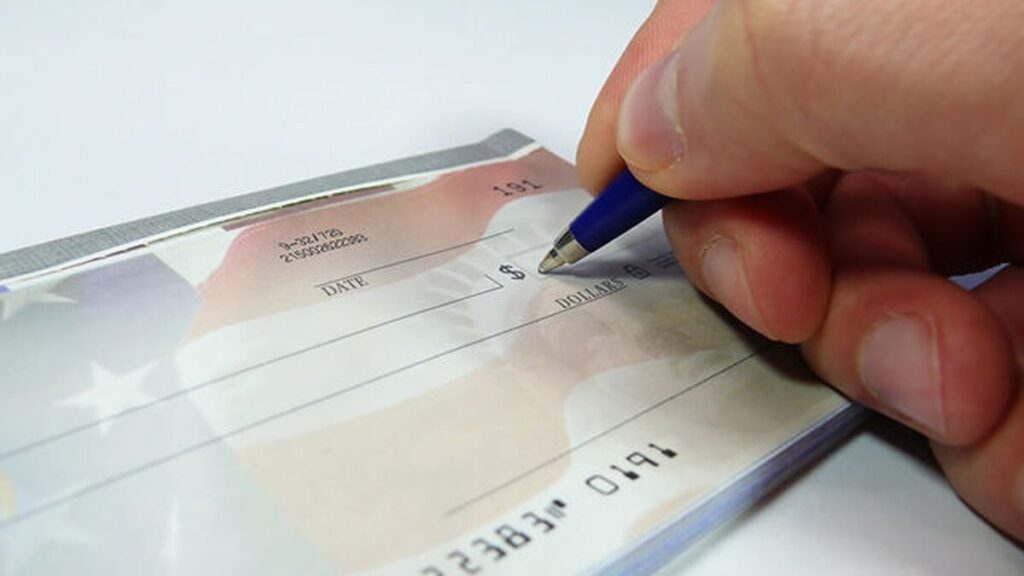
A guarantee cheque is an ordinary cheque issued to back an obligation rather than to pay for something on the spot. The holder keeps it in reserve and presents it only if you default.
Common examples include:
- A blank or post-dated cheque given to a landlord with a tenancy contract
- A security cheque given to a bank, finance company, or lender against a personal or business loan
- A cheque given to a contractor, supplier, or developer to secure delivery or payment
- A cheque left with an employer or recruitment agency (a risky practice that deserves caution)
The key point is simple. The label describes the purpose of the cheque between you and the holder. It does not change how banks and courts treat the instrument.
Which Law Governs Cheques in the UAE?
The main source is Federal Decree-Law No. 50 of 2022 on Commercial Transactions, which replaced the earlier Commercial Transactions Law (Federal Law No. 18 of 1993) and the 2020 amendments that first reshaped bounced-cheque rules. It sets out what a valid cheque is, how it must be presented, when a bank may refuse payment, and what penalties apply.
Three related instruments matter in practice:
- The Civil Procedure Law, which governs execution and challenges before the courts
- The Penal Code (Federal Decree-Law No. 31 of 2021), which sits behind fraud-type offences
- Central Bank (CBUAE) rules, which control how banks handle returned cheques and account restrictions
One boundary to remember: financial free zones such as DIFC and ADGM have their own legal frameworks. Onshore courts and Execution Courts handle most cheque disputes, including those involving companies based in zones like JAFZA, but a lawyer should confirm the correct forum when a free zone is involved.
How the UAE Changed Its Approach to Bounced Cheques
For years, a bounced cheque in the UAE was a criminal offence under Article 401 of the old Penal Code. A bad cheque could mean arrest, a police case, and a travel ban, regardless of the reason. Many residents left the country rather than face prosecution.
The law changed on 2 January 2022. Since then, a cheque returned for insufficient funds is mainly a civil matter. Criminal exposure was kept for conduct that looks deliberate or fraudulent.
This shift is the single most misunderstood point about guarantee cheques. Many people now say “cheques are no longer criminal.” That is only partly true, as the next sections show.
Does a Guarantee Cheque Have Different Legal Status From a Normal Cheque?
No. This surprises many people.
Banks do not ask why a cheque was issued. They check the signature, the date, the amount, and the account balance. If the cheque is valid on its face, they pay it, or they return it with a reason code.
Courts take a similar view. The cheque is an independent payment instrument. The beneficiary does not need to prove the underlying deal before presenting it. The burden usually falls on the drawer to show why it should not be enforced.
The practical result is clear. If you hand over a guarantee cheque and then default, the holder can present it on the due date, and your explanation about “it was only security” will carry little weight at the bank.
What Makes a Cheque Valid?
Under the law, a cheque must contain the word “cheque,” the drawer’s signature, the name of the drawee bank, the issue date, and the amount. Missing elements can weaken enforceability, but do not assume a flaw will save you.
A cheque is payable on presentation. The beneficiary generally has six months (about 180 days) from the date on the cheque to present it. After that window the cheque is “stale” for bank processing, yet the holder can still pursue the debt through the courts.
Signed Blank Cheques
If you sign a cheque and leave the amount or date blank, the law treats this as authorising the holder to complete it. A blank signed cheque is therefore among the riskiest things you can hand over. A holder could fill in a higher amount, and you would then have to prove the entry was unauthorised.
Civil Consequences When a Guarantee Cheque Bounces
When a cheque is returned for insufficient funds, the holder does not need a full lawsuit. Under Article 667, a returned cheque can qualify as an executive instrument, comparable in force to a court judgment. The holder files directly with the Execution Court.
What can follow:
- Asset attachment, including bank balances and other property
- Salary or income attachment, within legal limits
- Travel ban applications, subject to judicial orders and conditions
- Vehicle and property restrictions
- Bank account freezes while the execution file is active
Partial payment also matters. If the account holds some money but not the full amount, the holder can request that the bank pay what is available and note it on the cheque. The remaining balance is then pursued separately.
The civil route is faster, and often harsher in practice, than many drawers expect.
Criminal Consequences: When a Guarantee Cheque Becomes a Criminal Case
Insufficient funds alone is no longer the main trigger. The law now targets conduct that suggests bad faith or deliberate obstruction.
| Conduct | Typical consequence (check current text) |
|---|---|
| Issuing a cheque from a closed or frozen account, or withdrawing the funds before presentation | Criminal offence, imprisonment and/or fine |
| Stopping payment without a legally accepted reason | Criminal exposure under Article 675 |
| Signing or writing the cheque in a way that prevents payment | Criminal exposure under Article 675 |
| Forging or knowingly using a forged cheque | Imprisonment of at least one year plus a fine reported at AED 20,000 to 100,000 (Article 676) |
| Endorsing or giving a cheque to another person knowing it will not be paid | Criminal penalty, doubled for repeat offences |
For the Article 675 group, commentary from UAE law firms describes imprisonment from six months to two years and a fine of at least 10 percent of the cheque value (minimum AED 5,000), up to double the value, with penalties doubled for repeat offenders.
Two important relief mechanisms apply. A criminal case can often be extinguished by full settlement at any stage before final judgment, and for lower-value cheques the law has offered a prescribed fine route that can avoid criminal proceedings. Law firm summaries differ on the exact thresholds (AED 200,000 is often cited), so confirm the current schedule.
Editorial verification flag: article numbers and fine bands vary between legal commentaries because of the 2020 and 2022 reforms. Cross-check against the official UAE Legislation portal before publishing.
The Closed Account Trap
This catches many people. Suppose you give a guarantee cheque, then close the account or let the bank freeze it. When the holder later presents the cheque, it is returned for “account closed,” not “insufficient funds.” That reason code sits in the criminal category. The holder can then file a criminal complaint.
If you change banks, tell the holder and replace the guarantee cheque first.
Additional Penalties Courts Can Impose
Beyond fines and prison, UAE law has given courts extra tools in cheque cases:
- Chequebook withdrawal, blocking the convicted person from obtaining a chequebook for up to five years
- Publication of the judgment, in some cases naming the convicted person in newspapers or online
- Bank penalties, where a bank ignores a court order or wrongly refuses payment
These consequences can hurt a business even when the fine itself is modest.
Can You Stop Payment on a Guarantee Cheque?
Only in narrow cases. The law allows a drawer to object to payment mainly where the cheque has been lost or stolen, or where the bearer is bankrupt (Article 651). A drawer who wants to avoid payment because the deal went wrong does not have a valid stop-payment ground.
Issuing a stop-payment instruction without a legal reason can create the criminal exposure covered above. If the deal collapsed, the correct response is a civil challenge, not a quiet instruction to the bank.
Defences and Challenges Available to the Drawer
The law still gives drawers some room, though not as much as people hope.
- Conditional cheques. If the parties agreed in writing that the cheque could only be presented once a specific condition occurred, a lawyer may argue that the condition was not met. Written evidence is essential.
- Paid or settled debt. If you already paid and the holder still presented the cheque, evidence of payment is the main defence.
- Invalid or altered cheque. Missing mandatory elements, signature problems, or unauthorised changes can be challenged.
- Lack of capacity or authority. For company cheques, the signatory’s authority can be examined, though the signatory may remain personally exposed.
- Objection to execution. The Civil Procedure Law allows a challenge, but it should identify a real legal or factual ground and attach the supporting document.
A weak argument tends to fail. Courts generally reject the claim that a cheque was “only a guarantee” when there is no written proof of the agreed conditions.
Company Cheques and Personal Liability
Business owners and managers should read this section carefully.
- A company, its manager, its shareholders, and its employees are distinct legal persons.
- However, the person who signs a company cheque can face personal exposure, especially where the conduct is criminal in nature, and that exposure can remain even after leaving the company.
- If a cheque bounces for insufficient funds, the creditor generally proceeds against the drawer account holder in the execution file. Personal liability for a manager typically needs a separate legal or contractual basis.
For companies in JAFZA and similar zones, a practical step is to limit who may sign, require two signatories above a set threshold, and keep a cheque register.
Guarantee Cheque vs Bank Guarantee vs Promissory Note
| Feature | Guarantee cheque | Bank guarantee | Promissory note |
|---|---|---|---|
| Issued by | The drawer | A bank on the customer’s behalf | The borrower |
| Backed by | The drawer’s account balance | The bank’s undertaking | The borrower’s promise |
| Enforcement | Fast, through the Execution Court | Claimed from the bank | Usually requires a court claim |
| Cost to issue | Free | Bank fees apply | Low |
| Risk to holder | Cheque may bounce | Lower | Higher |
After bounced cheques stopped being criminal in most cases, many businesses began asking for bank guarantees or fixed deposits as extra protection. A bank guarantee gives the holder a more dependable source of payment.
Step-by-Step: What To Do If a Guarantee Cheque Is Presented and Your Account Is Short
- Check the balance before the due date. Warn the holder if you will be short.
- Ask the bank about partial payment. The law allows the holder to request it.
- Negotiate in writing. Agree a payment plan with dates, amounts, and consequences of default.
- Keep your account open. Closing it can turn a civil problem into a criminal one.
- Do not instruct the bank to stop payment unless the loss, theft, or bankruptcy ground applies.
- Get legal advice early if an execution file is opened or the cheque value is large.
- Settle fully if a criminal complaint exists. Settlement can end the case before judgment.
Common Mistakes People Make With Guarantee Cheques
- Signing a blank cheque and trusting the holder to fill it correctly
- Believing the word “security” written on the cheque gives legal protection
- Closing an account without recovering the old cheques
- Giving cheques to an employer, agent, or landlord without a signed receipt listing numbers, dates, and amounts
- Failing to retrieve the cheque after the obligation ends
- Ignoring an Execution Court notice
- Letting a cheque be presented when the account is short, rather than speaking to the holder first
How To Protect Yourself Before You Issue One
- Insist on a written agreement that states why the cheque is given and when it may be presented.
- Write the exact amount and date. Avoid blank cheques.
- Take a signed acknowledgement listing every cheque handed over.
- Ask for the cheque to be returned or destroyed in your presence when the obligation ends.
- Where possible, offer a bank guarantee or deposit instead.
- Keep proof of every payment you make.
Tips for the Person Holding a Guarantee Cheque
Holders have duties too. Do not present a cheque for an amount that was never agreed. A cheque used outside the agreed terms can lead to a counterclaim or allegations of misuse. Present within six months, preserve the original returned cheque and the bank’s return memo, and seek legal advice before filing, especially where the cheque value is high or the drawer disputes the debt.
What To Expect in 2026 and Beyond
The direction of travel is toward faster enforcement and tighter controls on misuse. Digital payments are growing, yet cheques remain central in rent, real estate, construction, and long-term contracts. Expect continued focus on execution speed, partial-payment rules, and stricter treatment of deliberate obstruction. Anyone relying on cheques as security should review contract wording regularly, since this area of law has been amended more than once.
FAQs
1. Is a guarantee cheque legal in the UAE?
Yes. It is a normal cheque given to secure an obligation. The law does not treat it as a special instrument, so all standard cheque rules apply.
2. Can I go to jail for a bounced guarantee cheque in the UAE?
Not for ordinary insufficient funds, which is mostly a civil matter now. Jail remains possible for closed or frozen accounts, unjustified stop-payment instructions, deliberate signing to prevent payment, and forgery.
3. What happens if a security cheque bounces?
The holder can file directly in the Execution Court, because a returned cheque can serve as an executive instrument. The court can attach assets, freeze accounts, and apply travel restrictions where conditions are met.
4. Can I stop payment on a guarantee cheque?
Only for narrow reasons, mainly loss, theft, or the bearer’s bankruptcy. A stop-payment instruction for any other reason can create criminal exposure.
5. How long is a cheque valid in the UAE?
A cheque should be presented within six months (about 180 days) of its date. After that, banks treat it as stale, though the holder can still pursue the debt through the courts.
6. Does writing “security” on a cheque protect me?
No. Banks and courts treat it as a standard cheque. Only a clear written agreement setting conditions for presentation gives you meaningful protection.
7. Can a blank signed cheque be misused?
Yes. A signed cheque with missing details is treated as authorising the holder to complete it. Disputing an inflated amount means proving the entry went beyond what you agreed.
8. What if my account is closed before the cheque is presented?
The cheque will be returned for account closure, which falls in the criminal category. The holder may file a criminal complaint, so replace the cheque before closing the account.
9. Can a bounced cheque lead to a travel ban?
Yes, an execution file can lead to a travel ban, but it requires a judicial order and the legal conditions to be met.
10. Is the company or the signatory liable for a company cheque?
The company account is the drawer, but the person who signs can face personal exposure, particularly where criminal conduct is involved, and this can continue after they leave the company.
11. Can I settle a cheque case after a complaint is filed?
Often yes. Full settlement or reconciliation can extinguish a criminal case before final judgment, and civil cases can be resolved by an agreed payment plan.
12. Should I ask for a bank guarantee instead of a cheque?
If you are the holder, yes where practical, because it gives more certain payment. If you are the issuer, offering one can build trust, though it carries bank fees.
Conclusion
A guarantee cheque is never just paperwork in the UAE. It is a live legal instrument that a holder can present on the due date, and your private understanding of “it’s only security” will not stop the bank or court from treating it as a cheque.
The 2022 reforms softened the law for genuine cash-flow problems, yet they sharpened enforcement. Insufficient funds mostly means a fast civil execution. Closed accounts, wrongful stop-payment orders, obstructive signing, and forgery still carry criminal penalties.
The safest approach is simple. Put the purpose and conditions in writing, never sign blanks, keep your account open and funded, retrieve cheques when obligations end, and take legal advice at the first sign of trouble.

Sara is a UAE-based banking and accounting expert with over 4 years of professional experience in the financial sector. Her expertise spans retail banking, financial reporting, compliance, and practical money management topics relevant to individuals and businesses in the UAE.
She contributes clear, accurate, and well-researched financial content, simplifying complex banking and accounting concepts for everyday readers. Sara’s writing reflects strong industry knowledge, regulatory awareness, and a commitment to financial accuracy and transparency.