Credit Card Score Check UAE: The Complete 2026 Guide to Checking, Reading, and Improving Your AECB Score
To check your credit card score in the UAE, log in to the Al Etihad Credit Bureau (AECB) website or app with your Emirates ID, or request it through UAE PASS. Your AECB score ranges from 300–900; scores above roughly 700 are considered good. Checking your own score is a soft inquiry and never lowers it.
credit card score check UAE
Every credit card application, car loan, and even some rental agreements in the UAE start with the same quiet background check: your AECB credit score. If you’ve ever wondered why one applicant sails through a credit card approval in 48 hours while another gets asked for extra documents, the answer is almost always sitting inside a three-digit number issued by the Al Etihad Credit Bureau.
A credit card score check is simply the process of retrieving that number – and the fuller report behind it – so you know where you stand before a bank does. Whether you’re applying for your first credit card in Dubai, refinancing a car loan in Abu Dhabi, or just want to catch an error before it costs you a rejection, understanding how to check, read, and improve your credit score in the UAE puts you back in control of the process.
This guide walks through every official channel for a credit card score check in the UAE, what the score bands actually mean to a bank, what pulls your number up or down, and how to fix a report that contains a mistake – all in one place, without needing to jump between five different bank FAQ pages.
What Is a Credit Score in the UAE, and Who Issues It?
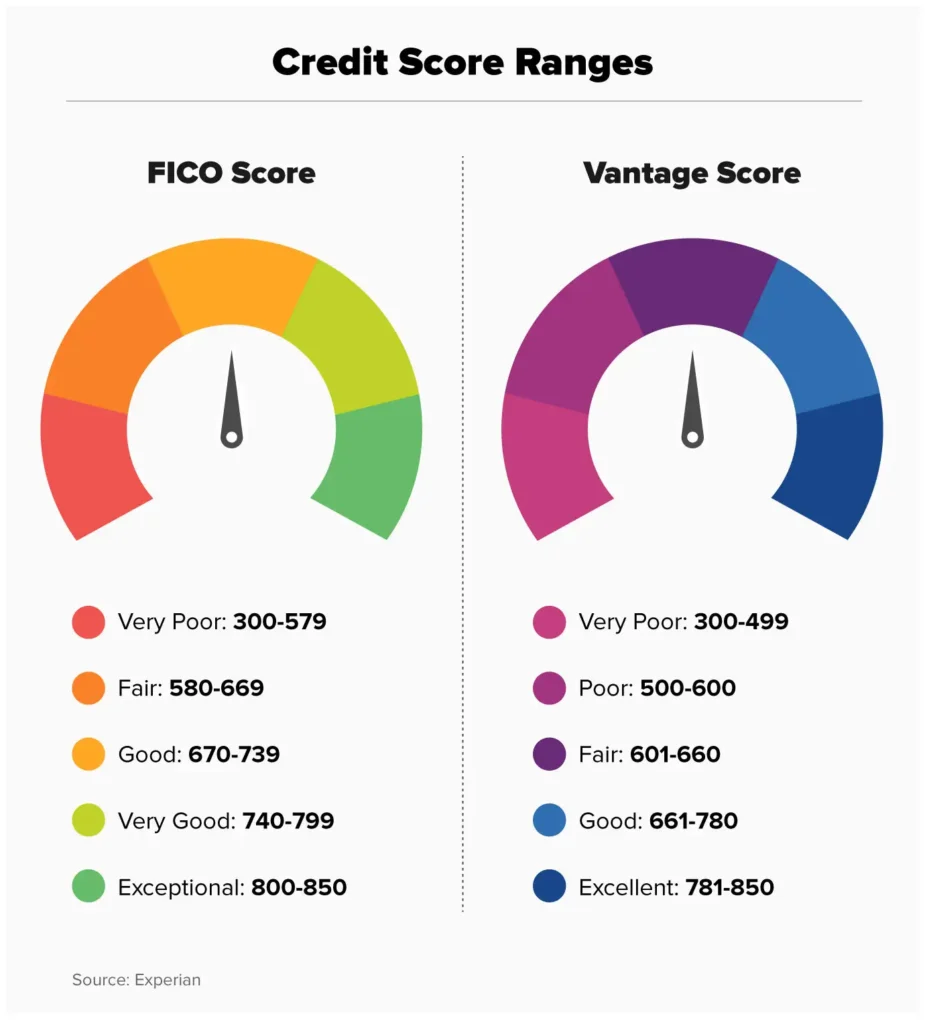
The UAE does not use FICO or the credit bureaus familiar to US or UK residents. Instead, the entire market runs on a single national bureau: the Al Etihad Credit Bureau (AECB), a federal government-owned company that has operated as the UAE’s official credit reporting system since 2014.
AECB pulls data from banks, finance and takaful (Islamic insurance) companies, telecom operators, utility providers, courts, and select government entities to build a rolling financial history on every resident with a bank account, mobile line, or credit facility. That history is compressed into two related products:
- Credit Report – the full paper trail: active and closed credit cards, loans, payment timeliness, credit limits, utilization, bounced cheques, and credit inquiries.
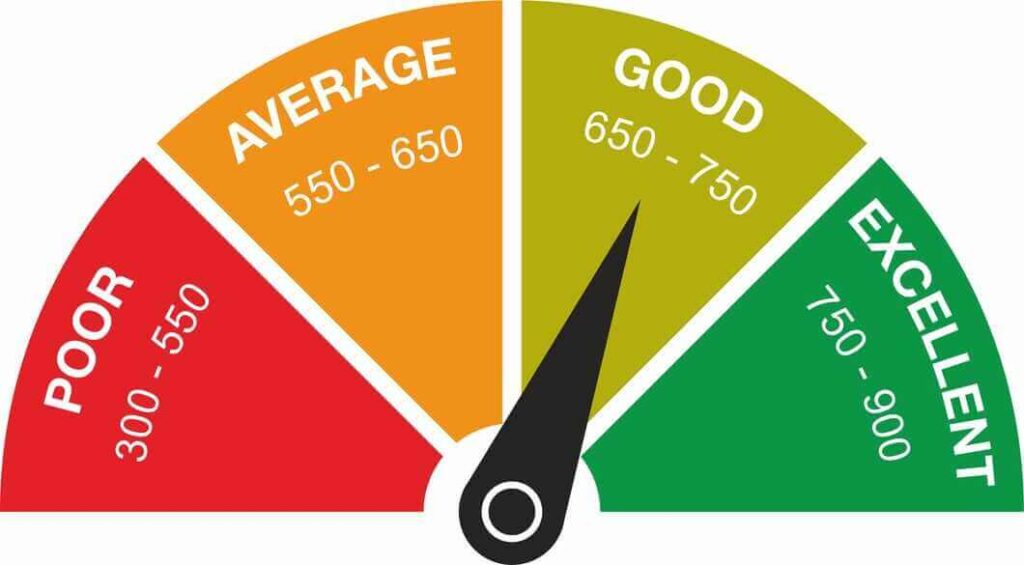
- Credit Score – a single number, from 300 to 900, that summarizes the report into one risk indicator lenders can act on quickly.
Banks, telecom providers, and even some landlords in the UAE lean on this score as their primary trust signal – it’s the closest thing the country has to a universal financial reputation score.
Credit Score vs. Credit Report: What’s the Difference?
| Credit Score | Credit Report | |
|---|---|---|
| Format | Single number (300–900) | Multi-page document |
| Shows | Overall risk summary | Every account, payment, and inquiry |
| Best for | Quick eligibility check | Spotting errors, understanding why the score is what it is |
| Typical cost | Lower (score-only options are cheaper) | Higher (full report costs more) |
| Update frequency | Monthly, as new data is reported | Monthly, as new data is reported |
Most people applying for a credit card only need the score. Anyone disputing a rejection, applying for a mortgage, or trying to fix an error should pull the full report.
How to Do a Credit Card Score Check in the UAE (Step by Step)
There are four official, government-recognized ways to check your credit score. All of them ultimately draw from the same AECB database, so the number will match regardless of which channel you use.
1. The AECB Website or Mobile App (Most Common)
- Go to the official AECB website or download the AECB app (iOS or Android).
- Register or log in using your Emirates ID number and a registered mobile number.
- Complete identity verification – this may include an OTP sent to your registered mobile number or a scan of your Emirates ID.
- Choose whether you want the Credit Score only, the Credit Report only, or both together.
- Pay the applicable fee through the app or website.
- View your score instantly, or download/email the full report as a PDF.
2. UAE PASS
UAE PASS is the country’s national digital identity app, and it has a direct integration with AECB:
- Open the UAE PASS app and tap Services.
- Select Al Etihad Credit Bureau.
- Authenticate with your UAE PASS PIN or biometric login.
- On first use, grant AECB permission to share your credit data with the app.
- Tap View Credit Score to see your number and a short summary of what’s influencing it.
This route is popular because it skips a separate AECB account registration entirely.
3. Your Bank’s Mobile App
A growing number of UAE banks – including Emirates NBD, ADCB, ADIB, and Mashreq – embed a free or discounted AECB score widget directly inside their own mobile banking apps. If you’re already a customer, check your bank’s app under a section usually labeled “Credit Score,” “AECB Score,” or “Financial Health” before paying for a standalone check.
4. In Person at an AECB Customer Service Centre
For residents who prefer an in-person process, or who are correcting a report and need to submit physical documents, AECB operates customer service centres in Dubai and Abu Dhabi. Bring:
- Original, valid Emirates ID
- Passport copy (for some services)
- Payment method (cash, card, or eDirham)
A Quick Note on Cost
AECB pricing has changed multiple times since the bureau launched and is periodically adjusted, with app-based purchases typically discounted compared to in-branch requests, and a combined score-plus-report bundle usually cheaper than buying each separately. Because these fees are revised from time to time, always confirm the current price on the official AECB website or app before paying – don’t rely on a fee you saw in an older article, including this one.
Understanding Your AECB Score Bands
A number on its own doesn’t tell you much. What matters is which band it falls into, because that’s what a loan officer or credit card underwriter is trained to look for.
| Score Range | Rating | What It Signals to Lenders |
|---|---|---|
| 746 – 900 | Excellent | Very low default risk; fastest approvals, best rates, highest limits |
| 711 – 745 | Very Good | Low risk; strong approval odds with competitive terms |
| 651 – 710 | Good | Moderate risk; generally approved, may see standard (not premium) terms |
| 541 – 650 | Fair | Higher risk; approval possible but with more scrutiny, lower limits, or added conditions |
| 300 – 540 | Poor | High risk; applications are frequently declined or require additional guarantees |
As a rule of thumb, most UAE banks treat a score in the high 600s to low 700s and above as “good enough” to move a credit card or personal loan application forward smoothly. Anything comfortably above 700 tends to unlock the more competitive interest rates and premium card tiers.
What Actually Affects Your Credit Score
AECB doesn’t publish its exact scoring formula, but based on consumer education materials from the bureau and UAE banks, the following factors carry the most weight, roughly in order of importance:
1. Payment History
This is consistently cited as the single biggest factor. Every late payment, missed installment, or bounced cheque gets reported and can pull your score down – sometimes significantly, even from an otherwise strong profile.
2. Outstanding Debt and Credit Utilization
How much you currently owe relative to your total available credit matters almost as much as payment history. Running your credit cards close to their limit, even if you pay on time, signals higher risk than keeping balances low relative to your limits.
3. Number of Active Credit Facilities
Holding several open credit cards and loans simultaneously – especially if some are underused or forgotten – can weigh on your score. It’s not just about having credit; it’s about how much of it is active and how it’s managed.
4. Length and Consistency of Credit History
A longer track record of responsibly managed accounts generally supports a higher score than a thin, brand-new credit file.
5. Recent Credit Inquiries
Every time you formally apply for a credit card or loan, the lender’s request registers as a “hard inquiry,” which can cause a small, temporary dip. Applying for multiple products in a short window compounds this effect.
6. Bounced Cheques
The UAE places particular weight on bounced or returned cheques – including for rent, utilities, or service charges, not just loan repayments – because of their historical link to serious financial and even legal consequences locally.
What Does Not Affect Your AECB Score
It’s worth clearing up common confusion: your salary, job title, marital status, education level, and medical history are not used to calculate your AECB score. Only your payment and credit behavior feeds the number – though your income and employer stability are separately assessed by banks alongside the score during an actual application.
Does Checking Your Own Score Lower It? (Soft vs. Hard Inquiries)
No – and this is one of the most persistent myths around credit checks in the UAE. There are two types of inquiries:
- Soft inquiry – when you check your own score through AECB, UAE PASS, or a bank’s built-in widget. This has no effect on your score, no matter how often you do it.
- Hard inquiry – when a bank or finance company checks your score because you formally applied for a credit product. This can cause a small, temporary dip, which is why it’s wise to space out credit applications rather than apply to several banks at once.
How to Improve a Low Credit Card Score
If your score check comes back lower than you’d hoped, the fix is rarely instant, but it is straightforward:
- Pay every bill on or before the due date – credit cards, loans, and even utility and telecom bills where relevant.
- Never let a cheque bounce. Keep sufficient balance in any account tied to post-dated or security cheques.
- Lower your credit utilization. Paying down card balances so you’re using a smaller share of your available limit tends to help more, and faster, than most people expect.
- Resist closing old cards. A long-standing card with a clean history and low usage is usually better left open than closed, since closing it can shorten your credit history and push up your utilization ratio on remaining cards.
- Space out new applications. Apply for one credit product at a time rather than several banks in the same month.
- Give it time. AECB data typically refreshes monthly, so a change you make today won’t show up in your score immediately – expect a lag of a few weeks to a couple of months before it’s reflected.
How to Correct an Error on Your Credit Report
If your report shows a payment, account, or cheque that isn’t yours or is recorded incorrectly, AECB has a formal correction process:
- Gather supporting evidence – bank statements, closure letters, or other documentation proving the entry is wrong.
- Submit a Data Correction Request through the AECB website or app, specifying exactly which entry you’re disputing.
- Attach all required documents. Incomplete submissions are typically rejected outright, so double-check the form before sending.
- Wait for a response. Under UAE Central Bank regulation, the data provider (usually the bank or company that reported the error) is required to respond to a correction request within 10 working days.
- Recheck your report once you’ve been notified the correction was processed, to confirm it’s reflected.
Credit Score and Credit Cards: How the Two Connect
Your AECB score doesn’t just decide whether you get approved for a credit card – it shapes the entire offer:
- Approval speed – higher scores are processed faster, often with fewer supporting documents requested.
- Credit limit – a stronger score typically supports a higher starting limit.
- Interest or profit rate – premium scores tend to unlock more competitive APRs on both conventional and Islamic (Sharia-compliant) cards.
- Card tier eligibility – entry-level cards are more forgiving of a mid-range score; premium and metal cards generally expect a score well into the “Good” band or higher.
- Add-on approvals – supplementary cards for family members can also be influenced by the primary cardholder’s score and repayment record.
Common Mistakes to Avoid
- Assuming your salary determines your score. It doesn’t – your repayment behavior does.
- Applying to multiple banks at once “to see who approves me.” Each hard inquiry stacks and can temporarily drag your score down.
- Ignoring small bills. A forgotten telecom or utility payment can be just as damaging as a missed loan installment.
- Closing old credit cards to “clean up.” This can backfire by shortening your credit history and raising your utilization ratio.
- Paying off debt and expecting an instant score jump. Updates flow through on AECB’s monthly reporting cycle, not in real time.
FAQs
1. How can I check my credit card score in the UAE?
You can check it through the official AECB website or mobile app, via UAE PASS, through participating bank apps, or in person at an AECB customer service centre using your Emirates ID.
2. Is checking my own credit score free in the UAE?
Not on AECB’s own channels – a fee applies whether you request the score alone or with the full report. Some banks offer a discounted or bundled score check within their own apps, so it’s worth checking your bank first.
3. What is a good credit score in the UAE?
Most lenders treat scores from roughly 651–710 as “Good” and anything above 711 as “Very Good” to “Excellent.” Scores below 650 may face more scrutiny or reduced offers.
4. Does checking my own credit score lower it?
No. Checking your own score is a soft inquiry and has zero impact. Only a lender’s hard inquiry, triggered by an actual application, can cause a small temporary dip.
5. How long does it take to improve a credit score in the UAE?
There’s no fixed timeline, but since AECB data refreshes monthly, expect any positive change in behavior to take at least a few weeks to a couple of months to show up in your score.
6. Can I check my credit score without an Emirates ID?
No. Emirates ID is the core identity credential AECB uses to match you to your credit file across every official channel.
7. Does my salary affect my AECB credit score?
No, your salary itself isn’t part of the score calculation. It’s assessed separately by banks alongside your score when you apply for a product.
8. What is the difference between a credit score and a credit report in the UAE?
The score is a single 300–900 number summarizing your risk; the report is the full underlying document showing every account, payment, and inquiry that produced that number.
9. Can bounced cheques really affect my credit card score?
Yes – bounced or returned cheques, including for rent or utilities, are treated as a significant negative factor in the UAE, not just missed loan or card payments.
10. How often is my AECB credit score updated?
Typically on a monthly cycle, as banks, telecoms, and other data providers report fresh information to the bureau.
11. Can I get my credit report corrected if there’s a mistake?
Yes. You can file a Data Correction Request with supporting documents through AECB, and the reporting institution is required to respond within 10 working days under UAE Central Bank rules.
12. Do landlords check credit scores in the UAE?
Some landlords and property managers do request an AECB credit report as part of tenant screening, particularly for higher-value rentals, though it isn’t a universal requirement across the market.
Conclusion
A credit card score check in the UAE takes only a few minutes through AECB, UAE PASS, or your own bank’s app – but understanding what that number means, what moves it, and how to fix a mistake in it is what actually protects your next application. Treat your AECB score the way you’d treat any other financial fundamental: check it before you need it, not after a rejection forces the question.

Sara is a UAE-based banking and accounting expert with over 4 years of professional experience in the financial sector. Her expertise spans retail banking, financial reporting, compliance, and practical money management topics relevant to individuals and businesses in the UAE.
She contributes clear, accurate, and well-researched financial content, simplifying complex banking and accounting concepts for everyday readers. Sara’s writing reflects strong industry knowledge, regulatory awareness, and a commitment to financial accuracy and transparency.