How to Get CIF Number in UAE: Complete Step-by-Step Guide (2026)
To get a CIF number in the UAE, open a bank account: the bank creates your Customer Information File automatically and assigns the number. If you already bank there, find it in your mobile app profile, on your statement, in your chequebook, or by contacting customer care or your branch with your Emirates ID.
What is CIF Number in UAE

You are setting up online banking, applying for a loan, or filling in a bank form, and suddenly you see a field asking for your “CIF number.” Many people in the UAE have never heard the term, yet almost every bank uses it behind the scenes.
If you want to know how to get a CIF number in UAE, the short version is that you do not apply for it separately. The bank issues it the moment you become a customer. The real challenge is finding it later, and keeping it safe once you have it.
This guide covers both sides. You will learn what a CIF number is, how it is created, where to find it at major UAE banks, how it differs from your account number and IBAN, and how to protect it from scammers. Whether you are a new resident opening your first account or a long-time customer who lost track of your details, everything you need is below.
What Is a CIF Number?
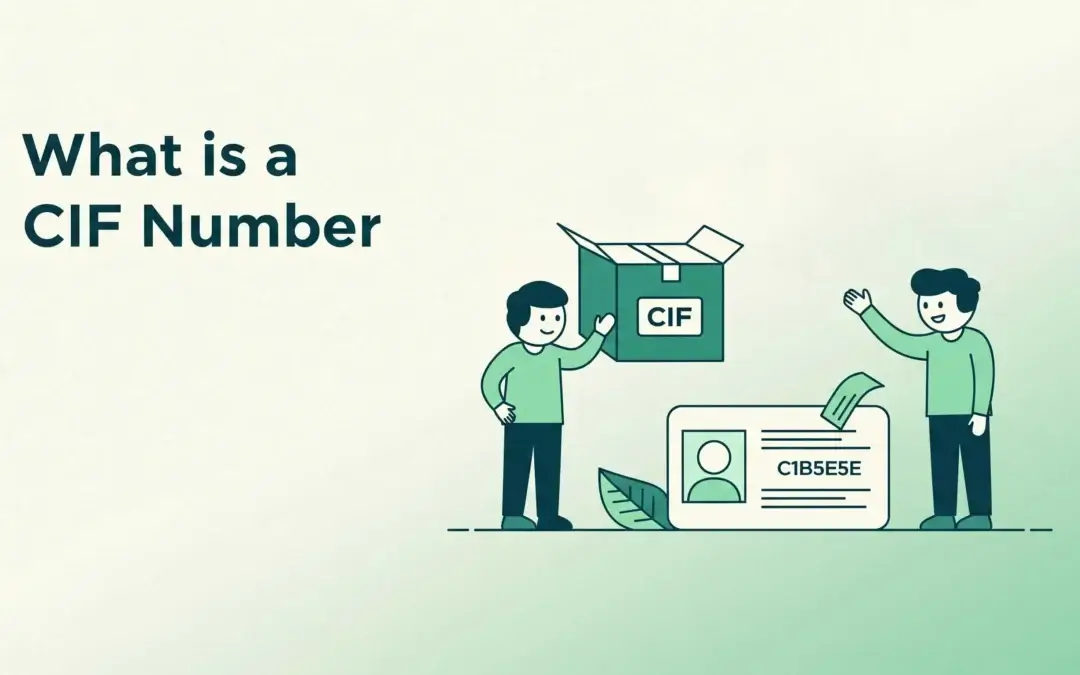
CIF stands for Customer Information File. It is a unique number that a bank assigns to you as a customer. Think of it as the bank’s internal reference for your entire profile: your personal details, your accounts, your cards, your loans, and your relationship history with that bank.
Guides across the UAE market commonly describe it as an eight-digit number. However, the exact format varies by institution, so treat “eight digits” as a common pattern rather than a rule.
Two points matter most:
- It belongs to one bank. Each bank creates its own CIF numbers. Your Emirates NBD CIF will not work at Mashreq, and the reverse is also true.
- It links everything together. If you hold a current account, a savings account, and a credit card at the same bank, they typically sit under a single CIF number.
This is why the number works like a master key for your profile inside that bank.
How Do You Actually Get a CIF Number in the UAE?
Here is the part most guides skip. Since the number is generated by the bank, “getting” a CIF number really means one of two things.
Scenario 1: You are a new customer
You receive a CIF number automatically when you open your first product with a bank. The process usually looks like this:
- Choose a bank and account type. Compare current accounts, salary accounts, or Islamic accounts based on fees and minimum balance.
- Submit your documents. Banks typically ask for your Emirates ID, passport, residence visa, and proof of income or address. Requirements differ by bank and by account type, so check before you visit.
- Complete KYC checks. “Know Your Customer” verification is a regulatory requirement. The bank confirms who you are before creating your profile.
- Bank creates your customer file. At this point the system generates your CIF number and links your new account to it.
- Receive your details. Your welcome message, account documents, or first statement will normally carry the number, although some banks show it only in the app or online banking.
If you later open a credit card or a loan at the same bank, the bank attaches it to your existing CIF number rather than creating a new one.
Scenario 2: You are already a customer
Then you already have a CIF number. You only need to retrieve it, and the next section shows how.
Personal and business customers
Businesses also receive customer numbers when they open a corporate account. If you run a company, expect the business profile to be separate from your personal one, even at the same bank. Confirm with your relationship manager which number a specific form is asking for.
How to Find Your CIF Number: Six Reliable Methods
Because every bank designs its own systems, the exact screens differ. Still, these methods work in most cases.
1. Mobile banking app or online banking
Log in and check your profile, account details, or “my information” area. Many banks display the customer number there. This is usually the fastest option.
2. Bank statements
Open the first page of a recent e-statement or paper statement. Banks often print the customer number near your name and address.
3. Chequebook or passbook
Some banks print the number on the first page of the chequebook. Check the section that lists your name and account number.
4. Welcome letter or registered email and SMS
Your onboarding message may contain it. Search your inbox for the bank’s name plus “customer number” or “CIF.” At least one UAE bank, Al Salam Bank, states that existing customers can request their CIF through its app by entering their ID card number, after which it is sent to the registered mobile number.
5. Customer care
Call the number printed on the back of your card. Expect security questions, since the agent must verify your identity first. Never give your details to someone who called you.
6. Branch visit
Bring your Emirates ID and, if possible, your debit card. A staff member can confirm the number after identity verification.
A note for Jebel Ali and Dubai Metro commuters: if you live or work along the Red Line near Jebel Ali, a branch visit is easy to combine with your commute, since the Dubai Metro links the area to many banking hubs along Sheikh Zayed Road. Confirm the branch address and working hours on the bank’s official website before travelling.
Bank-by-Bank Guide: Where to Look
The table below gives a practical starting point. Always confirm on your bank’s official channels, because apps and processes change often.
| Bank | Where to look first | Useful detail |
|---|---|---|
| Emirates NBD | Statement, online banking, app, or customer service on 600 54 0000 | The bank’s own online banking help says the e-statement password is your primary CIF ID, which it describes as the middle eight digits of your account number |
| Emirates Islamic | E-statements or printed statements | Widely reported as the simplest method |
| Dubai Islamic Bank (DIB) | Registered email, statements, app | Some guides report that DIB emails the number to your registered address; verify with the bank |
| Al Salam Bank | Bank app, existing customer login with ID card number | The bank states the CIF is sent to your registered mobile number |
| FAB, ADCB, Mashreq and others | App profile, statements, customer care | Processes differ, so use the general methods above |
Important: The Emirates NBD account-number pattern is specific to that bank. Do not assume you can extract a CIF from the account number at other banks.
CIF Number vs Account Number vs IBAN vs Emirates ID
Confusion between these identifiers causes many failed transfers and rejected forms. Here is how they differ.
| Identifier | What it identifies | Who uses it |
|---|---|---|
| CIF number | You, as a customer of one bank | Bank systems, support, some online banking steps |
| Account number | A single account | Payments and deposits |
| IBAN | An account in an international standard format | Transfers, salary setup, remittances |
| Emirates ID number | You, as a UAE resident | Government and regulated services, KYC |
In practice, one CIF number can sit above several account numbers. So if a form asks for your CIF and you type your IBAN, it will usually be rejected.
Why Your CIF Number Matters
Once you have the number, here is where it typically comes into play.
- Activating digital banking. Some banks ask for it during app or online banking registration.
- Customer support. Quoting it can speed up identity checks and case handling.
- Loan and credit card applications. Banks use your customer file to review your existing relationship, so having your profile in order helps. If you are also working on your credit health, our credit score check guide for the UAE explains how AECB reports interact with your banking history.
- Certain forms and claims. Some bank forms, such as service requests, ask for the customer number as a reference.
- Fraud prevention. A single profile per customer helps banks monitor unusual activity across all your products.
Advantages and Disadvantages of the CIF System
Advantages
- One profile means faster service and fewer repeated document requests.
- The bank sees your full relationship, which can help with product eligibility.
- Centralised records make it easier to detect fraud and errors.
Disadvantages
- A compromised profile can expose everything linked to it.
- Number formats differ across banks, which confuses customers.
- Retrieval steps are not standardised, so you may need to contact the bank.
Common Mistakes to Avoid
- Confusing the CIF with the account number or IBAN. They serve different purposes.
- Assuming it works at another bank. It never does.
- Sharing it casually. Treat it as sensitive banking information.
- Keeping outdated contact details. If your phone or email is old, you may not receive the number or verification messages.
- Panicking when the digits do not match a guide. Formats vary, so rely on your own bank.
- Searching for a “CIF generator.” No legitimate tool creates one. Only the bank issues it.
Can You Change Your CIF Number?
Generally, no. A customer number is a permanent internal record and is not something you can reset like a password. Some sources note that in exceptional situations, such as when duplicate profiles are merged, a bank may assign a new number. If you believe you have two profiles, ask the bank to review them.
How to Keep Your CIF Number Safe
A CIF number alone is not a password, but scammers use small details to build trust during phishing calls. Follow these habits:
- Do not share it in response to unsolicited calls, texts, WhatsApp messages, or emails, even if the caller sounds official.
- Never share OTPs, PINs, card details or passwords, whatever the reason given.
- Hang up and call back using the number printed on your card or on the bank’s official site.
- Use only official apps downloaded from trusted stores.
- Review statements regularly and report anything unfamiliar immediately.
- Update your contact details with the bank so alerts reach you.
The general rule is simple: banks may ask you to confirm details when you contact them, but you should be suspicious when someone contacts you and pushes for the number, especially with urgency.
Trends and Future Outlook
UAE banking is moving steadily toward digital onboarding, biometric verification, and Emirates ID-based identity checks. As a result, more customers open accounts through apps and see their profile details on-screen from day one. Over time, this should reduce the number of people who need to call customer care just to locate a basic identifier.
At the same time, fraud attempts are becoming more sophisticated, so expect banks to place more emphasis on caller verification and customer education. For you, the practical takeaway is to record your CIF in a secure place, such as a password manager, so you never need to hand it out in a hurry.
FAQs
1. What is a CIF number in UAE banks?
It is the Customer Information File number, a unique reference that a bank assigns to each customer to link their accounts, cards, loans, and personal details.
2. How can I get a CIF number in the UAE?
You get it automatically when you open your first account or product with a bank. You cannot apply for it separately.
3. How do I find my CIF number if I already have an account?
Check your mobile app or online banking profile, a recent statement, your chequebook, or contact customer care or your branch after identity verification.
4. Is the CIF number the same as my account number?
No. The account number identifies one account, while the CIF identifies you as a customer. One CIF can be linked to several accounts.
5. Is my CIF number the same as my IBAN?
No. The IBAN is an international format for an individual account, used mainly for transfers.
6. Can I use my CIF number at another bank?
No. Every bank issues its own numbers, so they are not transferable.
7. How many digits is a CIF number in the UAE?
Many guides describe eight digits, but the format depends on the bank. Check your own statement or app for the exact length.
8. What is the Emirates NBD CIF number, and where do I find it?
It is your customer ID at Emirates NBD. The bank’s online banking help says the e-statement password is your primary CIF ID, described as the middle eight digits of your account number. You can also call 600 54 0000.
9. Can I get a CIF number without visiting the bank?
If you are already a customer, usually yes, through the app, online banking, email statements, or a customer care call. New customers may complete onboarding digitally at some banks, depending on the product.
10. Is it safe to share my CIF number?
Share it only with your bank when you initiate contact. Do not give it to unsolicited callers or through unverified links.
11. Can my CIF number change?
Usually it stays the same for life. Rare exceptions, such as merged duplicate profiles, may lead to a new number.
12. Do businesses have a CIF number too?
Yes. Corporate customers are typically assigned their own customer number, separate from the owner’s personal profile. Confirm the correct number with your bank.
Conclusion
A CIF number is the quiet backbone of your relationship with a UAE bank. You do not apply for it. Your bank generates it when you open your first account, and it then follows you across every product at that institution. If you need it, check your app, statements, chequebook, or customer care, and bring your Emirates ID if you visit a branch.
Just as important, treat the number with care. Keep it out of unsolicited conversations, know how it differs from your account number and IBAN, and always verify who is asking. With those simple habits, you can handle forms, loans, and digital banking setup with confidence.

Sara is a UAE-based banking and accounting expert with over 4 years of professional experience in the financial sector. Her expertise spans retail banking, financial reporting, compliance, and practical money management topics relevant to individuals and businesses in the UAE.
She contributes clear, accurate, and well-researched financial content, simplifying complex banking and accounting concepts for everyday readers. Sara’s writing reflects strong industry knowledge, regulatory awareness, and a commitment to financial accuracy and transparency.