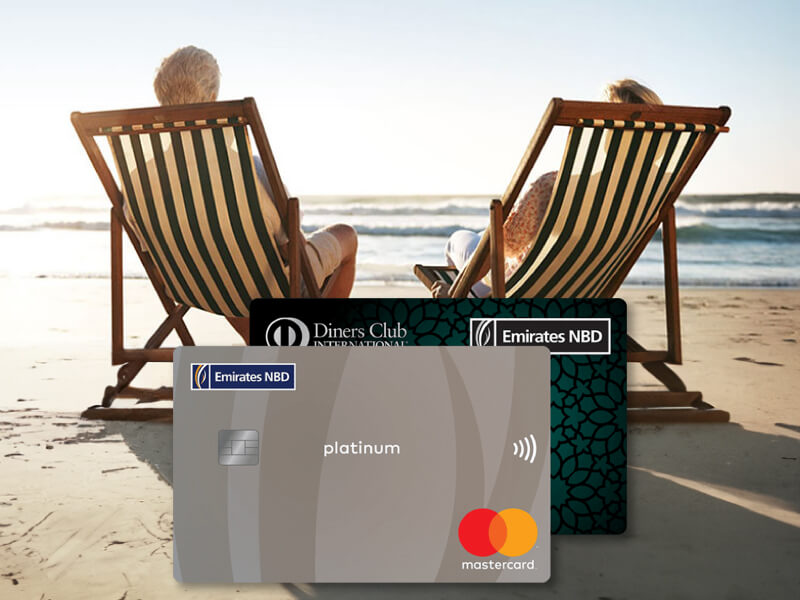
NBD LuLu Credit Card: The Complete 2026 Guide to Rewards, Fees and Eligibility
The NBD LuLu credit card is the Emirates NBD LuLu 247 Mastercard, a co-branded card that earns LuLu Points: up to 7% at LuLu stores, 4% on fuel and 2% on utility bills on the Platinum variant. It comes in Titanium and Platinum versions, and points are redeemable at over 70 LuLu stores across the UAE.
Most UAE households spend more at the supermarket than anywhere else. That is exactly the habit the NBD LuLu credit card is built around. Issued by Emirates NBD in partnership with LuLu Group, it turns the weekly grocery run, the petrol station stop and the monthly DEWA or SEWA bill into LuLu Points that you can spend back at LuLu.
But a high headline rate does not automatically make a card worth carrying. Fees, salary requirements, interest and the small print on redemption all decide whether you come out ahead. This guide walks through how the card works, what each variant offers, who should apply, who should skip it, and how to get the most from it.
What Is the NBD LuLu Credit Card?
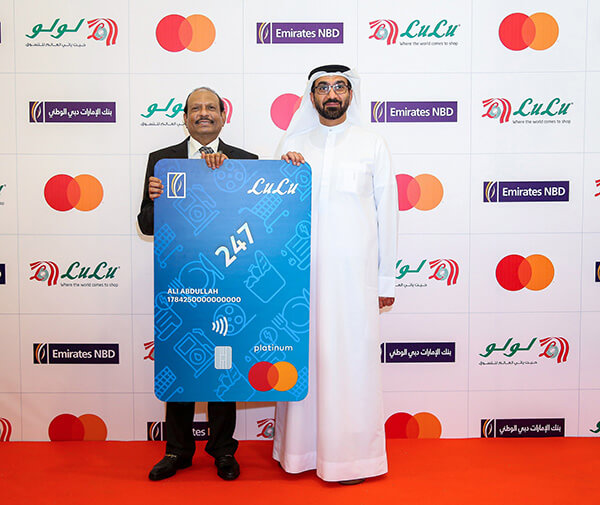
“NBD” is the shorthand many UAE residents still use for Emirates NBD. The bank was formed in 2007 through the merger of Emirates Bank International and the National Bank of Dubai, and the old initials stuck. When people search for an “NBD LuLu credit card,” they mean the Emirates NBD LuLu 247 Mastercard Credit Card.
The two companies launched the card on 11 December 2019. At the launch, LuLu Group chairman Yusuff Ali MA described it as a card for a large and cosmopolitan customer base, while Emirates NBD positioned it as a way to earn rewards on essential, everyday spending. The “247” in the name nods to the round-the-clock nature of household spending.
The card runs on the Mastercard network and comes in two tiers: Titanium (the entry level) and Platinum (the premium level). Both earn LuLu Points rather than cash or airline miles, which is the single most important thing to understand before applying.
How the LuLu Points Rewards Work
Rewards are paid as LuLu Points on eligible spending. According to Emirates NBD’s own product pages, the Platinum card pays up to 7% on LuLu in-store and online spending, up to 4% on fuel, up to 2% on utility bill payments and up to 0.7% on everything else. The Titanium card pays at half the grocery rate: up to 3.5% at LuLu, with lower rates on fuel and utilities.
Here is how the two compare on the earning side.
| Spend category | Platinum | Titanium |
|---|---|---|
| LuLu in-store and online | Up to 7% | Up to 3.5% |
| Fuel | Up to 4% | Up to 2% |
| Utility bills | Up to 2% | Up to 1% |
| Other spending | Up to 0.7% | Not published on the pages reviewed |
Two practical points follow from this. First, the rewards are tied to where you shop. A cardholder who buys groceries at Carrefour or Spinneys earns at the “other spending” rate, not the LuLu rate. Second, because the points come back as store credit rather than cash, the value only materialises if you genuinely shop at LuLu.
What are LuLu Points worth?
Points can be redeemed at more than 70 LuLu stores across the UAE. Comparison sites report a simple conversion of 1 LuLu Point to AED 1, but Emirates NBD’s pages do not state the rate in the sections reviewed, so confirm it in the bank’s rewards terms before you rely on it.
A realistic monthly example
Take a Platinum cardholder who spends AED 1,500 at LuLu, AED 600 on fuel, AED 400 on utility bills and AED 1,000 elsewhere each month. At the headline rates, that is roughly 105 points from LuLu, 24 from fuel, 8 from utilities and 7 from other spending, or about 144 points a month. Over a year, that is around 1,728 points. If a point is worth AED 1, the card returns more than six times its annual fee. Note that any monthly or annual caps in the terms would lower this figure.
A Titanium holder with the same spending would earn roughly half that on the three main categories, around 68 points a month before other spending is counted, but would pay no annual fee if the bank’s free-for-life positioning holds for their account.
Titanium vs Platinum: Which Variant Fits You?
The choice mostly comes down to salary and spending volume. Platinum earns double the rate but costs more and needs a higher income.
| Feature | LuLu 247 Platinum | LuLu 247 Titanium |
|---|---|---|
| Minimum monthly salary | AED 12,000 | AED 5,000 |
| Joining fee | AED 525 | Not published on the pages reviewed |
| Annual fee | AED 262.50 | Positioned as free for life |
| Interest on unpaid balances | 3.49% per month on the official page | 3.25% per month on the Abu Dhabi campaign page |
| Welcome bonus | Up to 500 LuLu Points | Welcome offer is a 0% balance transfer |
| Cinema offer | Buy one, get one free | Buy one, get one free at VOX (reported) |
| Airport lounge access | Listed on the Platinum page | Discontinued from 1 May 2025 |
The fee figures on the Platinum page look like AED 250 and AED 500 plus 5% VAT, which is a common way UAE banks display them. That is an inference rather than something the bank states, so treat the AED 262.50 and AED 525 figures as what you will see on your statement.
Who should choose Platinum
Platinum suits households that already spend a few thousand dirhams a month at LuLu and fill up regularly. The higher grocery and fuel rates are what pay for the annual fee. If your LuLu spend is small, the extra fee buys you very little.
Who should choose Titanium
Titanium suits people who qualify on a lower salary, want a card with no annual fee, and shop at LuLu occasionally rather than weekly. You give up half the earning rate in exchange for paying nothing to hold the card.
Fees and Charges You Need to Know
A rewards card is only as good as its cost structure. The main charges to keep in view are these.
The annual fee on Platinum is AED 262.50, with a joining fee of AED 525 on the bank’s page. Interest on unpaid balances is quoted at 3.49% per month on the Platinum page, which works out to roughly 41.9% a year when simply multiplied by twelve. Older comparison listings show 3.25% per month, so the rate has either changed or varies by listing. The minimum payment is 5% of the outstanding balance or AED 100, whichever is higher.
Third-party sources also list a cash advance fee of around 3% with a minimum near AED 99 to AED 104, a foreign-currency transaction fee of 1.99%, and monthly late-payment and over-limit fees in the range of AED 230 to AED 290. These come from comparison sites and may be out of date, so check the bank’s Key Facts Statement for current numbers.
The practical lesson is simple. At these interest rates, carrying a balance wipes out any rewards you earn within days. This card works for people who pay the statement in full every month.
Other Benefits Beyond Points
Points are the headline, but the card carries several smaller perks.
LuLu member privileges. Emirates NBD lists priority checkout, early access to sales and promotions, and free shipping on LuLu online orders among the benefits. Older comparison listings mention a minimum online spend of AED 300 for the free shipping, so read the current terms.
0% balance transfer. New cardholders can move balances from other cards at 0% interest with no processing fee. Comparison listings mention a six or twelve month window. This can be genuinely useful if you hold expensive debt elsewhere, but only if you clear the balance before the offer period ends.
Cinema offers. The Platinum card includes a buy-one-get-one-free offer on movie tickets. One comparison site reports it is limited to VOX Cinemas, applies up to three times a month and carries a minimum spend condition.
Airport lounge access. This is where the two cards diverge, and where the information online is least consistent. Emirates NBD’s Titanium page states that lounge access was discontinued from 1 May 2025. The Platinum page lists lounge access, but the wording differs between pages, referring to LoungeKey on one and Mastercard Travel Pass on another. Confirm the current programme and visit limits before you count lounges as a reason to apply.
Instalments and Credit Shield. The card supports Emirates NBD’s instalment plans and the optional Credit Shield Pro, a paid protection product. Treat Credit Shield as an add-on to evaluate separately, not as a reason to choose the card.
Eligibility and Documents
The bank states a minimum monthly salary of AED 12,000 for Platinum and AED 5,000 for Titanium. Some comparison sites quote AED 15,000 for Platinum, which appears to reflect an older requirement, so use the bank’s current figure and expect the credit assessment to matter as much as the salary line.
You will normally need your original Emirates ID with a copy, a passport copy and proof of income. Salaried applicants and self-employed applicants may be asked for different documents. Emirates NBD says you can apply for its credit cards without already holding an account with the bank, though existing customers often have a smoother process.
Before you apply, it helps to know where you stand with the Al Etihad Credit Bureau. A weak score or a high debt burden ratio is the most common reason a card application is declined. Our guide to checking your credit score in the UAE explains how to review your report first.
How to Apply, Step by Step
The route is straightforward. Start on the Emirates NBD website or the ENBD X app and choose the LuLu 247 card that matches your salary band. Submit your Emirates ID, passport copy and income documents. The bank runs its credit assessment, sets your limit and issues the card. Once it arrives, activate it through the app or online banking, and set up automatic full-balance payment so you never fall into interest by accident.
Pros and Cons
The card’s strengths are a high rate at a mainstream supermarket chain, solid fuel and utility earning for an everyday card, a free-for-life option at the entry level, and a 0% balance transfer offer for new customers.
Its weaknesses are the closed-loop nature of the rewards, since points are most useful at LuLu only, a low earning rate on general spending, high interest if you revolve a balance, and inconsistent published detail on lounge access and fees. If you rarely shop at LuLu, a general cashback card will probably serve you better.
Common Mistakes to Avoid
The most expensive mistake is carrying a balance. At roughly 3.25% to 3.49% a month, interest outpaces any reward in a matter of days. The second is chasing the 7% rate while spending nowhere near LuLu. The third is assuming the Platinum perks apply to Titanium, particularly the lounge access that has been withdrawn on the entry-level card. Finally, check whether the fuel and utility categories actually code correctly on your statement, since merchant category handling decides which rate you receive.
Expert Tips to Get More Value
Route your LuLu shopping, fuel and utility payments through the card, and keep everything else on whichever card pays best elsewhere. Track your points in the Emirates NBD app and redeem them regularly rather than letting a balance sit. Use the supplementary card for a spouse or family member, since comparison listings report that multiple supplementary cards are free, and the household’s combined LuLu spend then builds points on one account. Finally, treat the welcome balance transfer as a short, planned repayment tool and not as a loan.
How It Compares With Other UAE Supermarket Cards
The NBD LuLu card sits in a category of retailer-linked cards that trade flexibility for a higher rate at one store group. Its closest rivals are other co-branded grocery cards and general cashback cards. The deciding question is always the same: how much of your monthly budget goes to the sponsoring retailer? If more than a third of your household spending lands at LuLu, a co-branded card makes sense. If it is a small fraction, flat cashback usually wins.
Future Outlook
Co-branded cards in the UAE keep shifting their terms. Lounge access has already been withdrawn from the Titanium card, and fee and interest figures differ across sources. Expect Emirates NBD to keep adjusting benefits, so always read the live product page and the Key Facts Statement rather than relying on any single article, including this one.
FAQs
1. What is the NBD LuLu credit card?
It is the Emirates NBD LuLu 247 Mastercard, a co-branded card from Emirates NBD and LuLu Group that earns LuLu Points on everyday spending.
2. How much cashback does the LuLu 247 card give?
The Platinum card pays up to 7% on LuLu spending, 4% on fuel, 2% on utility bills and 0.7% on other purchases. The Titanium card pays up to 3.5% at LuLu. Rewards are paid as LuLu Points, not cash.
3. What is the minimum salary for the NBD LuLu credit card?
The bank lists AED 12,000 per month for Platinum and AED 5,000 for Titanium. Some comparison sites show higher older figures.
4. Is there an annual fee?
Platinum shows an annual fee of AED 262.50 and a joining fee of AED 525. Titanium is positioned as free for life.
5. Where can I redeem LuLu Points?
At over 70 LuLu stores across the UAE, according to Emirates NBD.
6. How much is one LuLu Point worth?
Comparison sites report AED 1 per point, but confirm the current rate in the bank’s rewards terms.
7. Does the card offer airport lounge access?
Titanium lounge access ended on 1 May 2025. Platinum lists lounge access, but check the current programme and conditions before relying on it.
8. What is the interest rate?
The Platinum page shows 3.49% per month. Older listings show 3.25%. Pay in full each month to avoid it.
9. Can I transfer a balance from another card?
Yes. New cardholders get a 0% balance transfer with no processing fee, for a limited period set by the bank.
10. Do I need an Emirates NBD account to apply?
No. The bank says you can apply for its credit cards without holding an account, though existing customers may find approval easier.
11. Is the Platinum card worth it over Titanium?
It pays off when you spend heavily at LuLu and on fuel. At low LuLu spending, the extra annual fee is hard to recover.
12. Can I add a family member?
Yes. Supplementary cards are available, and comparison listings report that multiple supplementary cards carry no fee.
Conclusion
The NBD LuLu credit card is a focused tool. If LuLu is where your household shops and you pay your statement in full, the Platinum card’s 7% rate and the Titanium card’s no-fee option can return real value on spending you were already doing. If your shopping is spread across several retailers, or you tend to carry a balance, the interest and the closed-loop rewards will work against you. Compare the two tiers against your actual monthly spending, read the current Key Facts Statement, and apply for the one that fits.

Sara is a UAE-based banking and accounting expert with over 4 years of professional experience in the financial sector. Her expertise spans retail banking, financial reporting, compliance, and practical money management topics relevant to individuals and businesses in the UAE.
She contributes clear, accurate, and well-researched financial content, simplifying complex banking and accounting concepts for everyday readers. Sara’s writing reflects strong industry knowledge, regulatory awareness, and a commitment to financial accuracy and transparency.