Emirates Road E611 Guide 2026: Route, Speed Limits, Tolls, and Interchanges
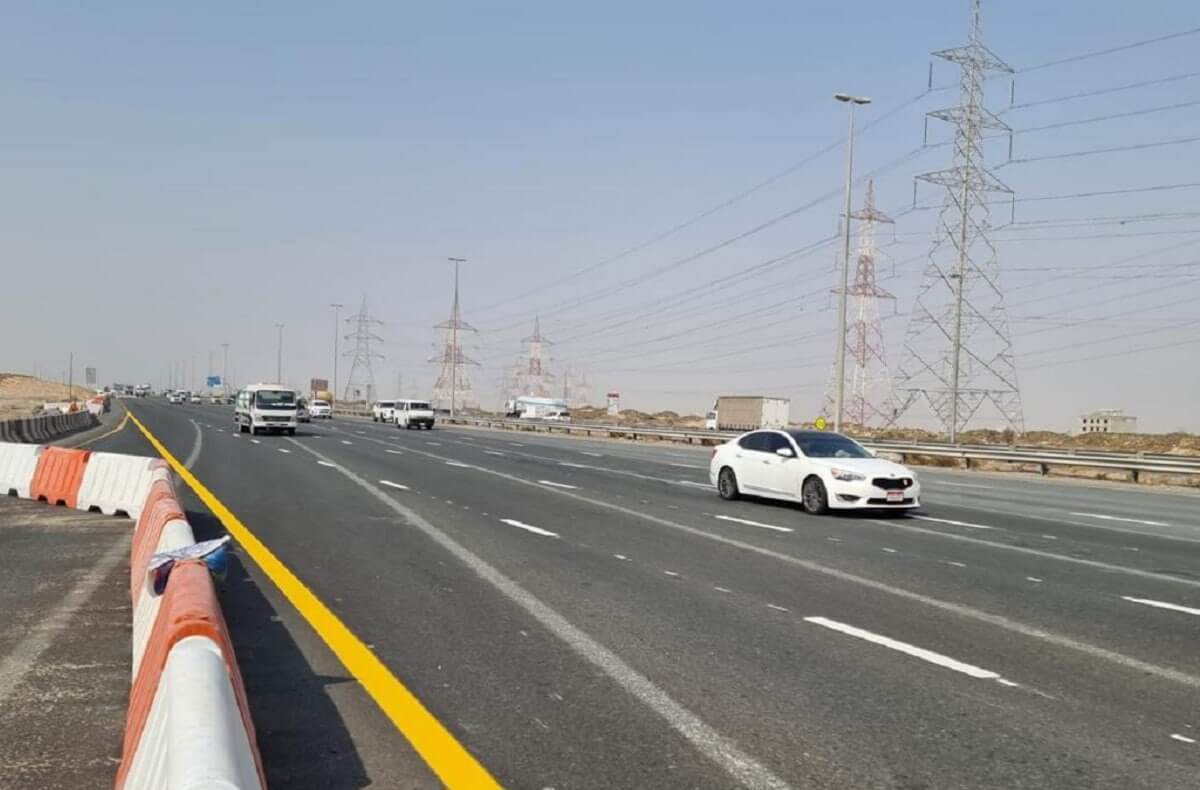
Emirates Road (E611) is a roughly 110-kilometre federal highway linking Abu Dhabi, Dubai, Sharjah, Ajman, Umm Al Quwain, and Ras Al Khaimah. It bypasses central Dubai and Sharjah, has a 110 km/h speed limit, carries no Salik toll gates, and is undergoing a 2026 RTA widening project adding lanes near the Sharjah border.
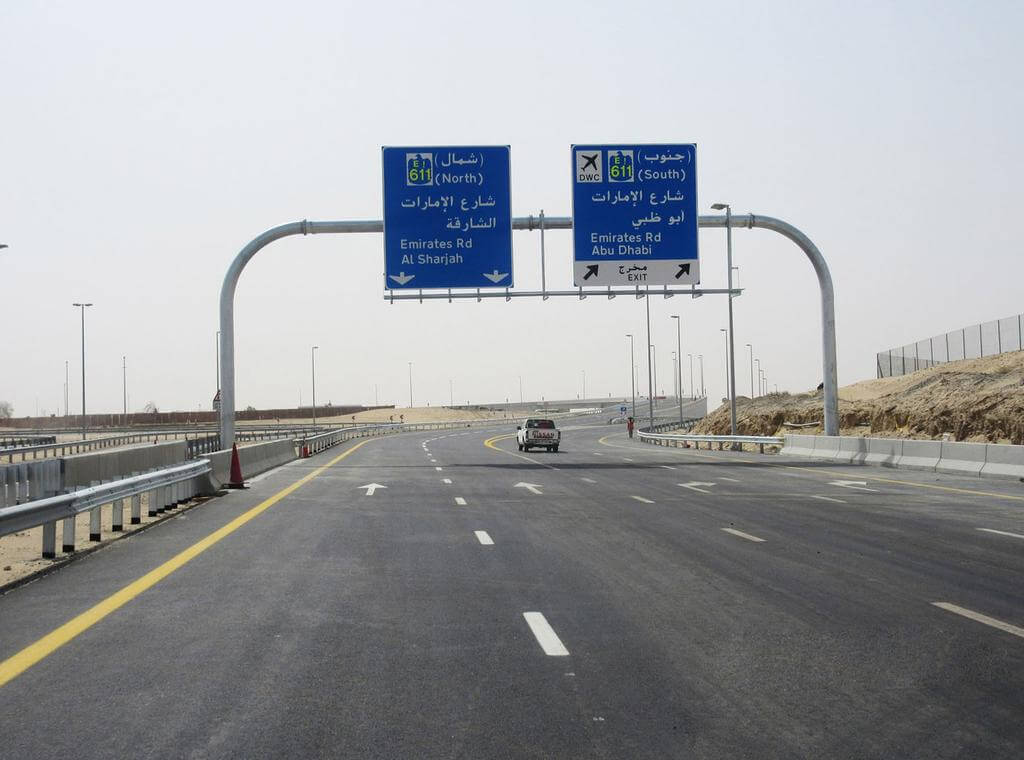
Few roads shape daily life in the UAE quite like Emirates Road. Officially numbered E611, this highway is the backbone that lets commuters, freight operators, and weekend travelers move between six emirates without ever touching the traffic lights of Downtown Dubai or old Sharjah. If you drive between Dubai South, Academic City, Sharjah’s industrial belt, or the northern emirates, you have almost certainly used it – whether you knew its official name or not.
This guide covers everything a driver, logistics planner, or new resident needs to know about Emirates Road E611 in 2026: its exact route, current speed limits and radar rules, truck ban timings, toll status, ongoing RTA upgrade works, and the landmarks and communities it connects. It is written to be the single most complete, up-to-date resource on the topic – going beyond the basic route descriptions found on most other guides to include live 2026 regulatory changes, RTA project timelines, and practical planning advice.
What Is Emirates Road (E611)?
Emirates Road is a federal highway that functions as the UAE’s primary inter-emirate bypass corridor. The road was originally called Dubai Bypass Road but was renamed Emirates Road (E611) in 2013 as part of the unified UAE road-numbering system, where “E” denotes an Emirates Route followed by its code.The renaming also reflected the road’s national reach, since it no longer served Dubai alone but linked six emirates together.
Emirates Road stretches roughly 110 kilometres, starting near Al Falah in the desert hinterland of Abu Dhabi and running northeast through Dubai’s southern industrial districts, the inland parts of Sharjah, and on through Ajman and Umm Al Quwain before merging with E18 toward Ras Al Khaimah.Because it was purpose-built for long-distance and cargo traffic that would otherwise clog inner-city routes, it offers a smoother, safer ride than the older urban roads it bypasses.
E611 vs. E11 vs. E311: What’s the Difference?
Understanding Emirates Road means understanding its place in the wider UAE highway network. Emirates Road serves as an alternative bypass to the busy Sheikh Zayed Road (E11) and complements Sheikh Mohammed bin Zayed Road (E311). E611 is preferred for bypassing congested city areas, while E11 handles dense urban travel and E311 provides a key corridor for residential and freight traffic running parallel to it.
| Highway | Official Number | Primary Role | Character |
|---|---|---|---|
| Sheikh Zayed Road | E11 | Main urban artery through Downtown Dubai and Abu Dhabi | Dense, high-traffic, tolled |
| Sheikh Mohammed bin Zayed Road | E311 | Parallel inland corridor for residential and freight traffic | Moderate density, toll-free |
| Emirates Road | E611 | Outer bypass linking six emirates, favored by freight and inter-emirate commuters | Toll-free, long-distance |
This three-tier structure is why logistics planners and daily commuters alike treat E611 as the “release valve” for traffic that would otherwise overload Dubai’s and Sharjah’s inner roads.
The Full Route: Which Emirates Does E611 Connect?
Emirates Road connects Abu Dhabi with Dubai, Sharjah, and Ajman, starting near Al Fayah in Abu Dhabi’s region before travelling northeast and merging into highways that link near Ras Al Khaimah. Structurally, E611 links nearly all the major emirates in the country, running through the country’s major cities without stagnating inside central Dubai or Sharjah.
Within Dubai, the road passes close to major growth corridors and communities, including Dubai South, Jebel Ali, and Dubai Industrial City. E611 runs in proximity to Dubai South, Jebel Ali, and Dubai Industrial City (DIC) – some of the most vibrant commercial hubs in the UAE – and links with connecting routes such as E77 (the Jebel Ali–Lehbab Road) and E75. Further along its Dubai stretch, the highway also provides access points used by residents and visitors heading to International City, Academic City, Dubai Silicon Oasis, Global Village, and IMG Worlds of Adventure, making it as relevant to leisure travelers as it is to freight operators.
Why E611 Matters for Different Users
- Commuters: The road offers a faster, less congested route for daily travel across the emirates, sparing drivers from the inner-city bottlenecks of Dubai and Sharjah.
- Logistics operators: E611 is critical for freight movement, connecting industrial zones, distribution hubs, and ports across the country.
- Inter-emirate travelers: It enables smooth travel across multiple emirates, reducing inner-city congestion and overall travel time.
Emirates Road E611 Speed Limits (2026)
Speed compliance on E611 is a top search concern, and the rules differ slightly depending on which emirate you’re driving through.
According to the official 2026 update, the speed limit on Emirates Road is 110 km/h, enforced through smart AI-powered radar cameras positioned along the corridor. Emirates Road is officially designated as E611, a major federal highway connecting Dubai, Sharjah, Ajman, and other northern emirates, and it carries a minimum speed requirement in addition to its maximum limit – a rule aimed at keeping traffic flowing consistently on a road built for continuous, higher-speed travel.
Radar Buffer Differences by Emirate
One detail that trips up many drivers is that the “grace margin” above the posted limit is not uniform across the UAE. Dubai applies a 20 km/h radar margin, while Abu Dhabi enforces a strict zero-tolerance policy on Emirates Road in 2026. In practice, this means a driver doing 128 km/h on a Dubai-administered stretch may avoid a fine, while the same speed on an Abu Dhabi-administered stretch would trigger an immediate violation. Always assume the stricter standard applies near emirate boundaries, since signage and enforcement zones change without a clear physical marker.
| Emirate Segment | Posted Limit | Radar Buffer | Enforcement Style |
|---|---|---|---|
| Dubai stretch | 110 km/h | +20 km/h buffer | Standard smart radar |
| Abu Dhabi stretch | 110 km/h | Zero tolerance | Strict, no buffer |
| Sharjah / Ajman / UAQ stretch | 110 km/h | Follows federal norms | AI-powered radar |
Is There a Toll on Emirates Road? (Salik Status 2026)
This is one of the most searched questions about E611, and the answer is good news for regular users. Salik has continued to evaluate additional gate locations on key arterials including the Dubai–Al Ain Road and Emirates Road (E611), but as of 2026 no gates have been installed on E611.Emirates Road (E611) has zero Salik gates along its full length and connects Dubai South to the northern emirates, making it – alongside Al Khail Road and Sheikh Mohammed bin Zayed Road – one of the few major Dubai corridors that lets drivers cross the emirate without paying a single toll.Confirming this, Dubai Wheels’ 2026 guide states plainly that there are no Salik toll gates on Emirates Road.
For budget-conscious commuters, this makes E611 a genuinely toll-free alternative to Sheikh Zayed Road for long north-south journeys – though, as noted above, this comes at the cost of a longer, less central route.
Truck and Heavy Vehicle Restrictions on E611
Freight is central to E611’s purpose, but that also means it is subject to specific truck-movement rules designed to keep peak-hour traffic manageable for private vehicles.
Since January 1, 2025, trucks have been banned on Emirates Road between Al Awir Street and Sharjah from 5:30pm to 8pm, a decision made by the RTA and Dubai Police as part of a wider strategy to expand truck movement bans on key Dubai roads and reduce evening congestion. A Dubai Police official noted the restriction followed an extensive engineering and technical study balancing safety needs with freight requirements.
Sharjah applies its own seasonal restrictions, particularly during Ramadan. On Emirates Road, trucks are restricted from 6:30am to 10am, while vehicles travelling from Dubai toward Sharjah up to Intersection 7 face additional restrictions from 2pm to 8pm during Ramadan 2026. On the Al Hibab–Al Madam section of Emirates Road, heavy vehicle movement is prohibited in both directions between 6:30am and 10am, while Sheikh Mohammed bin Zayed Road carries a separate night-time restriction from midnight to 5:30am.
Practical takeaway for fleet operators: treat E611’s truck ban timings as two-layered – a standing Dubai-side evening restriction near Al Awir and Sharjah, plus additional seasonal Sharjah-side morning and afternoon windows during Ramadan. Always check current RTA and Sharjah Police bulletins before scheduling freight runs, since these windows are reviewed annually.
Emirates Road Upgrade and Expansion Projects (2026)
E611 is currently one of the most actively upgraded highways in the UAE, with multiple concurrent projects addressing both capacity and safety – a genuine 2026 differentiator most competing guides do not cover in depth.
Federal-Level Traffic Study
The Ministry of Energy and Infrastructure has appointed CDM Smith to lead a full traffic assessment and design program for the upgrade of Emirates Road, covering roughly 2.5 kilometres of the E88 corridor. The study is analyzing existing conditions, conducting traffic counts, assessing levels of service, and forecasting demand for horizon years 2029, 2034, 2039, and 2044, using SIDRA, SYNCHRO, and HCS modelling software. Recommended improvements include road widening, interchange upgrades, new links, and redesigned intersections, alongside stormwater drainage, lighting, and traffic safety works, structured across two main contracts to improve mobility between Sharjah, Dubai, and surrounding regions.
RTA Summer 2026 Lane Expansion
Dubai’s RTA launched a package of rapid traffic improvements at 28 locations across the emirate between July and September 2026, aimed at enhancing the road network, improving operational efficiency, and strengthening connectivity between residential, educational, and development areas. The Emirates Road expansion is the most prominent of these improvements, involving two new lanes added over a 5-kilometre stretch extending from Sharjah toward Al Omardi Street. The works are expected to increase road capacity, reduce waiting queues, and improve vehicle movement, with RTA projecting up to a 25% cut in peak-hour journey times along the widened stretch.
Latifa bint Hamdan Corridor: A New Feeder Route to E611
The RTA has awarded the contract for the Dh2-billion Latifa bint Hamdan Corridor Development Project, a 12-kilometre strategic corridor connecting Sheikh Zayed Road, Al Khail Road, Al Meydan Street, Sheikh Mohammed bin Zayed Road, Sheikh Zayed bin Hamdan Al Nahyan Street, and Emirates Road. Once completed by the end of 2028, the corridor is expected to cut travel time between Umm Al Sheif Street and Emirates Road from 33 minutes to just 15 minutes – a 54% reduction – while accommodating more than 130,000 trips daily and serving around 650,000 residents and visitors. Beyond travel-time savings, the RTA said the corridor will improve traffic safety through multi-level interchanges and support future urban expansion across Dubai.
The Bigger Picture: Long-Term Smart Road Plans
Authorities plan to further expand E611 with additional lanes, interchanges, and service roads to meet growing traffic demand, while integrating smart-road technologies such as AI-powered traffic management, real-time congestion updates, and infrastructure to support future autonomous vehicle operations. Combined, these projects signal that E611 is transitioning from a purely functional bypass into a technology-enabled backbone for the UAE’s next phase of urban and logistics growth.
| Project | Scope | Status (2026) | Expected Completion |
|---|---|---|---|
| CDM Smith federal traffic study | 2.5 km of E88 corridor near Badeea IC to E55 IC | Design and modelling phase | Multi-horizon planning to 2044 |
| RTA summer lane expansion | 5 km, two new lanes, Sharjah side to Al Omardi Street | Underway (Jul–Sep 2026) | 2026 |
| Latifa bint Hamdan Corridor | 12 km new corridor linking six major roads including E611 | Contract awarded | End of 2028 |
| Smart road / AI traffic systems | Corridor-wide | Planned, phased rollout | Multi-year |
Key Landmarks and Communities Near Emirates Road
Because E611 threads through Dubai’s fastest-growing residential and leisure zones before continuing north, it doubles as a practical access route for visitors, not just commuters. Communities and attractions near its Dubai stretch include Global Village, IMG Worlds of Adventure, International City, Dubai Silicon Oasis, and Dubai Academic City – all reachable via dedicated interchanges without needing to enter central Dubai traffic. These interchanges allow motorists easy access to commercial centres and tourist attractions, with Global Village and IMG Worlds of Adventure among the most frequently used exits.
For readers planning a Dubai visit rather than a daily commute, this makes Emirates Road a useful reference point when cross-referencing directions to Global Village or Business Bay-area attractions from northern-emirate accommodation.
Common Mistakes Drivers Make on E611
- Assuming a uniform radar buffer. As covered above, Dubai’s 20 km/h buffer does not apply once you cross into an Abu Dhabi-administered section – a frequent cause of unexpected fines.
- Ignoring seasonal truck-ban windows. Fleet schedules built around standing Dubai rules can still fall foul of Sharjah’s additional Ramadan-specific restrictions.
- Underestimating roadwork zones. With the RTA’s summer 2026 lane expansion active near the Sharjah border, temporary lane closures and reduced limits are common; always check current RTA advisories before a freight-critical journey.
- Confusing E611 with E311. Both are toll-free, parallel, inter-emirate corridors, but they serve different traffic profiles – E611 leans toward freight and long-distance bypass traffic, while E311 carries more residential and mixed commuter traffic.
Future Outlook
Emirates Road’s trajectory over the next several years is defined by three converging trends: physical widening (the current summer 2026 lane additions and the CDM Smith-led federal study), new feeder infrastructure (the Latifa bint Hamdan Corridor, due 2028), and digital modernization (AI-powered traffic management and autonomous-vehicle-ready systems). For residents, investors, and logistics planners, this points to a highway that will carry an increasing share of the UAE’s inter-emirate traffic over the coming decade, reinforcing its role as the country’s primary freight and bypass artery.
FAQs
1. What is Emirates Road officially called?
It is officially designated E611, a UAE federal highway, though it is widely known by its common name, Emirates Road.
2. How long is Emirates Road (E611)?
The highway runs approximately 110 kilometres, connecting Abu Dhabi, Dubai, Sharjah, Ajman, Umm Al Quwain, and Ras Al Khaimah.
3. What was Emirates Road called before 2013?
It was originally known as Dubai Bypass Road before being renamed Emirates Road (E611) in 2013 under the UAE’s unified road-numbering system.
4. What is the speed limit on Emirates Road in 2026?
The posted speed limit is 110 km/h, enforced by AI-powered smart radar cameras along the corridor.
5. Does Dubai’s 20 km/h radar buffer apply on the entire E611 route?
No. The 20 km/h buffer applies on Dubai-administered stretches, but Abu Dhabi enforces a strict zero-tolerance policy on its section of Emirates Road.
6. Are there Salik toll gates on Emirates Road?
No. As of 2026, Emirates Road has zero Salik toll gates along its full length, making it one of the few major toll-free corridors crossing Dubai.
7. Are trucks banned on Emirates Road?
Yes, in specific windows. A standing Dubai rule bans trucks between Al Awir Street and Sharjah from 5:30pm to 8pm, and Sharjah applies additional seasonal restrictions, particularly during Ramadan.
8. What roads does Emirates Road connect to?
It connects with Sheikh Zayed Road (E11), Sheikh Mohammed bin Zayed Road (E311), the Jebel Ali–Lehbab Road (E77), E75, and E18 toward Ras Al Khaimah, among others.
9. Is Emirates Road being expanded in 2026?
Yes. The RTA is adding two new lanes over a 5-kilometre stretch from the Sharjah side toward Al Omardi Street as part of a summer 2026 upgrade package, alongside a separate federal traffic study covering the E88 corridor section.
10. What is the Latifa bint Hamdan Corridor and how does it relate to E611?
It is a Dh2-billion, 12-kilometre road project connecting six major Dubai corridors, including Emirates Road, expected to cut travel times to E611 by 54% once complete by the end of 2028.
11. Why do drivers prefer Emirates Road over Sheikh Zayed Road?
E611 bypasses central Dubai and Sharjah entirely, offering a faster, less congested, and toll-free route for long-distance and inter-emirate travel, at the cost of being further from central business and tourism districts.
12. What attractions can I reach via Emirates Road?
Dedicated interchanges along E611 provide access to Global Village, IMG Worlds of Adventure, International City, Dubai Silicon Oasis, and Dubai Academic City, among other communities.
Conclusion
Emirates Road (E611) is far more than a bypass – it is the connective spine of the UAE’s inter-emirate transport and logistics network. From its origins as Dubai Bypass Road to its current status as a 110-kilometre, toll-free federal highway undergoing active widening, smart-technology integration, and a Dh2-billion feeder corridor project, E611 continues to evolve alongside the country’s growth. Whether you’re a daily commuter tracking radar rules, a fleet operator navigating truck-ban windows, or a visitor plotting a route to Global Village, understanding E611’s current regulations and ongoing upgrades is essential for smooth, compliant travel through 2026 and beyond.

Sara is a UAE-based banking and accounting expert with over 4 years of professional experience in the financial sector. Her expertise spans retail banking, financial reporting, compliance, and practical money management topics relevant to individuals and businesses in the UAE.
She contributes clear, accurate, and well-researched financial content, simplifying complex banking and accounting concepts for everyday readers. Sara’s writing reflects strong industry knowledge, regulatory awareness, and a commitment to financial accuracy and transparency.