
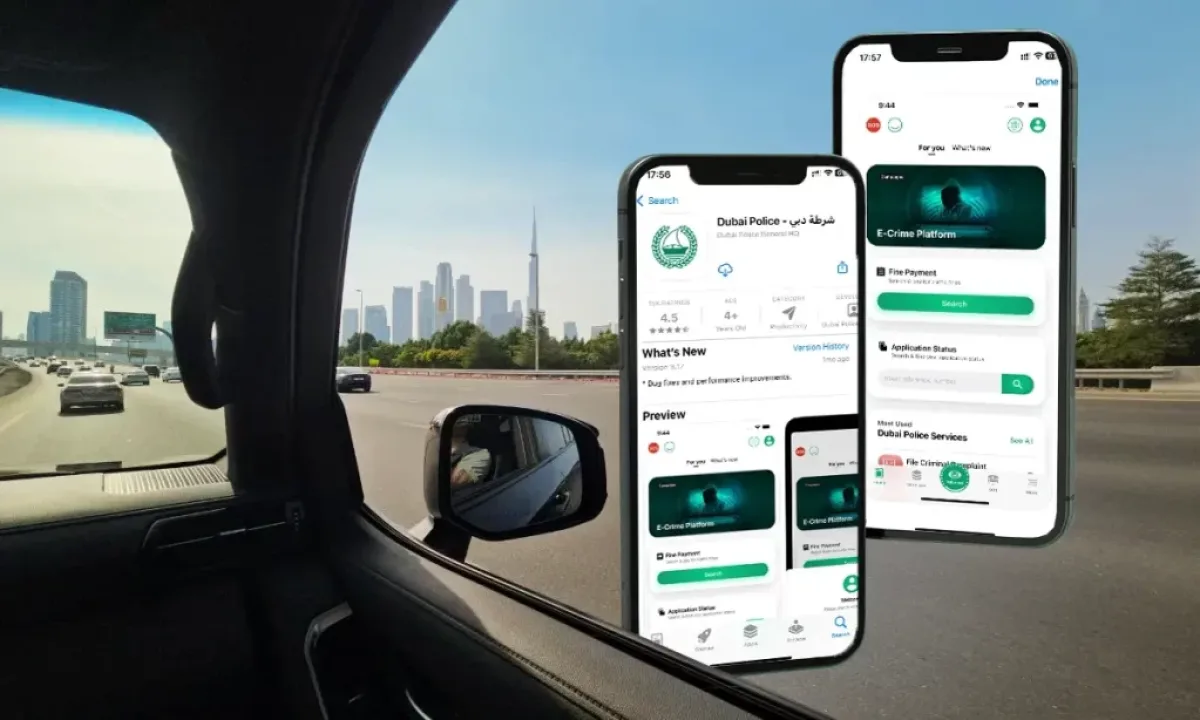
Dubai RTA Fines Guide 2026: Complete List, Black Points, Discounts & How to Pay
RTA fines in Dubai are penalties issued by the Roads and Transport Authority and Dubai Police for traffic violations, ranging from AED 200 for minor parking offenses to AED 3,000+ for serious violations like reckless driving. Drivers can check and pay fines via the RTA website, Dubai Drive app, or Dubai Police app using a plate number, traffic file number, or Emirates ID, with early-payment discounts of up to 35–50% available on eligible violations.
Getting a traffic fine notification in Dubai is never a pleasant surprise, but the city’s digital-first approach to RTA fines means checking, understanding, and settling a penalty takes only a few minutes once you know where to look. Whether you’re a resident navigating Sheikh Zayed Road every day or a visitor driving a rental car through Dubai Marina, understanding how the RTA fines system works – including black points, impoundment rules, and the discounts available for early payment – helps you stay compliant and avoid the compounding costs of an unpaid violation. This guide covers the complete, updated 2026 picture of RTA fines in Dubai, built around Federal Decree-Law No. 14 of 2024, the legislation that reshaped UAE traffic enforcement.
What Are RTA Fines in Dubai?
RTA fines are monetary penalties issued by Dubai’s Roads and Transport Authority for violations of the emirate’s traffic regulations. The RTA has overseen Dubai’s roads, public transport network, vehicle registration (Mulkiya), and driving licences since it was established in November 2005. Traffic enforcement itself is carried out jointly by the RTA and Dubai Police, who together operate the network of radar cameras, AI-powered monitoring systems, and smart checkpoints that catch the vast majority of violations automatically.
Since March 29, 2025, all traffic fines, black points, and penalties in Dubai — and across the rest of the UAE — have been governed by Federal Decree-Law No. 14 of 2024 on Traffic Regulation, which replaced the previous 1995 traffic law and was designed to keep pace with developments in the transport sector, including self-driving vehicles, electric cars, and personal mobility devices. This law remains the active legal framework for every fine issued in 2026, and it introduced some genuinely significant changes that older guides on this topic still haven’t caught up with — including criminal-level penalties for certain offenses and a lowered minimum driving age.
Why RTA Fines Matter Beyond the Cost
An unpaid RTA fine isn’t just a lingering debt. Outstanding fines block Mulkiya (vehicle registration) renewal, and once black points accumulate past a threshold, they trigger licence suspension regardless of whether the underlying fines have been paid. For residents renewing a UAE residence visa or leasing a new vehicle, a clean RTA record is often a practical prerequisite, which is why staying on top of fines matters as much for administrative reasons as financial ones.
Complete List of RTA and Dubai Police Traffic Fines (2026)
The table below reflects the fine structure enforced under Federal Decree-Law No. 14 of 2024 and the Dubai Police Traffic Violation Schedule. Amounts can be adjusted by RTA and Dubai Police through periodic circulars, so always verify the exact figure on the official RTA portal before paying.
| Violation | Fine (AED) | Black Points | Vehicle Impound |
|---|---|---|---|
| Speeding, under 20 km/h over limit | 300 | 0 | None |
| Speeding, 20–30 km/h over limit | 600 | 0 | None |
| Speeding, 30–40 km/h over limit | 700–1,000 | 0–4 | None |
| Speeding, 50–60 km/h over limit | 1,500 | 6 | 15 days |
| Speeding, 60–80 km/h over limit | 2,000 | 12 | 30 days |
| Speeding, 80+ km/h over limit | 3,000 | 23 | 60 days |
| Jumping a red light | 1,000 | 12 | 30 days |
| Using a mobile phone while driving | 800 | 4 | None |
| Not wearing a seatbelt (driver or passenger) | 400 | 4 | None |
| No child car seat (under 4 years old) | 400 | 0 | None |
| Child under 10 or under 145cm in front seat | 400 | 0 | None |
| Driving without a valid licence | 2,000 | 12 | 60 days |
| Reckless driving | 2,000 | 23 | 60 days |
| Dangerous overtaking | 1,000 | 12 | None |
| Failing to yield to emergency vehicles | 3,000 | 6 | 30 days |
| Illegal parking (general) | 200–1,000 | 0 | None |
| Parking in a spot for people of determination | 1,000 | 6 | None |
| Blocking traffic flow | 1,000 | 0 | None |
| Driving without insurance | 500 | 0 | None |
| Excessively noisy or modified exhaust | 500–2,000 | 4–12 | None |
| Salik toll violation (insufficient balance) | 50 per gate | 0 | None |
| Littering from a vehicle | 1,000 | 6 | None |
| Jaywalking on roads with 80+ km/h limit | Criminal offense | — | — |
| Drink driving (any detectable alcohol) | AED 20,000–100,000 | 23 | 60 days |
Fines and black points are cumulative within a rolling 12-month window, and this is where many drivers get caught out: a driver who accumulates several moderate violations in a single year can reach the suspension threshold faster than one serious infraction would.
What Changed Under Federal Decree-Law No. 14 of 2024
This law isn’t just a fine-amount update — it restructured how the UAE treats certain violations altogether. Several changes are worth understanding in detail because they affect how seriously a seemingly minor mistake can be treated:
- Jaywalking reclassified as a criminal offense. Anyone who crosses outside designated areas on roads with a speed limit of 80 kilometres per hour or more can face imprisonment for no less than three months and a fine of no less than AED 10,000, or one of these penalties. This is a marked escalation from the administrative fines that governed jaywalking previously.
- Driving under the influence carries near-maximum penalties. The UAE maintains a zero-tolerance policy on alcohol, with any detectable level treated as a criminal offense carrying steep fines, 23 black points, and 60-day vehicle impoundment.
- Fatal accidents carry mandatory minimum penalties. Anyone who causes the death of a person by mistake because of using a vehicle faces imprisonment and a fine of no less than AED 50,000, or one of these penalties, in addition to 24 traffic points — effectively an automatic licence suspension.
- Minimum driving age lowered to 17. Individuals can now apply for a driving licence at 17, a change from the previous minimum of 18, bringing the UAE closer to international norms.
- Emergency vehicle right-of-way enforced more strictly. Failing to yield to ambulances, police, or civil defense vehicles now carries fines of up to AED 3,000, six black points, and 30-day vehicle impoundment.
- Framework for self-driving and electric vehicles. The law introduces regulatory groundwork for autonomous vehicles and EVs, reflecting Dubai’s push toward smart mobility.
Understanding the Black Points System
Black points function as a separate penalty track that runs alongside monetary fines — paying off a fine never removes the associated black points from your licence. Each violation carries a specific point value, from 0 for very minor infractions up to 23 for serious offenses like reckless driving or extreme speeding, with 24 points reserved for the most severe cases such as causing a fatality.
Points remain active on a driver’s file for 12 months from the date of the violation before expiring. If a driver accumulates 24 or more points within that rolling 12-month period, their driving licence is suspended. For drivers aged 21 and over, a first suspension typically runs three months, though some drivers can pay a fee and complete a one-day rehabilitation course as an alternative to the full suspension period. Repeat suspensions within the same period escalate in length and, in extreme cases, can lead to permanent licence cancellation.
Because points and fines are tracked separately, it’s worth checking both numbers whenever you review your record — a driver could clear every outstanding fine and still be sitting dangerously close to the suspension threshold.
Early Payment Discounts: How Much You Can Save
Dubai’s discount structure rewards drivers who settle fines quickly, and the savings are substantial enough to make timing genuinely worth planning around. As of 2026, there is no single permanent discount program running at all times — instead, the RTA and Dubai Police periodically activate discount windows, supplemented by seasonal campaigns.
Standard early-payment windows:
- Paying within roughly 60 days of the violation typically unlocks a 35% discount on eligible fines.
- Waiting until closer to 90 days usually drops the discount to around 25%.
- After the discount window closes, the full fine amount becomes payable with no reduction.
Seasonal amnesty campaigns: During UAE National Day, Ramadan, and Eid, the RTA and Dubai Police have historically run special campaigns offering discounts of up to 50%, announced exclusively through official channels — never through third-party websites or social media promotions.
Important exclusions: Serious violations — including reckless driving, drink driving, and offenses that endanger life — are generally excluded from any discount program, regardless of when they’re paid. Discounts also apply only to the monetary fine; they never remove or reduce the black points attached to a violation.
Installment plans: For fines totaling AED 5,000 or more (AED 20,000+ for companies), Dubai Police offers interest-free installment plans through partner banks including Emirates NBD, Dubai Islamic Bank, ADCB, Mashreq, and FAB. These require an upfront payment of 25% of the total amount, with the balance spread across monthly installments — a useful option for drivers facing a stack of fines from a single serious incident rather than routine violations.
How to Check Your RTA Fines (7 Official Methods)
You never need to pay a fee simply to check whether you have outstanding fines — checking is always free through official channels.
- RTA Website (rta.ae / traffic.rta.ae): Navigate to the “Check Your Fines” service and enter your plate number, traffic file number (T.C. number from your Mulkiya), or Emirates ID.
- Dubai Drive App: RTA’s official mobile app combines fine checks with Salik balance, Nol card balance, vehicle registration status, and black points in a single dashboard. Sign in with UAE Pass for the fastest experience.
- Dubai Police Website/App: Best for violations issued directly by police (as opposed to camera-detected ones) and for checking black points specifically.
- DubaiNow App: A unified government services app that includes traffic fine checks alongside other municipal services.
- SMS Service: Send your traffic file number in the required format to the RTA’s SMS shortcode to receive an instant reply listing outstanding fines.
- Smart Kiosks: Located at Dubai Mall, Mall of the Emirates, Union Metro Station, and RTA Customer Happiness Centers — useful when you’d rather handle it in person or don’t have reliable mobile data.
- EVG (Emirates Vehicle Gate) / MOI UAE App: Useful for drivers who need a cross-emirate view, since these platforms track fines registered under your Emirates ID nationally, not just in Dubai.
How to Pay Traffic Fines in Dubai
Once you’ve located your fines, payment options mirror the checking methods:
- Online: RTA website, Dubai Drive app, Dubai Police app, DubaiNow app, or Nol Pay app — all accept debit and credit cards, plus Apple Pay and Samsung Pay on mobile.
- Bank channels: Most major UAE banks allow direct fine payment through online banking or their apps, and several offer the installment plans described above for larger amounts.
- In person: RTA Customer Happiness Centers, select police stations, and Smart Kiosks all accept cash and card payments with instant receipts.
- SMS: For quick single-fine payments tied to a registered UAE mobile number.
Vehicle Impoundment: What Triggers It and What It Costs
Beyond fines and points, Dubai’s most serious traffic violations trigger vehicle impoundment, ranging from 15 days for moderate speeding well above the limit to 60 days for reckless driving, extreme speeding, or drink driving. Release fees scale with impound duration and vehicle class, and can reach up to AED 100,000 for serious cases involving heavy vehicles or repeat offenders. Under Federal Decree-Law No. 14 of 2024, penalties — including impound periods — effectively double for repeat offenses committed within the same 12-month period, making a second serious violation considerably more costly than the first.
Disputing a Fine You Believe Was Issued in Error
If you believe a fine was recorded incorrectly — wrong plate number, a since-resolved technical fault, or a genuine camera error — Dubai provides a formal dispute channel rather than requiring drivers to simply accept every automated notification:
- Gather evidence — photos, correspondence, or documentation supporting your case.
- Submit a dispute through the RTA Customer Happiness Center, the Dubai Police app’s complaint feature, or in writing at a service center.
- Await review — authorities investigate the claim and issue a decision, which may uphold, reduce, or cancel the fine.
Disputes are generally more successful when submitted promptly, close to the violation date, while supporting evidence is still fresh and easy to verify.
Common RTA Fines and How to Avoid Them
A handful of violation types account for a disproportionate share of Dubai’s total fines each year. Speeding alone generated AED 53.9 million in fines in a recent year, from nearly 25,000 documented offenses, with over 4,000 of those involving speeds more than 80 km/h over the limit — a category now treated with particular severity under the current law. Beyond speeding, mobile phone use, seatbelt violations, and illegal parking round out the most frequently issued fines. The practical fix for most of these is procedural rather than complicated: use hands-free systems, buckle every passenger before moving off, park only in marked bays, and build in a speed buffer well under the posted limit rather than relying on the grace margin, since camera thresholds can vary by road and are not guaranteed.
What Happens If You Don’t Pay
Ignoring a fine doesn’t make it disappear — it compounds the problem in ways that go beyond the original amount. Unpaid fines block Mulkiya (vehicle registration) renewal, which means an unregistered vehicle technically cannot be driven legally. Accumulated fines and points can also delay visa renewal processes for residents, since registration status is checked across several government systems. In persistent cases, driving privileges can be suspended entirely until the outstanding balance is cleared.
FAQs
1. What is the fastest way to check RTA fines in Dubai?
The RTA website or Dubai Drive app are the fastest official methods — enter your plate number, traffic file number, or Emirates ID and results appear instantly, with no login required for a basic guest check.
2. Is there really a 50% discount on Dubai traffic fines?
Yes, but it isn’t permanent. Fifty percent discounts typically appear during seasonal campaigns around UAE National Day, Ramadan, and Eid. The standard year-round window offers up to 35% for payment within roughly 60 days, dropping to about 25% afterward.
3. Do black points expire?
Yes. Black points remain active on your licence for 12 months from the violation date before expiring, though they can push you over the 24-point suspension threshold if enough accumulate within that rolling window.
4. Can a discount remove black points along with the fine?
No. Discounts only reduce the monetary amount owed. Black points are a separate penalty and stay on your record for the full 12-month period regardless of payment discounts.
5. What happens if I reach 24 black points?
Your driving licence is suspended. For drivers 21 and over, the first suspension typically lasts three months, though a rehabilitation course may be available as an alternative in some cases. Repeat suspensions escalate.
6. Do tourists and rental car drivers have to pay RTA fines?
Yes. Traffic fines apply equally to residents, tourists, and rental vehicle drivers. Rental companies typically pass camera-detected fines directly to the renter, often with an added administrative fee.
7. Can I pay a large fine in installments?
Yes, for fines totaling AED 5,000 or more (AED 20,000+ for companies), Dubai Police offers interest-free installment plans through partner banks, requiring 25% upfront with the balance spread over monthly payments.
8. How do I dispute a fine I think was issued by mistake?
Submit evidence through the RTA Customer Happiness Center or the Dubai Police app’s complaint feature. Authorities review the claim and can uphold, reduce, or cancel the fine.
9. Does an unpaid fine stop me from renewing my vehicle registration?
Yes. Outstanding RTA fines block Mulkiya renewal until they’re settled, which is often the practical trigger that prompts drivers to finally clear old fines.
10. What’s the difference between an RTA fine and a Dubai Police fine?
Both are enforced under the same national traffic law, but RTA typically issues fines tied to registration, parking, and road-use violations, while Dubai Police issues fines from radar cameras, checkpoints, and in-person traffic stops. Both appear together on your combined traffic file.
11. Is jaywalking really a criminal offense now?
On roads with a speed limit of 80 km/h or higher, yes. Under Federal Decree-Law No. 14 of 2024, this is treated as a criminal matter rather than a simple fine, carrying potential imprisonment and a fine starting at AED 10,000.
12. Can I check fines from other emirates through the Dubai RTA portal?
Not reliably. For a fine registered in Abu Dhabi or Sharjah, use that emirate’s own police portal or the national MOI UAE app, since a Dubai RTA check may not display fines issued outside Dubai.
Conclusion
Dubai’s RTA fines system has become significantly more digitized — and, under Federal Decree-Law No. 14 of 2024, significantly more consequential for serious violations — than it was even two years ago. The core mechanics remain straightforward: check your fines regularly through an official channel, understand that black points and monetary fines are tracked separately, and pay within the early discount window whenever possible. For drivers who stay on top of their traffic file and treat black points as seriously as the fines themselves, navigating Dubai’s roads without licence suspension or vehicle impoundment is entirely manageable.

Sara is a UAE-based banking and accounting expert with over 4 years of professional experience in the financial sector. Her expertise spans retail banking, financial reporting, compliance, and practical money management topics relevant to individuals and businesses in the UAE.
She contributes clear, accurate, and well-researched financial content, simplifying complex banking and accounting concepts for everyday readers. Sara’s writing reflects strong industry knowledge, regulatory awareness, and a commitment to financial accuracy and transparency.