Dubai Marina Area Guide 2026: The Ultimate Waterfront Living, Investment & Visitor Resource
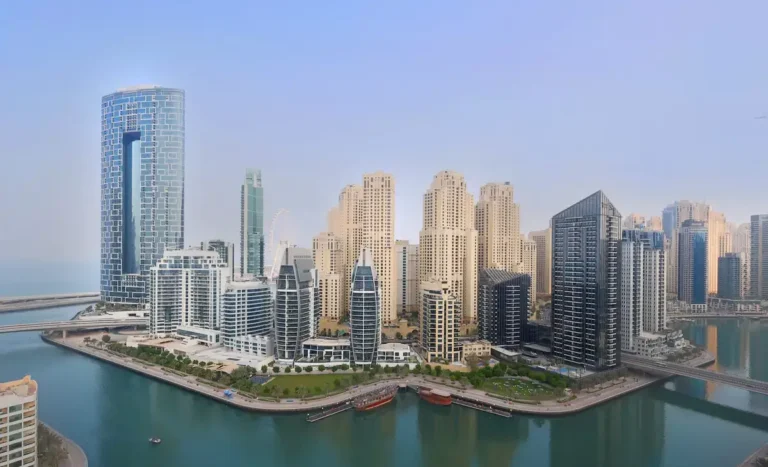
Dubai Marina is a purpose-built waterfront community in New Dubai, developed by Emaar Properties along a 3.5-kilometre man-made canal. Home to over 200 residential towers, a 7-kilometre pedestrian promenade, world-class dining, and two Red Line Metro stations, it consistently ranks as Dubai’s most sought-after address for residents, investors, and tourists in 2026.
Few places in the world redefine urban ambition the way Dubai Marina does. Carved from the Arabian Gulf shoreline in a feat of engineering that reshaped “New Dubai” forever, this shimmering canal city has become the benchmark against which every other waterfront development in the world is measured. Whether you are planning a visit, weighing a relocation decision, or evaluating your next real estate investment, understanding Dubai Marina in 2026 means understanding one of the most dynamic, liquid, and genuinely liveable communities on earth.
Dubai Marina is not simply a neighbourhood – it is an address that carries global recognition, consistent rental demand, exceptional transport connectivity, and a lifestyle infrastructure that few cities outside this emirate can replicate at scale. This comprehensive guide covers every dimension of the Marina: its history and geography, the daily lifestyle reality, property prices and investment yields, transport connections, schools, healthcare, dining, attractions, and the honest advantages and drawbacks that no polished brochure will tell you.
What Is Dubai Marina? Definition, History
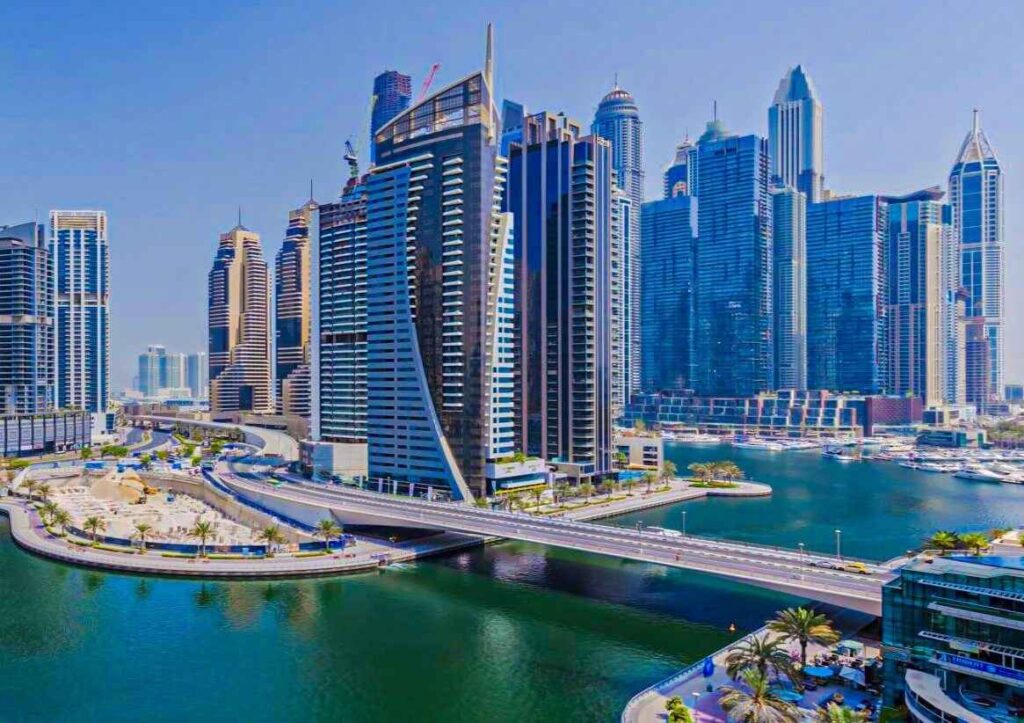
Dubai Marina is a master-planned waterfront district located in the southwestern corridor of Dubai, positioned directly off Sheikh Zayed Road (E11) between Jumeirah Lakes Towers (JLT) to the east and the Arabian Gulf to the west. Emaar Properties conceived the project in the late 1990s as an ambitious canal city — at the time of its conception, the largest man-made marina in the world.
Construction transformed a stretch of desert coastline into a continuous 3.5-kilometre canal accessible from the sea at both ends. The result is a waterway flanked by the Marina Walk promenade, on which superyachts, leisure boats, water taxis, and traditional abras share the water with joggers, cyclists, and diners above.
Today, Dubai Marina is a fully matured urban community. Its infrastructure is delivered, its amenities are established, and its daily rhythms are set. Unlike emerging districts still carrying completion risk, the Marina offers buyers and renters something increasingly rare in Dubai’s fast-moving market: certainty of lifestyle.
The community spans approximately 50 million square feet of total area. Over 200 residential towers line the canal, creating one of the most photographed skylines on the planet. The resident population is overwhelmingly international, with significant communities from the United Kingdom, India, Pakistan, and continental Europe. That cosmopolitan character gives the Marina a unified neighbourhood identity centred on the waterway itself.
Dubai Marina’s Location and Surrounding Communities
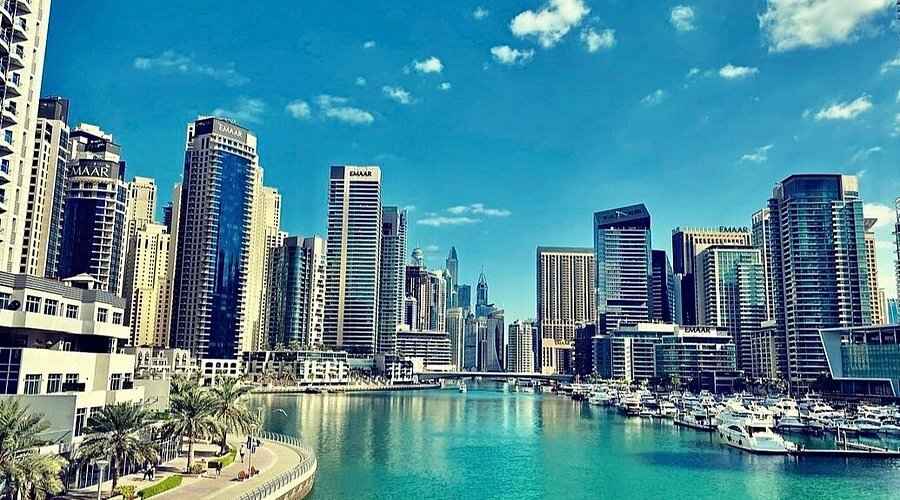
Understanding the Marina’s geography is essential for both residents and investors, because micro-location within the wider district drives enormous variation in property prices, commute times, and daily lifestyle quality.
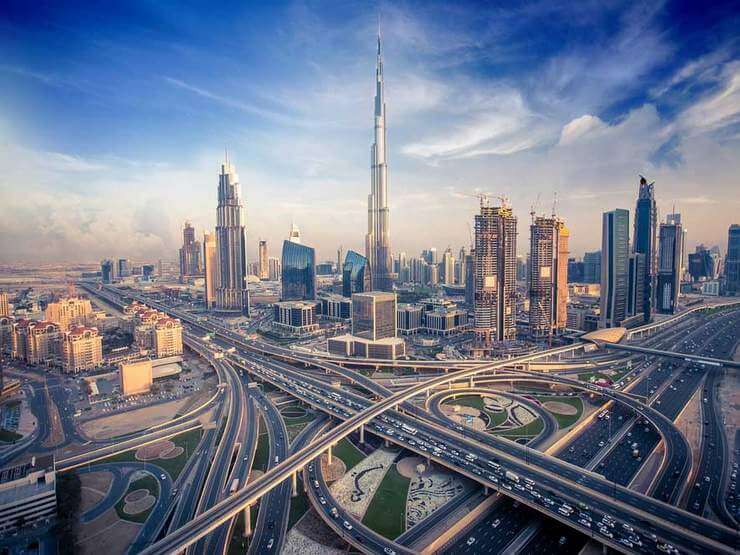
Dubai Marina occupies the southwestern edge of New Dubai – the residential corridor that defines modern Dubai alongside neighbouring Jumeirah Beach Residence (JBR), Palm Jumeirah, Jumeirah Lakes Towers, and Dubai Media City. Geographically, the district sits 25–30 kilometres from Downtown Dubai and approximately 30 kilometres from Dubai International Airport (DXB).
To the immediate west lies JBR, where the Arabian Gulf meets one of the city’s most popular free public beaches. The connection between Marina Walk and JBR’s The Walk is seamless on foot, effectively doubling the retail, dining, and leisure options available to Marina residents. Palm Jumeirah is roughly seven minutes away by car. Al Maktoum International Airport, the future mega-hub under construction as part of Dubai’s D33 economic plan, sits approximately 30–35 minutes by road.
This strategic position gives the Marina dual connectivity: it is close enough to the business districts of Media City, Internet City, and DIFC to make professional commutes manageable, yet distinct enough from Downtown Dubai to maintain its own character and price point.
The Dubai Marina Lifestyle: What Daily Life Actually Looks Like
The Marina’s primary selling point has always been lifestyle, and in 2026 that lifestyle remains genuinely distinct from what any other Dubai community offers at the same scale.
The Marina Walk: The Social Heart of the Community
The Dubai Marina Walk is a 7-kilometre pedestrian circuit that loops around the entire canal. It is the physical and social spine of the community – the place where daily life plays out for tens of thousands of residents and hundreds of thousands of monthly visitors.
Early mornings belong to runners and cyclists. The flat, palm-lined promenade handles strollers effortlessly, and dedicated cycling lanes reduce conflict between user types. By mid-morning, café terraces fill with remote workers and residents. The waterfront-facing restaurants and coffee shops represent over 300 retail and dining outlets along the promenade, ensuring that no two visits to the Walk feel identical.
Sunset, particularly between October and April when temperatures are moderate – transforms the Walk into the most impressive urban promenade in the Gulf. The western façades of the towers catch the light and the water turns copper. After dark, the Marina takes on a different character entirely: illuminated skyscrapers reflect in the canal, nightlife venues fill, and the atmosphere shifts to the sophisticated urban energy that makes the district equally appealing to couples and young professionals as it does to families in the morning.
The Walk is free to access at all times. It ranks among Dubai’s most compelling zero-cost experiences, consistently outperforming paid attractions in visitor satisfaction surveys.
Recommended: Jumeirah Islands
Waterfront Dining: From Pier 7 to Marina Walk Restaurants
Dubai Marina’s restaurant scene is one of the most extensive in the city. Pier 7 – the distinctive seven-storey circular structure on the waterfront – houses seven restaurants across seven floors, each with panoramic marina views. Venues including Roberto’s (Italian) and Asia Asia (Asian fusion) anchor the Pier 7 concept and make it the area’s most distinctive dining destination.
Along the Marina Walk, Buddha-Bar Dubai, Massimo’s, and More Café represent the waterfront-facing international dining options that serve residents year-round. The proximity to JBR extends the dining radius considerably, adding beach club restaurants, casual international chains, and upscale hotel dining at Address Beach Resort and Le Méridien Mina Seyahi.
Beach Access, Watersports, and Outdoor Recreation
Dubai Marina Beach (often referred to alongside JBR Beach) is a free public beach offering fine white sand, clear turquoise water, and changing facilities. Its backdrop of towering skyscrapers and views of the Ain Dubai observation wheel on Bluewaters Island make it one of Dubai’s most photographed coastal locations.
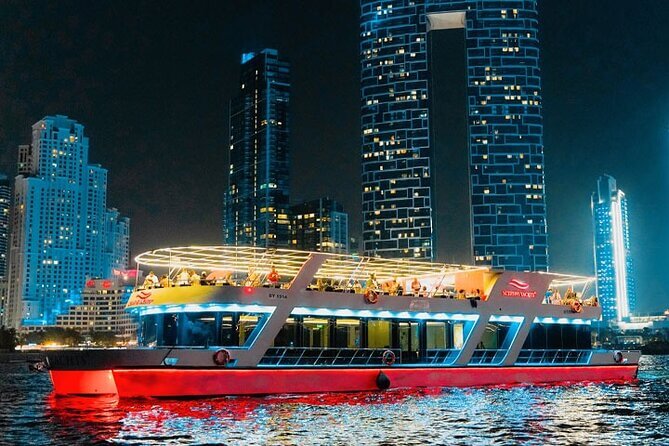
For watersports, Dubai Marina is the operational hub for the city. Yacht charters, speedboat tours, jet ski rentals, paddleboarding, and parasailing are all available through licensed operators departing from the marina basin. Standard yacht charters for 10–15 guests begin at around AED 650–1,000 per hour for a 36- to 50-foot vessel, with premium vessels exceeding AED 2,500 per hour.
Zero Gravity Dubai, the premier beach club on the Marina’s edge, receives consistent recognition for its day-to-night concept and spectacular panoramic views of the JBR skyline and Arabian Gulf.
XLine Dubai Marina and Adventure Experiences
XLine Dubai Marina holds the distinction of being the world’s longest urban zip line. Riders launch between towers at high speed while taking in aerial views of the marina basin below. Pricing starts at approximately AED 499 for younger riders and AED 650–699 for adults. It remains one of the area’s most distinctive experiences and an unofficial symbol of the district’s ambition.
Skydive Dubai, located at the adjacent Palm Drop Zone, offers tandem skydiving with aerial views over the Palm Jumeirah and Marina skyline — one of the most spectacular skydive settings in the world.
Aqua Fun Waterpark, described as the largest inflatable water park in the world with over 100 obstacles, adds a family-friendly adventure dimension to the waterfront.
Nightlife, Entertainment, and the Marina After Dark
Dubai Marina’s nightlife reputation is well-earned. The area functions effectively as a 24-hour community: Marina Walk and JBR transitions from morning fitness activity through daytime dining to evening entertainment without any perceptible lull. Late-night lounge destinations, rooftop bars, and waterfront dining venues serve a cosmopolitan crowd through the small hours, particularly on weekends.
For families, the district is equally accommodating. Dubai Marina Mall houses 140+ stores, a dedicated family entertainment zone, and a cinema. The outdoor cinema concept at the mall and at Habtoor Grand Beach Resort — screening family-friendly films at sunset on weekends — adds a uniquely pleasant seasonal experience.
Transport Connectivity: Getting Around Dubai Marina
Dubai Marina’s transport infrastructure stands as one of its defining competitive advantages. It is one of the few areas outside the Downtown–Business Bay corridor where car-free or genuinely car-light daily life is feasible for residents.
Dubai Metro Red Line
Two Red Line Metro stations serve the Marina. Sobha Realty Station (formerly Dubai Marina Station) provides access to the northern promenade and the residential towers along the marina’s edge. DMCC Station (formerly Jumeirah Lake Towers Station) serves the southern Marina and JLT areas, with direct pedestrian access to Dubai Marina Mall and The Walk at JBR. Both stations connect to the Dubai Tram via air-conditioned footbridges — an important quality-of-life detail in Dubai’s summer months.
For professionals commuting to Business Bay, DIFC, or Downtown Dubai, the Red Line metro journey takes approximately 30–40 minutes, door to office. From Dubai International Airport, the journey requires a transfer at Union Station and takes roughly one hour.
Dubai Tram
The Dubai Tram runs a loop through the Marina and JBR areas, with 11 stations connecting both metro stops with the beachfront, hotels, and residential towers. It links at Palm Jumeirah Station for Monorail access to Atlantis and Palm Island attractions. For intra-community travel — from your tower to the beach, the mall, or a restaurant — the tram is the most practical option. Frequency runs every 8–12 minutes, with service hours from 5 AM to 1 AM on weekdays and later on weekends. Fares are paid via NOL card.
Road Access and Parking
Sheikh Zayed Road (E11) provides the Marina’s main highway connection to the rest of Dubai. Typical drive times without traffic: Downtown Dubai 20–25 minutes; Dubai International Airport approximately 30 minutes; Al Maktoum International Airport 30–35 minutes.
Public parking within the Marina is limited, particularly near the waterfront promenade and on weekends. Dubai Marina Mall offers parking, and paid spaces along the promenade charge approximately AED 4 per hour. Residents with dedicated building parking typically find car ownership straightforward, though many who live near tram stops choose not to own a vehicle at all.
Water Taxi and Ride-Hailing
Dubai Water Taxi services connect the Marina to other waterfront destinations across the city. Uber and Careem operate reliably throughout the district, with typical in-area trip costs of AED 15–40.
Dubai Marina Property Market 2026: Prices, Yields, and Investment Case
Dubai Marina’s real estate market in 2026 presents one of the most established and liquid investment cases in the UAE. The district’s maturity — fully built out, with no significant new supply pipeline to compress yields — creates structural conditions that newer communities cannot replicate.
Current Property Prices
Average sale prices in Dubai Marina have risen significantly over the past two years. The average sale price per square foot for apartments now sits at approximately AED 2,661, compared to AED 1,580 two years ago — a rise of roughly 68%. Waterfront units command a measurable premium, with marina-facing apartments averaging AED 1,820 per square foot versus AED 1,450 per square foot for inland-facing units.
Property entry points vary considerably by unit type and building age. In older inland towers, studio and one-bedroom apartments remain accessible at AED 800,000–1,100,000. Premium marina-facing one-bedrooms in Grade A buildings such as Marina Gate, Cayan Tower, and Princess Tower command AED 1,450,000–2,100,000. New launches including Marina Shores by Emaar (with Q4 2026 handover) and LIV Waterside are selling at AED 3,200–3,700 per square foot, reflecting the significant premium that fresh waterfront stock commands in a constrained supply environment.
Rental Values and Yields
Annual rental values across Dubai Marina have increased approximately 8–16% year on year through 2025, driven by strong expatriate and professional tenant demand. According to RERA’s Q4 2025 Rental Market Report, Dubai Marina recorded 16.4% year-on-year rental growth — the second-highest rate in the emirate after Business Bay.
Current annual rent ranges by unit type:
| Unit Type | Annual Rent Range (AED) |
|---|---|
| Studio | 65,000 – 130,000 |
| 1-Bedroom | 90,000 – 220,000 |
| 2-Bedroom | 140,000 – 350,000 |
| 3-Bedroom | 200,000 – 500,000+ |
Gross rental yields for long-let apartments range from 5.5% to 7.2%, with smaller studio and one-bedroom units delivering at the higher end. Short-term holiday home operators — operating under DTCM Holiday Home Permits — report gross yields of 8.5%–12% annually, with peak-season (November to March) nightly rates reaching AED 280–420 for studios and AED 550–950 for one-bedrooms.
Dubai Land Department data confirms the Marina as the third most active district by apartment transaction volume citywide in Q4 2025, with over 3,200 apartment sales recorded. Vacancy rates in the Marina sit at 2–3%, far below the citywide average of 4–7%.
Investment Considerations
The structural investment case for Dubai Marina rests on three pillars: constrained supply, brand recognition, and tenant depth. The district is essentially fully built out. Unlike JVC, Dubai South, or Business Bay — where new supply pipelines are deep — the Marina has very limited land for new towers. This supply constraint supports both rental values and capital appreciation over the medium term.
Brand recognition is a genuine asset. When tenants from the UK, India, Europe, or elsewhere search for a premium Dubai rental remotely, Dubai Marina appears in most conversations. That recognition translates directly to low vacancy rates and strong demand from high-earning professionals, corporate tenants, and short-stay visitors.
The most important caveat for investors is that net yields (after service charges of AED 14–28 per square foot) are materially lower than gross yields. Investors should model net yields of 3.6%–5.5% for a realistic return picture, depending on unit type and building. For buyers optimising for capital growth rather than pure yield, the Marina’s track record and supply dynamics make a compelling long-term case.
Notable Residential Towers
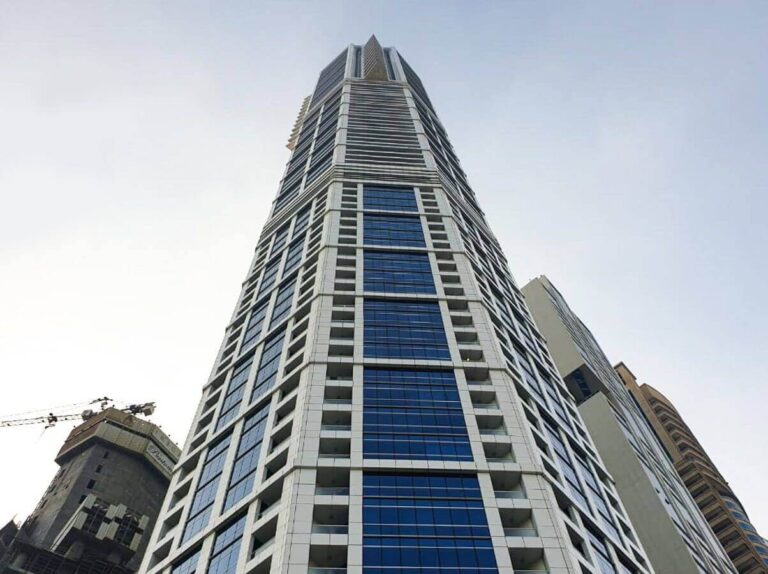
Dubai Marina’s tower portfolio includes some of the city’s most architecturally distinctive buildings. Cayan Tower — the twisted 307-metre skyscraper rotating one degree per floor — remains one of the most photographed residential buildings in the world. Princess Tower (414 metres) held the title of the world’s tallest residential building for several years. 23 Marina and Marina Gate I and II offer direct marina frontage with premium amenities.
The buyer profile in Dubai Marina is broadly segmented as professionals (35%), investors (30%), families (20%), and couples (15%), according to market analysis from White & Co Group. This diversity of tenant and buyer profiles is itself a risk mitigant — no single demand driver dominates.
Schools and Education Near Dubai Marina
Education access is one of the Marina’s notable practical limitations, particularly for families with school-age children. There are no international schools located within the Marina district itself, though excellent options are accessible within 10–20 minutes by car.
For younger children, nurseries within the Marina include Willow Nursery and Raffles Nursery, which offers an Early Years curriculum for children from 45 days to 4 years. These within-community options mean that the Marina works well for families with very young children.
For primary and secondary education, King’s School Dubai (British curriculum), Dubai British School, and Horizon International School are among the most accessible options within 15 minutes by car. The absence of on-site school provision is one of the factors that steers some larger families toward communities like Arabian Ranches, Dubai Hills Estate, or The Springs, which offer integrated school options and more space per resident.
Healthcare Facilities in and Around Dubai Marina
Medical provision within the Marina is adequate for everyday needs, with specialist hospitals accessible nearby. Within the district, Medcare Medical Centre, Emirates Hospital Clinic, and King’s Marina Medical Centre provide general practice, specialist consultations, and urgent care services. These clinics handle the routine medical needs of the resident population effectively.
For hospital-level emergency care, Al Zahra Hospital on Sheikh Zayed Road and Saudi German Hospital in Al Barsha are the nearest major facilities, both within 10–15 minutes by road. Mediclinic Meadows and Emirates Hospital JBR also serve the wider Marina catchment.
Shopping and Retail in Dubai Marina
Dubai Marina Mall is the district’s primary retail destination. Anchored by Waitrose supermarket, the mall houses over 140 stores, a cinema, a dedicated family entertainment zone, and multiple dining options. It is deliberately scaled for neighbourhood retail rather than destination shopping — practical rather than spectacular.
For larger shopping trips, Mall of the Emirates (25 minutes by car or Metro) and Dubai Mall (30 minutes) provide the full-service retail experience. Within the Marina itself, the Marina Walk’s 300+ outlets cover everyday essentials, boutique fashion, wellness, and services. Spinneys, West Zone, and Al Maya supermarkets supplement the Waitrose at Marina Mall for grocery needs.
Places of Worship and Community Life
Masjid Al Rahim is the most prominent mosque in Dubai Marina, seating up to 2,000 worshippers. Three mosques along the Marina Walk create a distinctive soundscape during prayer times — an atmospheric detail noted by many long-term residents as one of the area’s defining characteristics.
For residents of other faiths, churches and temples are located in Jebel Ali, Bur Dubai, and other parts of the city, typically 20–30 minutes away. The Marina’s cosmopolitan community holds regular social events, fitness groups, and neighbourhood activities that give the district a genuine sense of shared life despite its high-rise, transient character.
Dubai Marina Pros and Cons: An Honest Assessment
Every guide should acknowledge what the Marina does not do as well as what it does.
Genuine strengths:
The Marina delivers walkability, waterfront beauty, transport connectivity, dining variety, and lifestyle amenity that no other Dubai community matches at the same scale. Its brand recognition globally ensures consistent rental demand. The fully delivered infrastructure means residents move in to a finished community, not a construction site.
Real limitations:
Traffic congestion within the district — particularly on weekends and during peak evening hours — is significant. The narrow internal roads between towers were not designed for current vehicle volumes, and parking pressure is real. Noise levels, particularly in towers on or near Marina Walk, are higher than in quieter suburban communities. The area’s energy — which is its primary appeal — also means it rarely feels truly peaceful.
Apartment sizes in older buildings can be smaller than market equivalents elsewhere, and service charges in premium towers are substantial. Families with school-age children face genuine inconvenience from the absence of on-site schooling. And summer heat — while universal in Dubai — concentrates at the Marina because the density of towers and hard surfaces increases ambient temperatures relative to greener, lower-rise communities.
For young professionals and couples, the Marina is arguably Dubai’s best community. For large families seeking space and quietude, other districts may serve better.
Nearby Attractions and Day Trips from Dubai Marina
Dubai Marina’s location places it within easy reach of some of the emirate’s most significant attractions.
Ain Dubai on Bluewaters Island — at 250 metres the world’s largest observation wheel — is visible from the Marina Walk and reachable in minutes. Atlantis The Palm and the Aquaventure Waterpark are approximately 20 minutes by car or accessible via the Dubai Tram and Palm Monorail combination. The Burj Al Arab is 10 minutes south along the Jumeirah coastline.
For day trips further afield, the Al Hajar Mountains of Ras Al Khaimah are approximately 90 minutes by road, offering hiking and adventure activities. Hatta — Dubai’s mountain enclave — is around 100 minutes. Abu Dhabi, with the Sheikh Zayed Grand Mosque and Louvre Abu Dhabi, is approximately 90 minutes on the Abu Dhabi–Dubai highway.
New Developments and Future Outlook for Dubai Marina
Dubai Marina’s development pipeline in 2026 is thinner than in any comparable prime Dubai district — a deliberate consequence of the area being essentially fully built out. The developments that are completing or launching in 2026 are premium, not incremental.
Marina Shores by Emaar — a direct waterfront development with Q4 2026 handover — represents one of the last significant new supply additions to the district. LIV Waterside and the Kempinski-branded residences are the other notable completions, all selling at AED 3,200–3,700 per square foot.
The medium-term outlook for the Marina is shaped by broader Dubai infrastructure. The Blue Line Metro extension and continued population growth driven by Dubai’s D33 economic plan — targeting 5.8 million residents by 2033 — will maintain pressure on prime residential supply. Knight Frank’s Q3 2025 market review confirmed the area as a hotspot for mortgage-backed purchases, with financing volumes more than doubling over four years.
New green building requirements introduced in 2026 — mandating environmental performance standards and smart building systems — align with the Marina’s premium positioning and are expected to support continued price differentiation between Grade A stock and older towers.
Frequently Asked Questions
1. What is Dubai Marina and why is it famous?
Dubai Marina is a purpose-built waterfront canal city developed by Emaar Properties in New Dubai. It is famous for its record-breaking skyline of over 200 high-rise towers, the 7-kilometre Marina Walk promenade, world-class dining and nightlife, direct Gulf beach access, and seamless Metro and Tram connectivity. It consistently ranks as one of Dubai’s most searched residential and tourist destinations globally.
2. How far is Dubai Marina from Downtown Dubai and Dubai Airport?
Dubai Marina is approximately 25–30 kilometres from Downtown Dubai — around 20–25 minutes by car without traffic, or 35–45 minutes by Metro (Red Line with one transfer). From Dubai International Airport (DXB), the journey by car takes approximately 30 minutes; by Metro, around one hour including a transfer at Union Station.
3. What are average rental prices in Dubai Marina in 2026?
In 2026, studio apartments in Dubai Marina rent for AED 65,000–130,000 per year. One-bedroom apartments command AED 90,000–220,000, depending on floor level, view orientation, and building quality. Two-bedroom apartments typically range from AED 140,000 to AED 350,000 annually. Waterfront-facing units at higher floors command a meaningful premium over city-facing or inland equivalents.
4. Is Dubai Marina a good place to invest in property in 2026?
Dubai Marina remains a strong investment market in 2026, supported by constrained supply, consistent tenant demand, and global brand recognition. Gross rental yields range from 5.5% to 7.2% for long-let apartments, and short-term holiday home operators report gross yields of 8.5%–12% under DTCM licensing. The district’s limited new supply pipeline provides structural support for capital values over the medium term. However, investors should model net yields (after service charges) for a realistic return picture.
5. How do you get to Dubai Marina by Metro?
Take the Red Line to either DMCC Station (southern Marina, near Dubai Marina Mall and JBR) or Sobha Realty Station (northern Marina, near the promenade towers). Both stations connect to the Dubai Tram via air-conditioned footbridges. From DMCC, Dubai Marina Mall and the start of the Marina Walk promenade are within five minutes on foot.
6. What are the best things to do in Dubai Marina?
The top experiences in Dubai Marina include walking or cycling the 7-kilometre Marina Walk, dining at Pier 7, taking a sunset yacht cruise, riding the XLine Dubai Marina (the world’s longest urban zip line), visiting Dubai Marina Beach (JBR), enjoying beach clubs like Zero Gravity, and exploring the waterfront dining and nightlife scene. For adventure activities, Skydive Dubai at the adjacent Palm Drop Zone offers tandem skydiving over the Marina skyline.
7. Is Dubai Marina family-friendly?
Dubai Marina is increasingly family-oriented, particularly for families with young children. The Marina Walk is stroller-accessible throughout, nurseries including Willow Nursery and Raffles Nursery are located within the community, and the beachfront is safe and family-appropriate. The primary family limitation is the absence of international schools within the district itself — most school options require a 10–20-minute car journey. Larger families seeking more space and on-site schooling sometimes prefer communities like Dubai Hills Estate or Arabian Ranches.
8. What is the Dubai Tram and how does it serve Dubai Marina?
The Dubai Tram is a light rail system running 14.5 kilometres through the Marina and JBR areas, with 11 stations. It connects the DMCC Metro Station and Sobha Realty Metro Station with the JBR beachfront, hotels, and residential towers, and links to the Palm Jumeirah Monorail. It runs from 5 AM to 1 AM on weekdays and later on weekends, with service every 8–12 minutes. Fares are paid via NOL card at around AED 4 per journey.
9. Which are the most prestigious residential towers in Dubai Marina?
The most prestigious and widely recognised towers in Dubai Marina include Cayan Tower (the iconic twisted 73-storey skyscraper), Princess Tower (414 metres, one of the world’s tallest residential buildings), 23 Marina, Marina Gate I and II, and the newer Sobha Seahaven and LIV LUX developments. Buildings with direct marina-facing frontage on the Walk consistently command the highest sale prices and rental values.
10. What is the XLine Dubai Marina experience?
XLine Dubai Marina is recognised as the world’s longest urban zip line. Riders are harnessed and launched between tower platforms, flying at speed over the marina canal with panoramic views of the Dubai skyline below. The experience operates during the day and evening. Pricing starts at approximately AED 499 for riders aged 12–16 and AED 650–699 for adults. It is one of the few truly unique experiences in the city and a defining attraction of the district.
11. Can I rent an apartment in Dubai Marina short-term for a holiday?
Yes. Dubai Marina has a substantial short-term holiday home market operating under DTCM (Dubai Tourism and Commerce Marketing) Holiday Home Permits. Platforms including Airbnb and Booking.com list hundreds of licensed Marina apartments. Peak-season (November–March) nightly rates range from AED 280–420 for studios to AED 950–1,600 for two-bedrooms. Operating short-term rentals without a DTCM permit is illegal and subject to fines of AED 5,000 or more.
12. Is parking available in Dubai Marina for visitors?
Parking in Dubai Marina is available but limited, particularly near the waterfront promenade on evenings and weekends. Dubai Marina Mall provides parking for visitors. Paid street parking along the promenade costs approximately AED 4 per hour. Visitors are strongly advised to use the Metro or Tram for access, particularly during peak periods when parking can be extremely difficult to find.
Conclusion
Dubai Marina in 2026 remains exactly what it was conceived to be: the most ambitious, most complete, and most globally recognised waterfront community in the Gulf. Two decades since Emaar Properties broke ground on what was then desert coastline, the Marina has fully delivered on its founding promise. The canal is alive with yachts and water taxis, the promenade feeds tens of thousands of residents and hundreds of thousands of visitors monthly, and the skyline — including Cayan Tower’s unmistakable spiral — has become shorthand for modern Dubai in travel and investment conversations worldwide.
For visitors, the Marina offers a concentrated, walkable, visually spectacular experience that rewards both a half-day stroll and a week-long stay. For residents, it provides a rare urban bargain: lifestyle infrastructure of genuine international quality, transport connectivity that makes car ownership optional, and a community identity that transcends the transience of high-rise living. For investors, it represents a mature, liquid, supply-constrained market where global tenant demand and limited new stock create durable conditions for both rental income and capital appreciation.
Understanding the Marina’s limitations — traffic congestion, limited family school provision, service charge exposure, and the premium pricing that accompanies its desirability — allows buyers, renters, and visitors to make informed decisions rather than aspirational ones. The Marina rewards informed engagement.
In a city defined by ambition and transformation, Dubai Marina has achieved something more enduring: it has become an institution.

Usman Ali is a full-time content writer and financial specialist with over 6 years of experience living and working in the UAE. He focuses on business finance, insurance, investments, and corporate financial strategies, delivering authoritative content tailored to entrepreneurs and professionals.
Ali combines in-depth industry research with practical insights, helping readers understand complex financial and insurance topics in a simple, actionable way. His content is designed to build trust, authority, and long-term value for business-focused audiences.