Bur Dubai Area Guide 2026: History, Attractions, Living & Travel Tips
Bur Dubai is the district where Dubai’s story actually began. Long before Sheikh Zayed Road filled with glass towers, this stretch of land on the western bank of Dubai Creek was the emirate’s original trading port – a place of pearl divers, wind-tower houses, and dhows loaded with spices and textiles. Today, Bur Dubai still carries that legacy in its narrow lanes and creekside souks, but it has also grown into one of the city’s most connected, affordable, and culturally diverse residential and tourist areas.
This Bur Dubai area guide covers everything you need to know for 2026: history, top attractions, neighborhoods, transport, dining, shopping, and where to stay, so whether you’re visiting for an afternoon or considering it as your new home base, you’ll know exactly what to expect.
Quick answer: Bur Dubai is a historic district on the western bank of Dubai Creek, known for the Al Fahidi Historical Neighbourhood, Dubai Museum, Meena Bazaar, Al Seef, and the Textile Souk. It offers affordable apartments, strong metro and abra connectivity, and a mix of heritage sites and everyday amenities, making it popular with both tourists and long-term residents.
What Is Bur Dubai? A Quick Overview
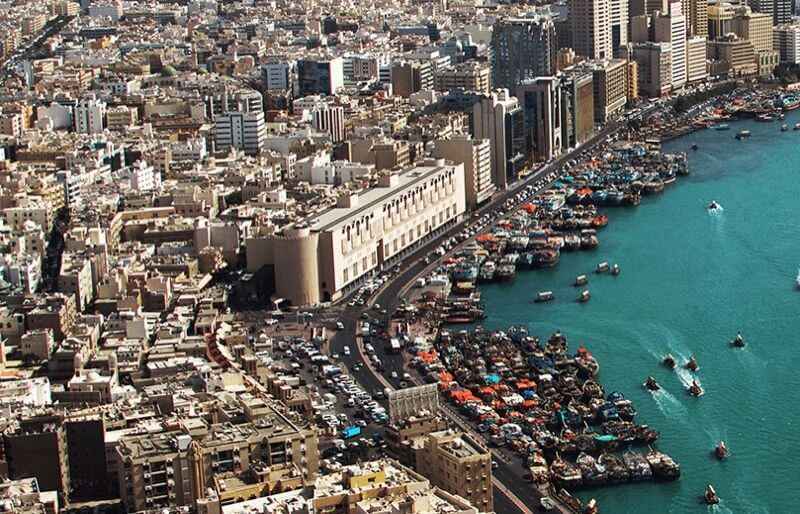
Bur Dubai (Arabic for “mainland Dubai”) sits opposite Deira across Dubai Creek, the natural saltwater inlet that has divided – and connected – the two halves of Old Dubai for centuries. Unlike the newer, master-planned communities of Dubai Marina or Downtown Dubai, Bur Dubai grew organically around trade, migration, and the creek itself.
The district is technically an umbrella term covering several sub-communities, each with its own character:
| Sub-community | Known for |
|---|---|
| Al Fahidi / Al Bastakiya | Heritage houses, wind towers, art galleries |
| Al Raffa | Souks, textile trading, budget hotels |
| Al Mankhool | Residential apartments, BurJuman area |
| Al Karama | Affordable dining, local markets |
| Oud Metha | Hospitals, wide roads, family villas |
| Al Jaddaf | Waterfront developments, Dubai Healthcare City |
This mix of heritage core and modern residential sprawl is exactly why Bur Dubai keeps appearing at the top of searches for both “things to do” and “where to live” in Dubai – it genuinely serves both audiences.
The History of Bur Dubai
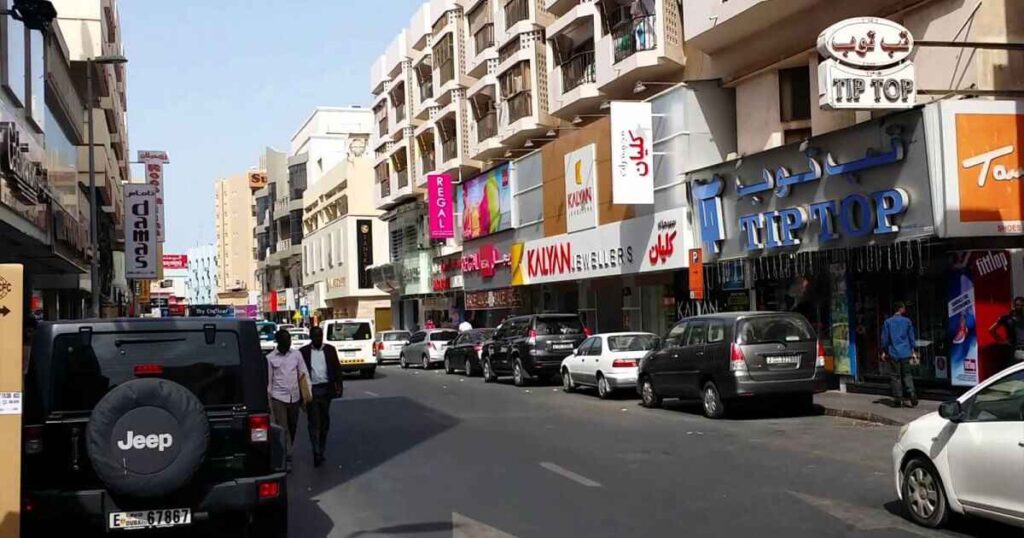
Understanding Bur Dubai’s history makes every landmark in the area click into place. The district’s roots trace back to the 18th century, when the Al Fahidi Fort was built to defend the settlement from seaborne raids. That fort, constructed from coral stone, gypsum, and palm-frond mortar, is the oldest surviving building in Dubai and now houses the Dubai Museum.
Through the 19th and early 20th centuries, Bur Dubai flourished as a pearling and trading hub. Persian merchants settled in what became the Bastakiya Quarter, bringing the distinctive wind-tower (barjeel) architecture that still cools these buildings today without any electricity. By the 1960s, the abra – Dubai’s traditional wooden ferry – was the only way to cross the creek to Deira, a role it still plays for locals and visitors who prefer the historic route over the modern bridges and tunnels.
This layered past is why Bur Dubai carries more heritage weight than almost any other district in the emirate, and why UNESCO and Dubai’s own heritage authorities have prioritized preserving Al Fahidi’s traditional streetscape even as skyscrapers rise around it.
Top Things to Do and See in Bur Dubai
Al Fahidi Historical Neighbourhood
Also known as Al Bastakiya, this is the best-preserved traditional quarter in Dubai. Wandering its shaded alleyways, you’ll see restored coral-stone houses, wind towers, art galleries, and boutique cafés tucked into 19th-century courtyards. It’s a working cultural district too, home to the Sheikh Mohammed Centre for Cultural Understanding, which runs cultural meals and open Q&A sessions designed to introduce visitors to Emirati traditions.
Dubai Museum at Al Fahidi Fort
Housed inside the city’s oldest building, Dubai Museum traces the emirate’s transformation from a modest fishing and pearling village into a global metropolis. Exhibits include reconstructed souk scenes, traditional dwellings, and displays on pearl diving – the trade that sustained Dubai before oil.
Dubai Frame
Standing 150 meters tall in Zabeel Park, the Dubai Frame is a golden, rectangular landmark that literally frames views of Old Dubai on one side and New Dubai’s skyline on the other. Visitors move through a ground-floor heritage gallery, up to the glass-floored Sky Deck, and finish in a Future Gallery imagining Dubai decades from now. It’s widely regarded as one of the most photogenic stops in the district and pairs well with a visit to Zabeel Park.
Dubai Creek and the Abra Crossing
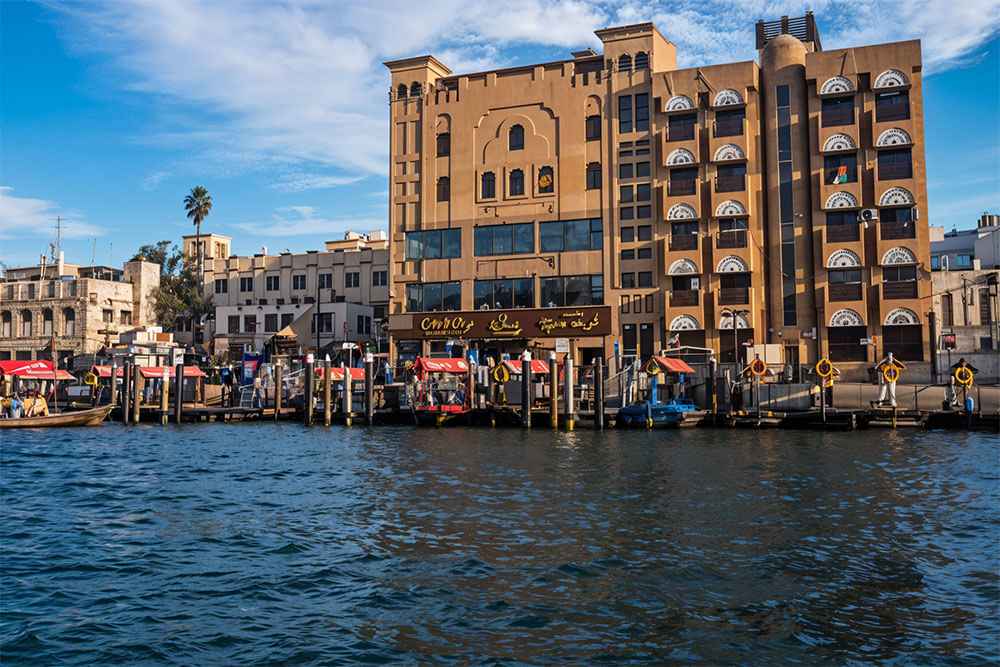
No Bur Dubai itinerary is complete without an abra ride. These traditional wooden ferries cross Dubai Creek between Al Ghubaiba or Al Seef on the Bur Dubai side and Deira’s Old Souk on the other, typically for just 1 AED per person, cash paid directly to the boatman. The crossing takes about five to ten minutes and offers a view of old dhows, minarets, and modern skyscrapers side by side – a contrast that sums up Dubai better than almost any other single experience in the city.
Al Seef
Al Seef is a redeveloped waterfront promenade that deliberately blends heritage-style architecture with a modern boardwalk of cafés, boutique shops, and art installations. It’s a good option for an evening stroll, particularly around sunset when the creek and skyline light up together.
Meena Bazaar and the Textile Souk
Meena Bazaar is Bur Dubai’s bustling shopping strip, known for sari shops, gold and gemstone jewelers, and the adjoining Textile Souk, where bargaining over fabric is part of the experience. It’s one of the most authentic (and budget-friendly) shopping stops in Dubai, reflecting the district’s large South Asian community.
Al Shindagha Historical District and Museum
A short walk or abra ride from Al Fahidi, Al Shindagha was once home to Dubai’s ruling family. The Al Shindagha Museum complex now spans several themed pavilions covering Emirati seafaring, perfume-making, and everyday heritage, offering more depth than a single-building museum can.
Al Nasr Leisureland
For families, Al Nasr Leisureland has been a Bur Dubai fixture for decades, offering an ice rink, bowling, swimming pools, and other indoor and outdoor activities – a practical break from heritage sightseeing, especially during Dubai’s hotter months.
Getting Around: Metro, Abra, and Transport Links
Bur Dubai’s transport connectivity is one of its biggest practical advantages over Dubai’s newer districts.
Metro: The district sits on both the Red Line and Green Line, with BurJuman serving as the key interchange station between them. Other stations serving the area include Al Fahidi, Al Ghubaiba, Al Jafiliya, Sharaf DG, Oud Metha, and Al Jaddaf. This means Bur Dubai is directly connected to Downtown Dubai, Dubai Marina, Deira, and Dubai International Airport without needing to change transport modes.
Nol Card fares: Dubai Metro uses the zone-based Nol card system. A standard Silver Nol card journey within Bur Dubai’s Zone 6 typically starts at a low base fare, with daily fare caps in place so frequent travelers never overpay. Tourists who don’t want a reloadable card can use a disposable Red Nol ticket instead.
Abra and water transport: The Al Ghubaiba Marine Transport Station is the main abra hub on the Bur Dubai side, offering both traditional 1-AED crossings and RTA-operated water buses on set routes extending toward Al Jaddaf and Dubai Festival City.
Roads: Bur Dubai connects easily to Sheikh Zayed Road and Al Maktoum Bridge, Al Garhoud Bridge, and the Business Bay Crossing, making it a practical base for reaching almost anywhere in the city by car or taxi.
What’s next: In 2026, Dubai’s Ruler announced a new fully underground Gold Line for the metro network, expected to connect major hubs including Bur Dubai and Business Bay as part of a broader expansion strategy through 2040. This is worth watching for anyone planning a longer-term move to the area, as it should further boost connectivity and, likely, property demand.
Living in Bur Dubai: A Residential Snapshot
Beyond tourism, Bur Dubai is genuinely one of Dubai’s most established residential communities, and its appeal for renters and long-term residents rests on a few consistent pillars.
Affordability relative to location. Compared with Downtown Dubai or Dubai Marina, Bur Dubai offers noticeably lower rents for a location this central, which is part of why area guides consistently flag it as a value-focused choice for both singles and families.
Housing mix. Most of Bur Dubai’s housing stock is apartments, ranging from studios to larger family units, concentrated in Al Mankhool, Al Raffa, and around BurJuman. Villas are less common but do exist in pockets of Oud Metha and Al Raffa, typically three- to five-bedroom homes suited to larger families.
Everyday amenities. The area is dense with supermarkets, pharmacies, schools, and clinics. Healthcare access is a particular strength, with hospitals and clinics in the district itself plus direct proximity to Dubai Healthcare City in neighboring Oud Metha.
Green space. This is one area where Bur Dubai lags newer communities – parks are smaller and less frequent than in purpose-built neighborhoods. Zabeel Park is the main large green space nearby, supplemented by smaller neighborhood parks in Al Karama and Al Mankhool.
Who it suits best. Bur Dubai tends to appeal most to residents who prioritize central location, transport access, and cultural diversity over resort-style amenities or brand-new towers – a profile that includes long-term expat families, young professionals, and anyone working in the Bur Dubai, Karama, or DIFC-adjacent business corridors.
Where to Eat in Bur Dubai
Bur Dubai’s dining scene mirrors its population: layered, diverse, and unpretentious. Al Karama and Meena Bazaar are packed with affordable South Asian, Filipino, and Middle Eastern eateries serving some of the best value meals in the city. For a more traditional experience, look for restaurants serving classic Emirati dishes such as grilled hammour (a local fish) or luqaimat, the sweet, syrup-drenched dumplings often served as dessert. Along the Al Seef waterfront and in nearby five-star hotels, the dining tone shifts toward stylish, waterside restaurants and bars, giving the district a genuine range from street food to fine dining within walking distance.
Shopping in Bur Dubai
Shopping here splits neatly into two experiences. For modern retail, BurJuman Mall is the district’s main shopping center, combining fashion, electronics, dining, and a cinema in one air-conditioned complex directly connected to BurJuman Metro Station. For traditional shopping, Meena Bazaar and the Textile Souk offer fabric, tailoring, gold, and spices at prices that reward a bit of friendly negotiation – a shopping style that’s increasingly rare elsewhere in the city.
Best Time to Visit Bur Dubai
Like the rest of Dubai, Bur Dubai is most comfortable to explore on foot between November and March, when daytime temperatures are mild. Outdoor sites such as Al Fahidi’s alleyways, the abra crossing, and Al Seef’s waterfront promenade are best enjoyed in this cooler window, ideally in the early morning or around sunset. During the hotter months from May through September, plan outdoor time for early morning or evening and rely on the metro, malls, and indoor museums during peak heat — Dubai’s infrastructure, including bus stops and metro stations, is built with heavy air conditioning specifically to make this manageable.
Common Mistakes to Avoid
- Assuming Bur Dubai and Downtown Dubai are the same area. They are entirely separate districts; Downtown Dubai (home to Burj Khalifa) is several kilometers away.
- Skipping the abra for a taxi. The abra is faster for short creek crossings, cheaper, and a genuine cultural experience — not just a tourist gimmick.
- Visiting Al Fahidi at midday in summer. The narrow lanes offer some shade, but midday heat between June and September can still be intense; early morning or evening visits are far more comfortable.
- Forgetting cash for the abra. Most traditional abra boatmen only accept cash (small AED notes or coins), unlike the metro and RTA water buses, which use Nol cards.
- Overlooking BurJuman as a transport hub. Because it’s an interchange station for both metro lines, BurJuman is often the fastest way to reach other parts of the city, even if it isn’t your final destination.
FAQs
What is Bur Dubai known for?
Bur Dubai is known for being one of Dubai’s oldest districts, home to the Al Fahidi Historical Neighbourhood, Dubai Museum, Dubai Frame, traditional souks, and the abra crossing over Dubai Creek.
Is Bur Dubai worth visiting?
Yes. It offers some of the most authentic, historically rich experiences in Dubai, including heritage architecture, traditional markets, and a creekside atmosphere that contrasts sharply with the city’s modern skyline.
How do I get to Bur Dubai from Downtown Dubai?
The most direct route is via Dubai Metro, connecting through the Red Line to BurJuman or Al Fahidi station, typically taking 20–30 minutes depending on the exact stations and any transfers.
Is Bur Dubai a good place to live?
Bur Dubai is popular with residents seeking a central, affordable, and well-connected location, with a strong mix of apartments, amenities, and metro access, though green space is more limited than in newer communities.
How much does an abra ride cost in Bur Dubai?
A traditional abra crossing typically costs around 1 AED per person, paid in cash directly to the boatman, making it one of the cheapest experiences in Dubai.
What is the difference between Bur Dubai and Deira?
Bur Dubai and Deira sit on opposite banks of Dubai Creek. Bur Dubai is generally associated with heritage sites like Al Fahidi and Dubai Museum, while Deira is known for the Gold Souk and Spice Souk.
Is Bur Dubai safe for tourists?
Bur Dubai is generally considered a safe, well-policed area popular with tourists and residents alike, though as with any busy urban district, standard travel precautions around belongings in crowded souks are recommended.
What is the best way to explore Al Fahidi Historical Neighbourhood?
Walking is by far the best way, since the quarter’s narrow lanes, courtyards, and galleries are designed for slow, on-foot exploration rather than vehicle access.
Are there family-friendly activities in Bur Dubai?
Yes, options include Al Nasr Leisureland for ice skating, bowling, and swimming, plus Zabeel Park and the interactive galleries inside the Dubai Frame.
What sub-areas make up Bur Dubai?
Bur Dubai includes Al Fahidi, Al Bastakiya, Al Raffa, Al Mankhool, Al Karama, Oud Metha, and Al Jaddaf, each with its own residential and commercial character.
Can I use the Dubai Metro to reach the abra stations?
Yes, Al Ghubaiba Metro Station sits close to the main Marine Transport Station on the Bur Dubai side, making it easy to combine metro and abra travel in one trip.
What new transport developments are planned for Bur Dubai?
In 2026, Dubai announced a new fully underground Gold Line for the metro network, expected to connect Bur Dubai with other major hubs such as Business Bay as part of a longer-term expansion through 2040.
Conclusion
Bur Dubai remains one of the few places in the city where Dubai’s pearling-port origins and its 21st-century ambitions sit side by side, sometimes within the same block. Whether you’re crossing the creek on a wooden abra, wandering the wind-tower lanes of Al Fahidi, or weighing up an apartment near BurJuman for its metro access and affordability, the district rewards a bit of exploration well beyond its headline attractions. As Dubai’s transport network continues expanding into the district with projects like the planned Gold Line, Bur Dubai’s role as a connective, historically grounded heart of the city looks set to grow rather than fade.

Sara is a UAE-based banking and accounting expert with over 4 years of professional experience in the financial sector. Her expertise spans retail banking, financial reporting, compliance, and practical money management topics relevant to individuals and businesses in the UAE.
She contributes clear, accurate, and well-researched financial content, simplifying complex banking and accounting concepts for everyday readers. Sara’s writing reflects strong industry knowledge, regulatory awareness, and a commitment to financial accuracy and transparency.