Princess Tower Dubai Marina Guide 2026: Inside the World’s Tallest Residential Skyscraper
Rising 414 metres above the waterfront, Princess Tower is the centerpiece of what locals call “The Tallest Block in the World” – a cluster of supertall towers at the northern tip of Dubai Marina. For over a decade it held the Guinness World Record and CTBUH title as the tallest residential-only building on the planet, and even after being overtaken on the global stage, it remains the third-tallest building in Dubai after the Burj Khalifa and Marina 101. Whether you’re comparing apartments in Dubai Marina, researching the building before a visit to the area, or simply curious about how a 101-storey residential tower actually works, this guide covers everything: its history, structure, apartments, amenities, surroundings, and what it’s like living in or visiting one of Dubai’s most photographed skylines.
Quick answer: Princess Tower is a 101-storey, 414-metre residential skyscraper in Dubai Marina, completed in 2012 by Tameer Holding Investment. It held the world record for tallest residential building until 2012 and remains the third-tallest structure in Dubai, housing 763 apartments and penthouses across a cylindrical, aluminum-clad tower.
What Is Princess Tower?
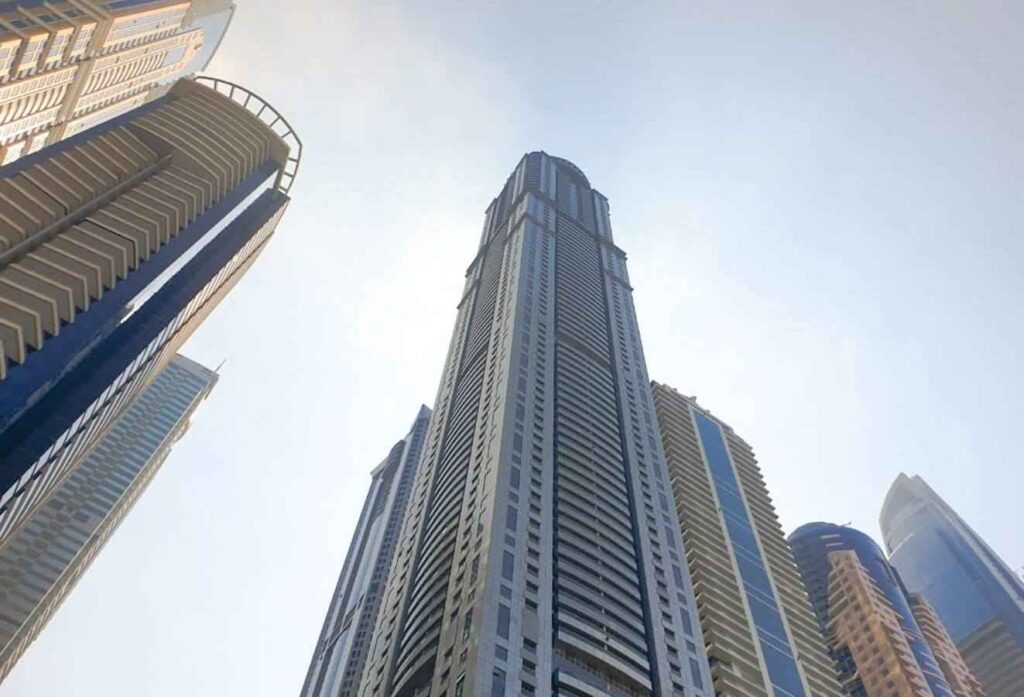
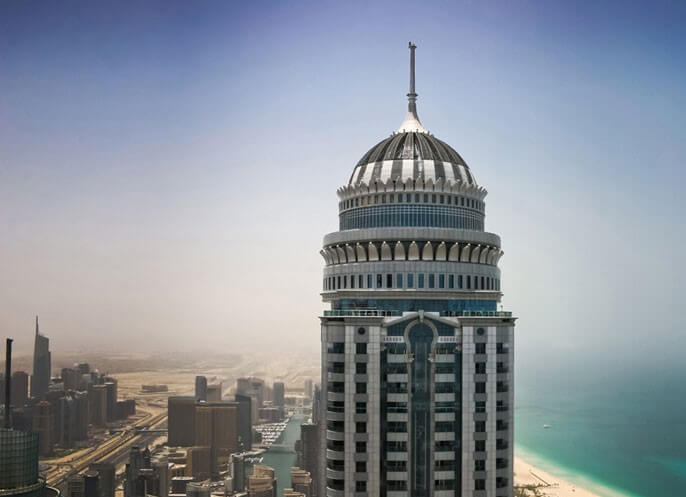
Princess Tower (in Arabic, برج الأميرة) is a 101-storey, 413.4-metre residential-only skyscraper located in the Marina district of Dubai. Including its decorative spire, the tower’s architectural height reaches 414 metres, making it the third-tallest building in Dubai and the 31st tallest building in the world at the time it was measured. Wikipedia’s more recent building rankings confirm that as of September 2022, Princess Tower remained the third-tallest building in Dubai, behind only the Burj Khalifa and Marina 101, and the 36th tallest building in the world.
The tower’s design is entirely residential, distinguishing it from Dubai’s many mixed-use supertalls that combine hotels, offices, and apartments in a single structure. That single-purpose design is part of why it became a world record holder in its category rather than the overall height rankings, which are dominated by mixed-use towers like the Burj Khalifa.
Key Facts at a Glance
| Attribute | Detail |
|---|---|
| Architectural height | 413.4 m (1,356 ft); with spire, 414 m (1,358 ft) |
| Roof height | 392 m (1,286 ft) |
| Highest occupied floor | 356.9 m (1,171 ft), on the 97th floor |
| Floor count | 101 storeys above ground, plus 6 basement levels |
| Total floor area | 171,175 m² (1,842,512 sq ft) |
| Elevators | 13 |
| Parking spaces | 957 |
| Residential units | 763 apartments and penthouses |
| Construction started | 25 February 2006 |
| Opened | 9 September 2012 |
| Architect | Eng. Adnan Saffarini Office |
| Developer | Tameer Holding Investment LLC |
| Main contractor | Arabian Construction Company (ACC) |
| Architectural style | Postmodern |
Editorial note: Height and floor-count figures vary slightly between sources (some cite 107 total levels including basements and ground floor, others 101 above-ground storeys). This guide uses the architecturally verified figures from CTBUH-aligned sources; confirm exact specifications against the building’s official records before publishing time-sensitive claims.
The Story Behind Princess Tower: From 90 Floors to a World Record
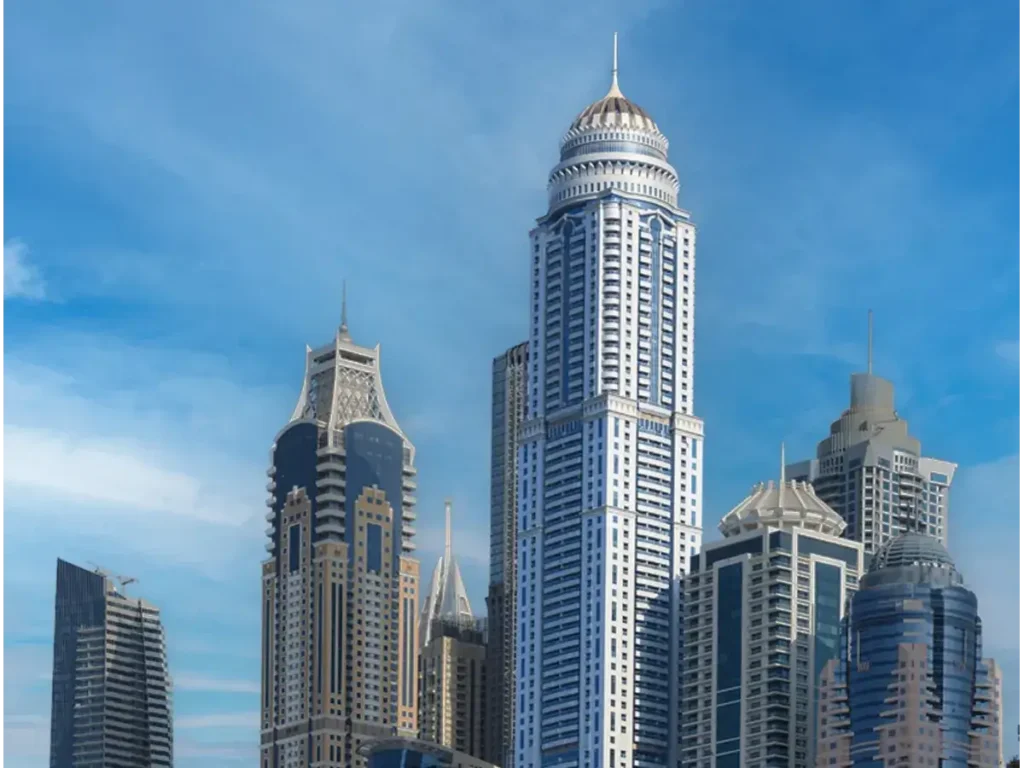
Princess Tower’s height wasn’t the original plan. According to building history records, the tower was originally designed for just 90 storeys, with height driven mainly by the need to maximise profitability on a relatively small plot of land. It was only later in the design process that developers realised a world record was within reach, prompting a last-minute redesign that added a further 11 floors.
That redesign paid off. As of May 2012, the Council on Tall Buildings and Urban Habitat (CTBUH) and Guinness World Records recognised the 414-metre tower as the tallest residential building on Earth, a title it held until later that year when it was surpassed. Construction itself ran from February 2006 through to the building’s opening in September 2012, with the World Construction Network reporting the project cost roughly AED 795 million (around $216 million).
Building on a footprint this small, for a tower this tall, wasn’t straightforward. As one industry account puts it, the narrow plot in Dubai Marina made transporting materials and equipment to the site especially difficult, requiring the construction team to rely on innovative techniques to keep the project on schedule.
Why Is It Positioned Off-Centre on Its Podium?
Visitors and residents often notice that Princess Tower doesn’t sit centrally on its base. That’s deliberate. The tower was placed slightly closer to the sea than its direct neighbours specifically to maximise sea views for its side-facing apartments, which explains its asymmetrical position on the podium when viewed from the Marina promenade.
Architecture and Structural Design
Princess Tower’s cylindrical silhouette is one of the most recognisable in Dubai Marina’s skyline, and its structural engineering reflects the demands of building at extreme height on a compact site.
Structural System
The tower uses a reinforced concrete core paired with peripheral columns to support the building’s full height, with jump-form construction methods used to accelerate the vertical build. The exterior is finished in an aluminum curtain wall cladding that gives the tower its shiny, reflective appearance against the Marina waterline. This combination of a strong central core and outer support columns is standard practice for supertall residential towers, since it frees up the perimeter for uninterrupted window walls and marina views.
Wind Engineering and the Rooftop Dome
At this height, wind load is one of the biggest engineering challenges, and Princess Tower’s design addresses it in two ways. First, its decorative dome — which sits above the actual occupied roofline — is purely ornamental and effectively hollow, built above the real structural roof at 377 metres, reducing unnecessary structural weight at the very top. Second, engineers installed a tuned liquid damper on the 98th floor specifically to counteract wind-induced sway and improve the building’s overall stability.
The 97th Floor: Dubai’s Highest Residential Amenity Deck
Rather than reserving the top floors purely for penthouses, Princess Tower dedicates its 97th floor — the highest occupied level in the building, at 357 metres — to a multipurpose space used for recreational and business events, offering panoramic views across the Marina and toward Palm Jumeirah. More recent building profiles describe this space as functioning as an observation deck with panoramic Marina and Palm Jumeirah views, complete with WiFi access — effectively giving residents a private sky lounge well above the surrounding skyline.
Apartments and Penthouses in Princess Tower
Princess Tower is a purely residential building, and its 763 units span a wide range of configurations designed for both end-users and investors.
Unit Types and Sizes
The building offers 1, 2, and 3-bedroom apartments, as well as 3, 4, and 5-bedroom penthouses. According to Bayut’s floor plan data, 1-bedroom apartments include two bathrooms, built-in closets, a fitted kitchen, an open living and dining area, a dedicated laundry area, and a balcony, with covered areas ranging from 859 to 1,599 square feet. 2-bedroom units step up to three bathrooms, built-in wardrobes, a fitted kitchen, a living and dining area, a laundry room, and a balcony. At the top end, the largest penthouses and duplexes extend to well over 6,000 square feet, offering multi-level living with sweeping Marina and Gulf views.
Property Values in 2026
Dubai Marina has remained one of the city’s most resilient rental and resale markets, and Princess Tower has tracked that trend closely. Property data shows average price-per-square-foot values climbing from roughly AED 800 in 2020 to around AED 1,600 by 2026, with the strongest increases occurring in 2023 and 2024 before pricing stabilised into minor quarter-to-quarter fluctuations. On the sales side, apartment prices in the tower range from about AED 1.4 million to AED 10.4 million, with the building delivering roughly a 6.1% gross rental yield — a strong figure for a landmark waterfront address.
Rental performance has moved in a similar direction. Average rents rose from around AED 55 per square foot in 2020 to approximately AED 100 per square foot by 2026, and separate marketplace data puts the average annual rent for flats in Princess Tower at AED 120,859. Tenant behaviour in the building also points to stability: long-term rentals account for more than 96% of all tenancies, suggesting the building attracts residents who stay rather than short-term or transient tenants.
Editorial verification flag: All pricing, rental yield, and per-square-foot figures are drawn from real estate marketplace listings current as of mid-2026 and fluctuate frequently. Verify against live listings on DLD (Dubai Land Department), Property Finder, or Bayut before publishing, and refresh these figures periodically since Dubai Marina pricing moves on a quarterly basis.
Building Amenities
Residents of Princess Tower have access to a substantial amenity package for a residential-only tower. Facilities include indoor and outdoor swimming pools, a fully equipped gym, a sauna, a steam room, games rooms, a children’s play area, and a banquet hall, with the gym and pool facilities occupying dedicated podium-level floors. The building’s original developer materials also describe a business centre and a sky lounge among the tower’s high-end offerings for residents.
Location: Living at the Heart of “The Tallest Block”
Princess Tower sits at the northern end of Dubai Marina, on a stretch of land informally known as “The Tallest Block in the World” because of the concentration of supertall towers found there. Its immediate neighbours on that block include some of the tallest residential buildings anywhere: as Wikipedia notes, the cluster comprises Princess Tower at 414 metres, 23 Marina at 395 metres, Elite Residence at 380.5 metres, Almas Tower at 363 metres, and the two JW Marriott Marquis towers at 355 metres each.
Getting Around
The tower benefits from Dubai Marina’s well-developed transport network. Dubai Metro is located near the tower, providing convenient access to Downtown Dubai and other districts across the city. For residents who prefer to walk, Dubai Marina Walk — a waterfront promenade lined with restaurants, cafes, and shops — is roughly a 4-minute drive from the building, and is also easily reachable on foot for those staying closer to the tram line.
Dining and Leisure Nearby
Princess Tower’s location places it within easy reach of some of Dubai Marina’s best-known dining destinations. Notably, Indego by Vineet, one of the top fine-dining restaurants in Dubai Marina, sits close to the building. Combined with the Marina Walk’s dense cluster of waterfront cafes and restaurants, residents rarely need to leave the immediate neighbourhood for dining or evening leisure.
Princess Tower vs. Marina 101 and Other Dubai Marina Supertalls
A common point of confusion is Princess Tower’s exact ranking among Dubai’s tallest buildings, since different snapshots in time produce different answers. When it opened in 2012, Princess Tower briefly held the world’s tallest residential building title. It was then surpassed later that same year, and current data confirms Marina 101 has since taken the position of Dubai’s second-tallest building, pushing Princess Tower to third place behind the Burj Khalifa.
For context, the surrounding towers illustrate just how concentrated this stretch of Dubai Marina is with record-chasing architecture: Princess Tower (414 m), 23 Marina (395 m), Elite Residence (380.5 m), and Almas Tower (363 m) all sit within the same few city blocks. Few neighbourhoods anywhere in the world pack this many supertall residential buildings into such a small footprint, which is part of what makes the Dubai Marina skyline instantly recognisable from across the city.
Common Questions About Visiting or Viewing Princess Tower
Because Princess Tower is a private residential building rather than a public attraction, it doesn’t operate visitor ticketing, an observation deck open to the public, or scheduled tours — unlike attractions such as the Burj Khalifa’s “At the Top” or the Dubai Frame. The best ways to experience the tower are:
- From Dubai Marina Walk, where the tower’s full height and dome are visible against the water, especially striking at sunset and after dark when the building is lit.
- From the Dubai Marina Yacht Club or a Marina dhow cruise, which offers water-level photography angles of the entire “Tallest Block” cluster.
- From nearby rooftop bars and restaurants in Dubai Marina and JBR, several of which frame Princess Tower prominently in their skyline views.
- As a resident or guest, since the 97th-floor amenity level and building facilities are reserved for residents, their guests, and prospective buyers on viewing appointments arranged through licensed agents.
Editorial note: Confirm current public-access policy directly with the building’s owners’ association or a licensed Dubai Marina real estate agent before publishing any claims about tours or visitor access, as residential tower access policies can change without notice.
Common Mistakes People Make About Princess Tower
- Assuming it’s still the tallest residential building in the world. It held that title only briefly around 2012 before being surpassed; it’s now the third-tallest building in Dubai specifically.
- Confusing it with Marina 101 or 23 Marina, both of which are separate towers in the same immediate cluster with similar heights and purposes.
- Expecting public tourist access, similar to the Burj Khalifa. Princess Tower is a private residential building with no public observation deck.
- Assuming all units have Marina or sea views. Interior-facing units on lower and mid floors often face other towers in the block rather than open water, which affects both livability and resale value.
Future Outlook
Dubai Marina’s supply pipeline has slowed compared to the district’s peak construction years in the 2000s and early 2010s, which has helped established towers like Princess Tower hold their value as land in the immediate Marina waterfront becomes scarcer. With pricing having stabilised after the sharp 2023–2024 growth phase, and with rental yields around 6.1% continuing to attract buy-to-let investors, Princess Tower is likely to remain one of the most closely watched buildings in Dubai Marina’s resale and rental markets through the rest of the decade — both for its investment profile and its enduring status as one of the tallest residential addresses in the world.
Frequently Asked Questions
1. How tall is Princess Tower in Dubai Marina?
Princess Tower stands 413.4 metres (1,356 ft) tall architecturally, reaching 414 metres (1,358 ft) including its decorative spire.
2. How many floors does Princess Tower have?
The tower has 101 storeys above ground plus 6 basement levels.
3. Is Princess Tower still the tallest residential building in the world?
No. It briefly held that title in 2012 but has since been surpassed. It’s currently the third-tallest building in Dubai, behind the Burj Khalifa and Marina 101.
4. Who developed Princess Tower?
It was developed by Tameer Holding Investment LLC, designed by Eng. Adnan Saffarini Office, and built by Arabian Construction Company (ACC).
5. When was Princess Tower built?
Construction began on 25 February 2006, and the tower officially opened on 9 September 2012.
6. How many apartments are in Princess Tower?
The tower contains 763 residential units, including 1, 2, and 3-bedroom apartments and 3, 4, and 5-bedroom penthouses.
7. Can tourists visit Princess Tower or go up to the top floor?
No. Princess Tower is a private residential building without a public observation deck or ticketed visitor access, unlike attractions such as the Burj Khalifa.
8. What amenities does Princess Tower offer residents?
Residents have access to indoor and outdoor pools, a gym, sauna, steam room, games rooms, a children’s play area, and a banquet hall, plus a 97th-floor sky lounge with panoramic views.
9. How much do apartments cost in Princess Tower?
As of 2026, prices range from roughly AED 1.4 million for entry-level 1-bedroom units to AED 10.4 million for the largest penthouses. Verify current listings before quoting exact figures.
10. What is the rental yield in Princess Tower?
The building delivers an average gross rental yield of approximately 6.1%, with rents averaging around AED 120,859 per year for a typical unit.
11. What other towers are near Princess Tower?
It sits in Dubai Marina’s “Tallest Block”, alongside 23 Marina, Elite Residence, Almas Tower, and the two JW Marriott Marquis towers.
12. How do I get to Princess Tower from Downtown Dubai?
The tower is accessible via Dubai Metro, which connects Dubai Marina to Downtown Dubai and other districts, as well as by road via Sheikh Zayed Road and the Dubai Tram along the Marina waterfront.
Conclusion
Princess Tower is more than a residential address — it’s a piece of Dubai’s skyline history, a former world-record holder that reshaped what a purely residential skyscraper could look like when developers combined ambition, engineering, and a small plot of prime waterfront land. From its off-centre podium and hollow decorative dome to its 97th-floor sky lounge and tuned liquid damper, nearly every design decision reflects the tension between maximising views, maximising height, and keeping 763 households safe and comfortable more than 350 metres above the ground. Whether you’re weighing an investment, planning a move to Dubai Marina, or simply want to understand the story behind one of Dubai’s most iconic buildings, Princess Tower remains one of the clearest examples of how the emirate turned ambitious engineering into an enduring residential landmark.

Shahzeen Usman is a full-time content writer based in the UAE, with over 5 years of local experience covering travel, lifestyle, and destination-focused stories. She specializes in creating engaging, research-driven content that highlights hidden gems, cultural insights, and travel trends across the Emirates and beyond.
With a deep understanding of UAE tourism, Shahzeen brings authentic perspectives to her writing, helping readers discover meaningful travel experiences. Her work combines storytelling with SEO best practices, making her content both informative and search-engine friendly.