Burj Khalifa Dubai Area Guide 2026: Tickets, Views, and Everything Around Downtown Dubai’s Icon
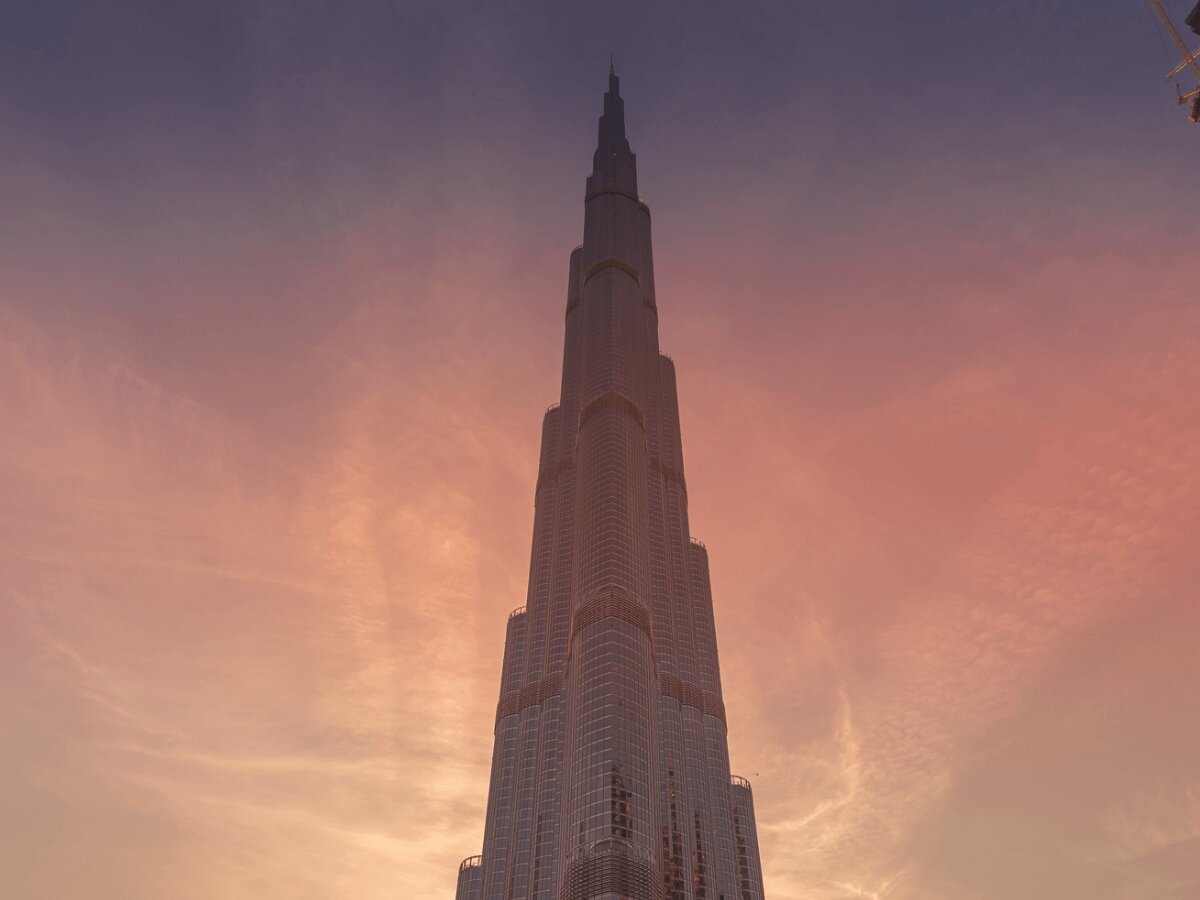
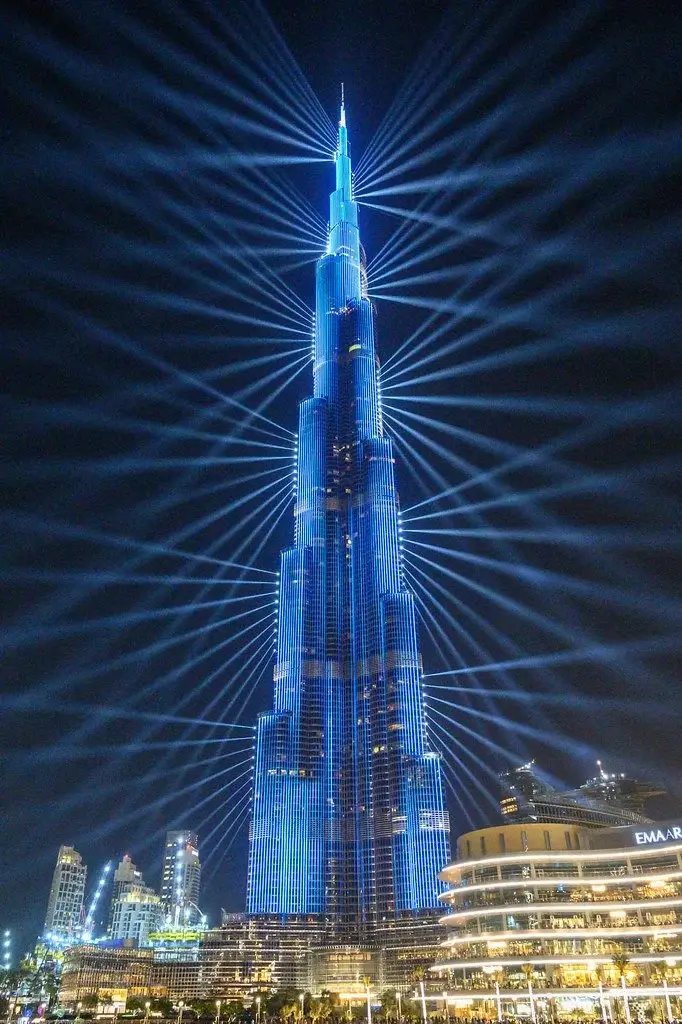
No skyline on Earth is defined by a single building the way Dubai’s is defined by the Burj Khalifa. At 828 metres and 163 floors, it has held the title of the world’s tallest structure since it opened on 4 January 2010, and it remains the gravitational center of Downtown Dubai – the neighborhood built around it, the metro station named after it, and the itinerary almost every visitor to the city ends up following. This Burj Khalifa area guide covers the tower itself, the observation decks, ticket options, the best times to visit, and everything within walking distance, from Dubai Mall to the Dubai Fountain, so you can plan a visit that actually works instead of guessing at the door.
Whether you’re booking a first trip to Dubai or refining a return visit, the goal here is the same: understand what’s genuinely worth your time and money at Burj Khalifa, and how it fits into the wider Downtown Dubai area.
Quick answer: Burj Khalifa is the world’s tallest building at 828 metres, located in Downtown Dubai. The main visitor experience, At The Top, gives access to the outdoor and indoor observation decks on Floors 124 and 125 (452–456 m), with an optional upgrade to Floor 148 (555 m). Tickets should be booked online in advance, and sunset slots sell out fastest.
Understanding Burj Khalifa Dubai: Background and Context
Burj Khalifa was designed by Adrian Smith of Skidmore, Owings & Merrill (SOM), the Chicago-based architecture firm behind several of the world’s tallest buildings. Construction began in 2004 and the tower opened in January 2010, developed by Emaar Properties as the centerpiece of a much larger master-planned district. It was originally named Burj Dubai during construction and renamed Burj Khalifa at its opening, in honor of Sheikh Khalifa bin Zayed Al Nahyan, President of the UAE at the time.
The design draws on the geometry of the desert flower Hymenocallis and the Islamic architectural pattern known as the spiral minaret, tapering as it rises through 26 setbacks to reduce wind load – a structural necessity at this height rather than a purely aesthetic choice. The tower uses a buttressed core structural system, also developed with SOM, which has since influenced supertall construction worldwide.
Burj Khalifa is a mixed-use building rather than a pure observation tower. It contains the Armani Hotel Dubai across its lower floors, more than 900 private residences, corporate office space, and At.mosphere, one of the world’s highest restaurants, on Floor 122. Understanding this mix matters for visitors: most of the building is not open to the public, and the visitor experience is concentrated on the At The Top observation decks and a handful of dining and lounge venues.
At The Top: Observation Decks, Floors, and What You’ll See
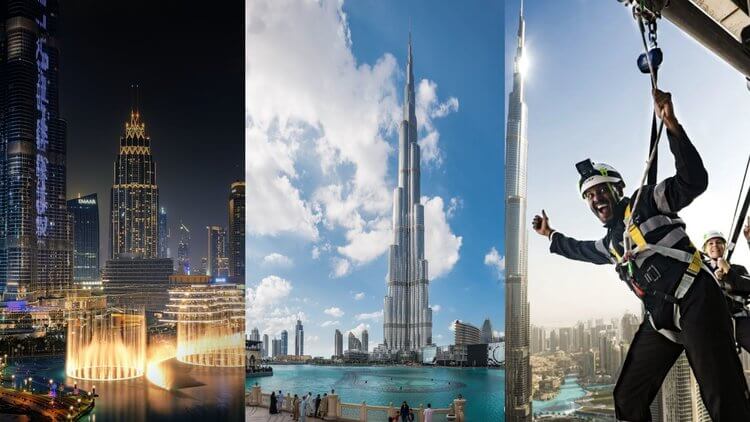
The core visitor experience at Burj Khalifa is called At The Top, and it spans several floor levels with different pricing and atmospheres.
Floors 124 and 125 (452–456 metres). This is the standard, most-booked ticket. Floor 124 has floor-to-ceiling glass windows and an outdoor terrace section, along with high-powered telescopes that let you pick out landmarks across the city. Floor 125 sits directly above and leans into an Arabic design theme, with cultural installations alongside the panoramic views. Most visitors spend 45 minutes to two hours across both levels.
Floor 148, At The Top SKY (555 metres). This upgrade adds access to the world’s highest outdoor observation deck open to the public, roughly 100 metres higher than Floor 125. The SKY ticket includes a dedicated Guest Ambassador, Arabic coffee and dates or sweets in a private lounge, and a capacity cap that keeps the deck far less crowded than 124–125. It’s the better choice for proposals, photography-focused visits, or anyone who has already done the standard experience on a previous trip.
The Lounge (Floors 152–154). At 585 metres, this is marketed as the world’s highest lounge and sits at the most exclusive end of the pricing spectrum, including canapés, beverages, and access to every lower level as part of the experience.
For most first-time visitors, Floors 124–125 deliver the view that people come for – a full 360-degree sweep across Downtown Dubai, the Dubai Fountain lake, the Arabian Gulf coastline, and on clear days, the desert stretching toward the horizon. The SKY upgrade is worth the extra cost primarily for the higher vantage point, the smaller crowds, and the hosted service, not because the standard floors fall short.
Ticket Types and Pricing (2026)
Editorial note: Ticket prices, opening hours, and package inclusions at Burj Khalifa change seasonally and are frequently adjusted by Emaar. The figures below reflect pricing reported by multiple booking platforms as of mid-2026 and should be verified against the official Burj Khalifa ticketing site before publishing or quoting to readers.
| Ticket Type | Floors | Approx. Price (Non-Prime) | Approx. Price (Prime, 4–7 pm) |
|---|---|---|---|
| At The Top | 124 & 125 | From AED ~150–175 | From AED ~220–250 |
| At The Top + Café | 124 & 125 + café access | From AED ~185 | Varies |
| At The Top SKY | 124, 125 & 148 | From AED ~400 | Up to AED ~554 |
| The Lounge | 152–154 | From AED ~770 | Premium pricing |
| At The Top + Sky Views Dubai combo | 124/125 + Address Sky View observatory | Bundled pricing | Bundled pricing |
Prime-hour tickets, covering the golden-hour and sunset window from roughly 4 to 7 pm, cost noticeably more and sell out first, sometimes days in advance during peak tourist season (November through March). Non-prime tickets in the morning or later evening are both cheaper and easier to book on short notice. Children’s tickets are typically discounted, and Emirates airline passengers have historically been offered promotional discounts on At The Top admission, though such offers should be confirmed at the time of booking.
Opening Hours
At The Top generally operates in three windows: non-prime hours from early morning (as early as 8–9 am on weekdays, sometimes earlier on weekends), the prime sunset window from 4 to 7 pm, and a late non-prime window from around 8 pm to midnight. Exact hours shift seasonally, particularly around Ramadan and major public holidays, so always check the live schedule when booking rather than relying on general guidance.
How to Book and When to Go
Advance booking is not optional if you want a specific time slot, particularly for sunset. Burj Khalifa is one of the most visited attractions on the planet, drawing well over 17 million visitors annually to the observation decks alone, and walk-up availability for prime slots is unreliable at best during high season.
Best time to visit for views: Late afternoon into sunset gives you the transition from daylight cityscape to the illuminated night skyline in a single visit, which is why prime-hour tickets command a premium. If budget matters more than that transition, a clear morning slot often delivers excellent visibility with a fraction of the crowd.
Best time to avoid crowds: Weekday mornings, particularly outside school holiday periods, are consistently the quietest. Weekend evenings and public holidays are the busiest by a wide margin.
How to get there: The Burj Khalifa/Dubai Mall metro station on the Red Line connects directly via an air-conditioned walkway into Dubai Mall, from which signed pathways lead to the Burj Khalifa entrance. This is the most reliable option during peak traffic hours. Taxis and ride-hailing services can drop passengers at Dubai Mall’s signed entrances, and on-site parking is available at the mall, though it fills quickly on weekends and holidays.
What to bring: A mobile ticket or confirmation and photo ID are required for entry. Large bags, tripods, and professional camera equipment are typically restricted on the standard decks. Layer for air conditioning even in summer, since the temperature at altitude and inside the building is kept notably cooler than street level.
Downtown Dubai: The Neighborhood Around Burj Khalifa
Burj Khalifa doesn’t stand alone – it’s the anchor of Downtown Dubai, a purpose-built district that includes some of the city’s most visited attractions within a short walk of one another.
Dubai Mall sits immediately adjacent and is directly connected to the Burj Khalifa complex. It’s one of the largest shopping malls in the world by total area and functions as the natural starting or ending point for a Burj Khalifa visit, with hundreds of retail outlets, an aquarium, an ice rink, and dozens of dining options.
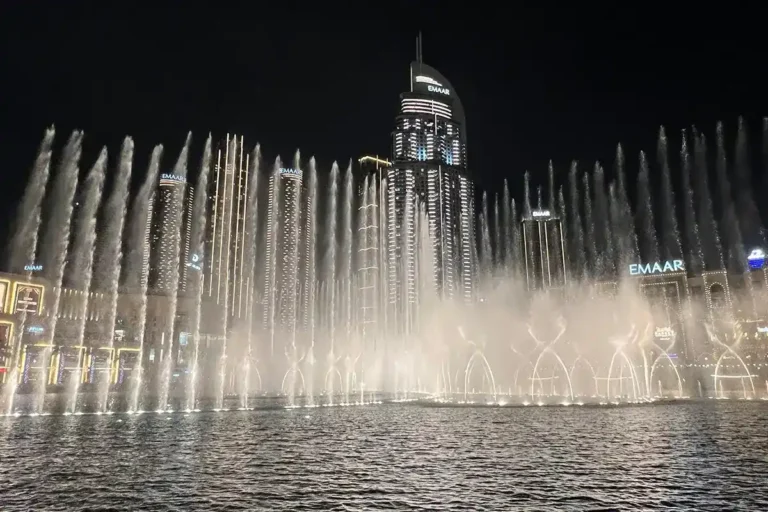
The Dubai Fountain performs choreographed water, light, and music shows on the lake directly in front of Burj Khalifa, typically at set intervals through the evening. Many of the best vantage points for photographing the fountain and the tower together sit along the Burj Khalifa Lake promenade and the Dubai Mall waterfront boardwalk.
Dubai Aquarium & Underwater Zoo is housed inside Dubai Mall and is often combined with Burj Khalifa tickets in bundled packages, making it a natural add-on for families visiting the area.
Business Bay, just south of Downtown Dubai along the Dubai Water Canal, offers a different, more commercial skyline view of Burj Khalifa from across the water, along with canal-side dining that many visitors miss in favor of the more crowded Downtown core.
Bur Dubai and BurJuman, further west along the historic creek, represent an older, pre-skyscraper layer of the city, and are worth visiting for contrast on a longer Dubai itinerary rather than as a same-day pairing with Burj Khalifa, given the distance between them.
Treating Downtown Dubai as a single half-day or full-day zone – Burj Khalifa, Dubai Mall, and the Dubai Fountain together – is the most efficient way to experience the area’s headline attractions without excessive backtracking across the city.
Advantages and Trade-Offs of Visiting Burj Khalifa
Advantages: Unmatched panoramic views of Dubai from the world’s tallest building; direct connectivity to Dubai Mall and Downtown Dubai’s other attractions; multiple ticket tiers to suit different budgets; genuinely spectacular sunset and night views over the Arabian Gulf and desert.
Trade-offs: Prime-hour tickets are expensive relative to many other Dubai attractions; the standard decks (124–125) can feel crowded during peak season and prime hours; visibility is weather-dependent, and haze or sandstorms can significantly reduce the view on a given day; the experience, while iconic, is relatively short (typically under two hours) for the price point at the upper ticket tiers.
Common Mistakes Visitors Make
Booking a walk-up ticket during peak season and being turned away or pushed to a much later time slot is the most frequent complaint among visitors. A second common mistake is booking prime-hour sunset tickets without checking the actual sunset time for the date of travel – Dubai’s sunset shifts meaningfully across the year, and a “sunset slot” booked out of season can miss the actual sunset by a wide margin. Third, many visitors underestimate travel time from outside Downtown Dubai during rush hour and arrive after their check-in window closes; Burj Khalifa tickets are time-slotted and generally non-transferable to a different entry time without prior arrangement.
Expert Insight and Best Practices
Frequent visitors and travel guides consistently recommend booking at least a few days ahead for any prime-hour slot, and a week or more ahead during November–March high season. For photographers, the outdoor terrace on Floor 124 offers the least obstructed shots, but arriving right at your slot’s opening minute – rather than mid-window – tends to produce noticeably shorter queues for the best window positions. Pairing a morning Burj Khalifa visit with an evening return to the Dubai Fountain promenade is a practical way to see the tower in two different lights without paying for two separate prime-hour tickets.
Future Outlook
Downtown Dubai continues to develop around Burj Khalifa, with ongoing enhancements to the Dubai Mall complex, the surrounding waterfront promenades, and periodic updates to the At The Top experience itself, including refreshed exhibits and technology on the observation floors. As Dubai’s broader tourism infrastructure expands — including continued growth around Expo City Dubai and the Dubai Metro network — Downtown Dubai is likely to remain the fixed center of most visitor itineraries, with Burj Khalifa as its defining landmark for the foreseeable future.
FAQs
How tall is Burj Khalifa?
Burj Khalifa stands 828 metres tall with 163 floors, making it the tallest building in the world since it opened in January 2010.
What floors can visitors access at Burj Khalifa? Standard At The Top tickets cover Floors 124 and 125. An upgraded SKY ticket adds Floor 148, and The Lounge experience covers Floors 152–154.
How much do Burj Khalifa tickets cost?
Standard non-prime tickets typically start in the AED 150–175 range for Floors 124–125, rising to around AED 220–250 for prime sunset hours. The Floor 148 SKY upgrade generally starts around AED 400. Always confirm current pricing on the official booking site, since rates change seasonally.
What is the difference between At The Top and At The Top SKY?
At The Top covers Floors 124–125 with indoor galleries and an outdoor terrace. At The Top SKY adds Floor 148, roughly 100 metres higher, with a hosted lounge experience, refreshments, and a capped visitor count for a less crowded visit.
When is the best time to visit Burj Khalifa?
Late afternoon into sunset offers the most dramatic transition from daylight to illuminated night views, but this window costs more and sells out fastest. Weekday mornings offer excellent visibility with far smaller crowds.
Do I need to book Burj Khalifa tickets in advance?
Yes, advance online booking is strongly recommended, particularly for prime sunset slots during the November–March high season, when walk-up availability is frequently sold out.
How do I get to Burj Khalifa?
The Burj Khalifa/Dubai Mall metro station on the Red Line connects via an air-conditioned walkway directly to Dubai Mall, from which Burj Khalifa is a short, signed walk. Taxis can drop off at Dubai Mall’s designated entrances.
Is Burj Khalifa connected to Dubai Mall?
Yes, Burj Khalifa is directly connected to Dubai Mall via an indoor walkway, making it easy to combine both in a single visit.
How long does a Burj Khalifa visit take?
Most visitors spend between 45 minutes and two hours at the observation decks, depending on crowd levels and ticket type.
Can you see the Dubai Fountain from Burj Khalifa?
Yes, the Dubai Fountain lake sits directly at the base of Burj Khalifa and is visible from the observation decks, though many visitors prefer watching the fountain show itself from ground-level viewpoints along the promenade.
What is the world’s highest observation deck at Burj Khalifa?
Floor 148, part of the At The Top SKY experience, sits at 555 metres and is marketed as the highest outdoor observation deck open to the public.
Is Burj Khalifa worth visiting if I’ve already seen Dubai’s skyline from another building?
For most visitors, yes – the combination of height, 360-degree views, and the surrounding Downtown Dubai district makes it distinct from other observation experiences in the city. Those seeking something different after a previous visit often pair it with Sky Views Dubai’s Edge Walk or Glass Slide instead of repeating At The Top.
Conclusion
Burj Khalifa earns its reputation as Dubai’s essential visitor experience not just because it’s the tallest building on Earth, but because of everything built around it – Dubai Mall, the Dubai Fountain, and the wider Downtown Dubai district that turns a single tower visit into a full day out. Booking the right ticket tier for your budget, choosing a time slot that matches the light you want to see, and pairing the visit with the surrounding attractions will get you the most out of what is genuinely one of the most impressive engineering and visitor experiences in the world.

Shahzeen Usman is a full-time content writer based in the UAE, with over 5 years of local experience covering travel, lifestyle, and destination-focused stories. She specializes in creating engaging, research-driven content that highlights hidden gems, cultural insights, and travel trends across the Emirates and beyond.
With a deep understanding of UAE tourism, Shahzeen brings authentic perspectives to her writing, helping readers discover meaningful travel experiences. Her work combines storytelling with SEO best practices, making her content both informative and search-engine friendly.