Ibn Battuta Mall Shopping Guide 2026: Courts, Stores, Dining & Metro Access
If you only have time for one unusual mall in Dubai, make it Ibn Battuta Mall. It isn’t just a shopping center – it’s a walk-through history lesson built around the travels of the 14th-century explorer Ibn Battuta, stretched along roughly 1.2 kilometers of Sheikh Zayed Road in Jebel Ali. This Ibn Battuta Mall shopping guide covers everything you need before you go: the six themed courts, where to shop and eat, what to do with kids, how to get there by metro or car, and how it stacks up against Dubai’s other big malls.
Quick answer: Ibn Battuta Mall is a themed shopping center on Sheikh Zayed Road in Jebel Ali, divided into six courts (China, India, Persia, Tunisia, Egypt, and Andalusia) inspired by the regions explorer Ibn Battuta visited. It offers hundreds of shops, 50-plus dining options, a multi-screen Novo Cinemas complex with IMAX, family entertainment, and direct access to Ibn Battuta Metro Station.
Why Ibn Battuta Mall Is Different From Other Dubai Malls
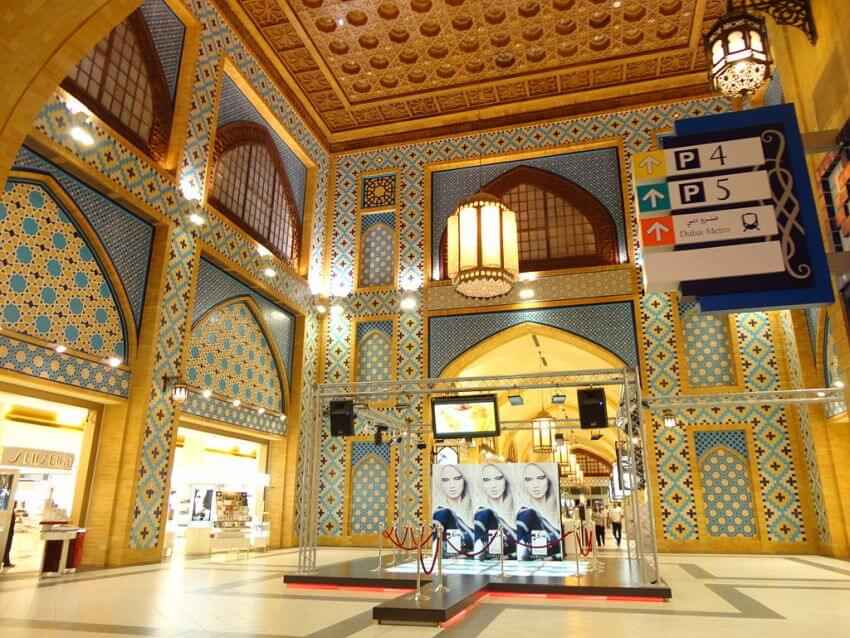
Most Dubai malls organize themselves around brand categories – fashion here, electronics there, food court somewhere in the middle. Ibn Battuta Mall organizes itself around geography and storytelling instead. Each of its six courts recreates the architecture and atmosphere of a place the real Ibn Battuta passed through on his 24-year journey across Asia, Africa, and Europe, so walking the mall end to end genuinely feels like moving between regions rather than between shop windows.
That design choice matters for how you should plan a visit. Because the mall runs long and single-level rather than stacking shops across multiple floors, getting from one end to the other takes real time. Knowing which court has what before you arrive saves you from unnecessary backtracking, especially if you’re visiting with kids or on a tight schedule.
Who Was Ibn Battuta, and Why Does a Dubai Mall Carry His Name?
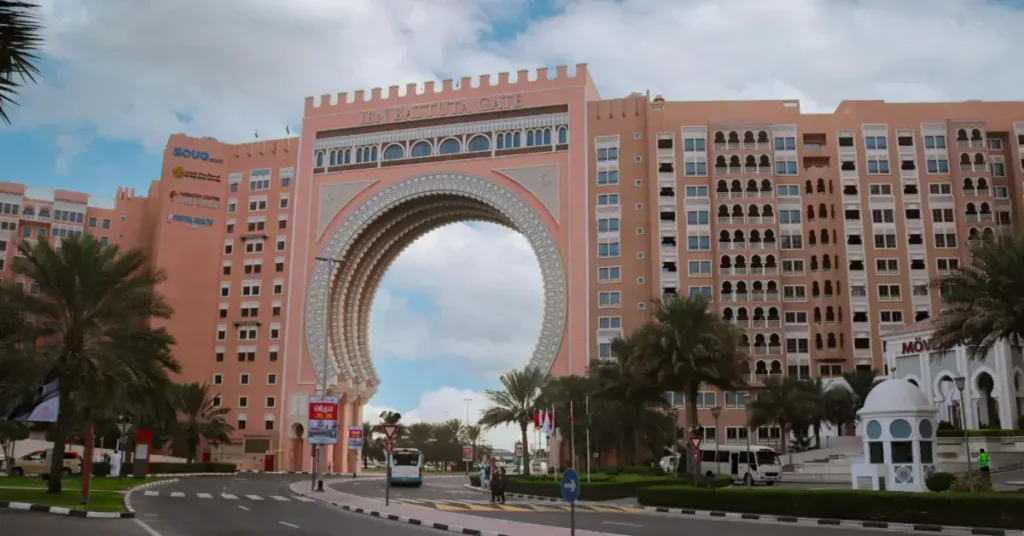
Ibn Battuta was a 14th-century Muslim scholar and explorer from Tangier, Morocco, whose decades-long travels took him through North Africa, the Middle East, Persia, India, and China – far beyond the more famous journeys of contemporaries like Marco Polo. Developer Nakheel used his route as the organizing concept for the mall, translating six of the regions he visited into distinct architectural courts. The result is a shopping destination that doubles as a light introduction to Islamic and Asian architectural styles, without requiring visitors to know anything about the history going in.
The Six Themed Courts, Explained
Andalusia Court
Modeled on Moorish Spain, Andalusia Court leans into horseshoe arches, intricate tilework, domed ceilings, and fountain features reminiscent of the Alhambra. It’s one of the more photogenic stretches of the mall and a natural starting or ending point for a walk-through visit.
Tunisia Court
Tunisia Court functions as the mall’s main anchor and practical hub. It’s home to the Carrefour hypermarket, the bulk of the mall’s ATMs, the primary food court, and Fun City, a multi-level indoor play area with a soft-play zone, slide, ball pool, and arcade games – a natural stop if you’re traveling with young children.
Egypt Court
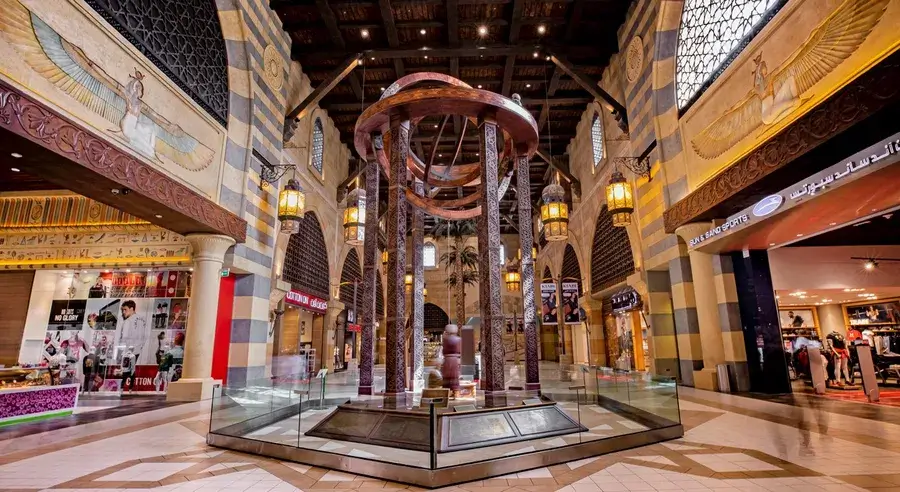
Egypt Court draws on ancient Egyptian civilization, with pyramid-inspired forms and decorative details referencing the region’s dynastic history. It sits among the more visually dramatic sections of the mall and connects naturally into the entertainment-heavy stretch that continues through India and Persia.
Persia Court
Persia Court sits at the physical center of the mall and is arguably its architectural centerpiece: an enormous hand-painted dome, arabesque detailing, arched passageways, a blue-and-turquoise mosaic walkway, and a large brass chandelier. It also houses a food court and the walkway leading directly to Ibn Battuta Metro Station, making it a key orientation point for transit-based visitors.
India Court
India Court references Mughal architecture, drawing visual cues from landmarks like the Taj Mahal and the Red Fort. Most current descriptions place the mall’s signature relic – a life-sized replica of the historic Elephant Clock – in this court, though at least one source places it in Egypt Court, so it’s worth confirming locally. The clock itself is a replica of a device originally described by the 12th-century Mesopotamian engineer al-Jazari, an early figure in mechanical engineering and automation whose work is still studied today. India Court is also where Switch Bowling is located, offering bowling lanes, billiards, and karaoke rooms.
China Court
China Court is the largest of the six and home to a full-size wooden Chinese junk ship, dragon motifs, pagoda-style rooflines, and a lantern-lit atmosphere. It also houses Novo Cinemas, the mall’s multiplex, which offers roughly 21 screens including an IMAX theatre and VIP viewing options.
Shopping at Ibn Battuta Mall: What’s Actually There
Ibn Battuta Mall’s retail mix spans international fashion, homegrown regional brands, electronics, home goods, and daily essentials, anchored by a Carrefour hypermarket in Tunisia Court. Reported anchor and notable tenants across recent listings include Debenhams and Sharaf DG in China Court, Decathlon for sportswear, and a wide range of mid-market fashion names such as H&M, Tommy Hilfiger, Forever 21, and Levi’s, alongside footwear and accessories brands like Aldo and Birkenstock, pharmacy chains such as Boots, BinSina, and Aster, and specialty stores covering books, beauty, and eyewear.
Because published store counts vary meaningfully between sources – from the low 200s in some listings to 300-plus or higher in others – treat any specific number with caution until it’s checked against the mall’s official directory. What’s consistent across every source is that the retail mix skews toward accessible, everyday brands rather than the ultra-luxury tier found in Downtown Dubai’s Dubai Mall, which makes Ibn Battuta a practical choice for regular shopping trips rather than a single splurge outing.
Dining: Where to Eat by Court
With 50-plus restaurants and cafes spread across the mall, Ibn Battuta Mall covers a wide cuisine range: Middle Eastern, Indian, Italian, East Asian, and international casual dining, plus dessert shops and cafes threaded throughout. The two main food courts sit in Tunisia Court and Persia Court, making either a sensible base if you’re splitting up a group with different tastes. Andalusia Court and China Court tend to draw the heavier weekend dining crowds thanks to their sit-down restaurant density and atmosphere.
Entertainment and Things to Do Beyond Shopping
Entertainment at Ibn Battuta Mall clusters around three courts:
- Novo Cinemas (China Court): roughly 21 screens including IMAX and VIP recliner theatres, with formats such as 3D and MX4D reported at various points – confirm current formats before publishing.
- Fun City (Tunisia Court): a multi-level indoor playground with soft play, a slide, ball pool, and arcade games, aimed at younger children.
- Switch Bowling (India Court): bowling lanes, billiards, and private karaoke rooms.
- Sky Zone Dubai: a trampoline park added more recently to the mall’s entertainment lineup, offering dodgeball, freestyle jumping, and an obstacle course.
Beyond the fixed attractions, the mall’s court architecture is itself a draw – the Elephant Clock, the China Court junk ship, and the Persia Court dome are all popular photo stops even for visitors who aren’t there to shop.
How to Get to Ibn Battuta Mall
By Dubai Metro: Ibn Battuta Metro Station sits on the Red Line and connects directly into the mall via the Tunisia/Persia end, which is the most convenient entry point if you’re arriving by public transport. This is also where the mall’s connected hotels – reported as Premier Inn and Avani – are located.
By car: The mall sits on Sheikh Zayed Road (E11) in Jebel Ali, roughly between interchanges 5 and 6, near Discovery Gardens. On-site parking is available; confirm current pricing, as sources differ on whether it’s free or paid.
By bus: Ibn Battuta Bus Station connects to major Dubai bus routes, making it accessible without a car even outside metro hours.
Planning Your Visit: Practical Tips
- Enter near the court you actually want. Because the mall runs long and single-level, decide your priority court (Tunisia for groceries and food, China for cinema, India for bowling and the Elephant Clock) and enter from the nearest access point rather than walking the full length.
- Budget more time than you think. The linear layout means a “quick errand” at the far end of the mall can take considerably longer than expected once you factor in the walk from parking or the metro entrance.
- Visit on weekdays for a calmer experience. Andalusia and China Courts get noticeably busier on weekends because of restaurant demand.
- Check opening hours before a late visit. Hours typically extend later on Thursday through Saturday evenings, but they shift around Ramadan, Eid, and Dubai Shopping Festival – always confirm the current schedule.
- Combine it with a metro day out. Because Ibn Battuta Metro Station sits directly on the Red Line, it pairs naturally with other Red Line stops if you’re building a car-free day around Dubai’s transit network.
Ibn Battuta Mall vs. Dubai’s Other Major Malls
| Factor | Ibn Battuta Mall | Dubai Mall | Mall of the Emirates |
|---|---|---|---|
| Layout | Long, single-level, six themed courts | Multi-level, very large, centrally located | Multi-level, centrally located |
| Positioning | Mid-market, family and everyday shopping | Luxury and flagship retail, major tourist draw | Mixed luxury and mid-market |
| Signature draw | Themed architecture, historical storytelling | Dubai Aquarium, Burj Khalifa views, Dubai Fountain | Ski Dubai indoor snow park |
| Metro access | Direct, Red Line (Ibn Battuta Station) | Nearby, Red Line (Burj Khalifa/Dubai Mall Station) | Direct, Red Line (Mall of the Emirates Station) |
| Best for | Locals, families, budget-to-mid-range shopping | Tourists, luxury shopping, landmark sightseeing | Winter sports novelty, mixed shopping |
Ibn Battuta Mall won’t out-luxury Dubai Mall or out-spectacle Mall of the Emirates, but it holds a clear niche: it’s a practical, architecturally distinctive mall that residents in Jebel Ali, Discovery Gardens, and along Sheikh Zayed Road use for everyday shopping, while still offering enough visual interest to justify a stand-alone visit for tourists with time to spare.
The Reported Expansion: What’s Planned
Secondary sources describe a large expansion under consideration or underway, reportedly covering around 4.7 million square feet and including a new cinema complex, a second hotel, a 24-hour food court, and a two-storey link connecting the mall directly to Ibn Battuta Metro Station. None of this was confirmed directly through Nakheel’s own channels in the research for this guide, so it should be treated as reported/planned rather than confirmed until verified against an official Nakheel announcement.
Accessibility and Family Logistics
Like most large Dubai malls, Ibn Battuta Mall is built for family visits, with stroller-friendly walkways, family restrooms, and prayer rooms distributed across the courts. Wheelchair access is generally available throughout the single-level layout, which – unlike multi-level malls – removes elevator dependency as a barrier to moving between sections. If you’re visiting with very young children, Tunisia Court’s Fun City and the nearby food court make a sensible base camp for the visit.
FAQs
1. What is Ibn Battuta Mall known for?
It’s known for being one of the world’s largest themed shopping malls, divided into six courts modeled on the regions explorer Ibn Battuta visited: China, India, Persia, Tunisia, Egypt, and Andalusia.
2. How many shops does Ibn Battuta Mall have?
Published figures vary by source and update date, generally ranging from the low 200s to 300-plus. Check the mall’s official directory for the current confirmed count.
3. What are the six courts at Ibn Battuta Mall?
China Court, India Court, Persia Court, Tunisia Court, Egypt Court, and Andalusia Court, each themed around the architecture of that region.
4. How do I get to Ibn Battuta Mall by metro?
Take the Dubai Metro Red Line to Ibn Battuta Metro Station, which connects directly into the mall via the Tunisia/Persia end.
5. Is parking free at Ibn Battuta Mall?
Sources disagree – some describe on-site parking as free, others as paid. Confirm current policy before your visit, as it may vary by zone or have changed recently.
6. What entertainment options are inside Ibn Battuta Mall?
Novo Cinemas (including IMAX and VIP screens) in China Court, Fun City in Tunisia Court, Switch Bowling in India Court, and Sky Zone Dubai’s trampoline park.
7. Where is the Elephant Clock located inside the mall?
Most current sources place the Elephant Clock replica in India Court, though at least one source references Egypt Court – confirm on-site if precision matters for your visit.
8. Is Ibn Battuta Mall good for families with young kids?
Yes. Fun City offers a dedicated soft-play area for younger children, the single-level layout avoids elevator dependency, and family restrooms and prayer rooms are distributed across the courts.
9. How does Ibn Battuta Mall compare to Dubai Mall?
Ibn Battuta Mall leans mid-market and family-focused with a distinctive themed layout, while Dubai Mall leans luxury and landmark tourism, anchored by attractions like Dubai Aquarium and views of Burj Khalifa.
10. What is Ibn Battuta Mall’s opening hours in 2026?
Hours generally run later on Thursday through Saturday evenings and shift around Ramadan, Eid, and Dubai Shopping Festival. Confirm the current schedule with the mall directly before visiting.
11. Who was Ibn Battuta, the explorer the mall is named after?
A 14th-century Muslim scholar from Tangier, Morocco, whose roughly 24-year journey took him across North Africa, the Middle East, Persia, India, and China.
12. Is Ibn Battuta Mall walkable end to end?
Yes, but it’s a long single-level layout stretching roughly 1.2 kilometers, so plan to enter near your priority court rather than walking the full length unless you have time to spare.
Conclusion
Ibn Battuta Mall earns its reputation less through luxury retail and more through how deliberately it turns a shopping trip into a walk through architectural history. Whether the draw is a Carrefour run in Tunisia Court, an IMAX screening in China Court, or simply photographing the Persia Court dome, understanding the six-court layout before you arrive is what makes a visit efficient rather than exhausting. Pair that planning with confirmed hours, transport, and parking details on the day of your visit, and Ibn Battuta Mall holds up as one of the more distinctive shopping destinations Dubai has to offer.

Sara is a UAE-based banking and accounting expert with over 4 years of professional experience in the financial sector. Her expertise spans retail banking, financial reporting, compliance, and practical money management topics relevant to individuals and businesses in the UAE.
She contributes clear, accurate, and well-researched financial content, simplifying complex banking and accounting concepts for everyday readers. Sara’s writing reflects strong industry knowledge, regulatory awareness, and a commitment to financial accuracy and transparency.