Nad Al Hamar Area Guide 2026: Dubai’s Quiet Residential Escape Near Ras Al Khor
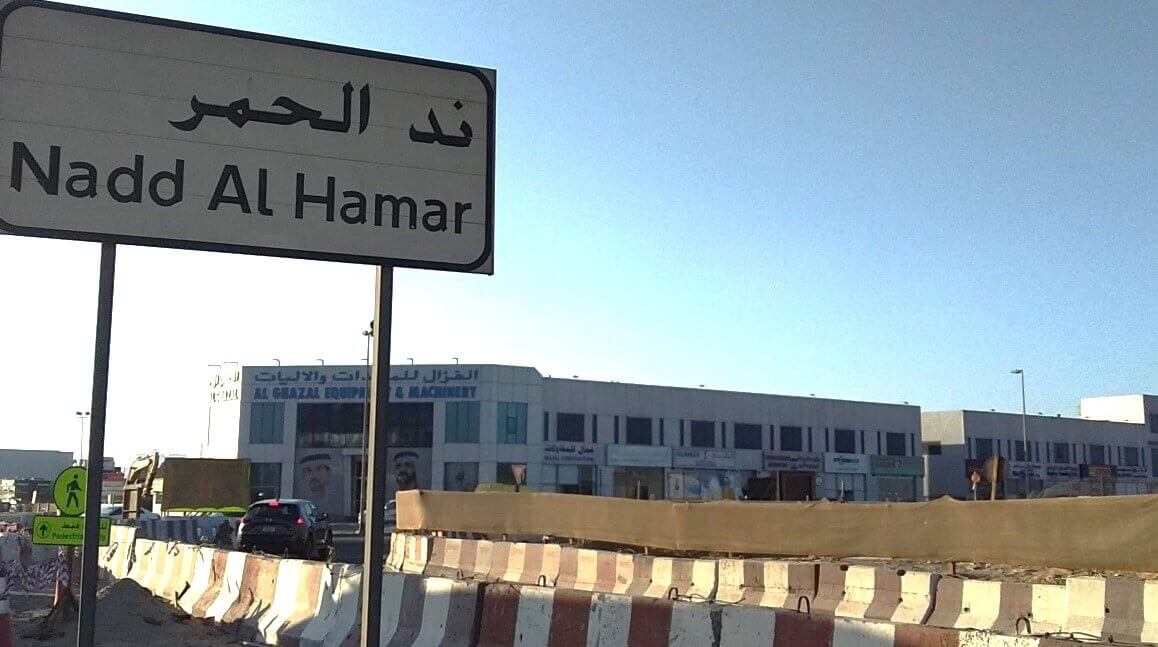
Nad Al Hamar is a low-rise residential neighbourhood in eastern Dubai, bordered by Ras Al Khor Road (E44) to the south, Sheikh Mohammed Bin Zayed Road (E311) to the east, and Rebat Street (D83) to the north. Known for spacious villas, gated communities, and a family-friendly atmosphere, it sits close to Dubai Festival City, Ras Al Khor Wildlife Sanctuary, and Mirdif, offering a quieter alternative to Dubai’s high-rise districts while still keeping residents within easy reach of Downtown Dubai and the airport.
Not every Dubai neighbourhood needs a skyline to make its case. Nad Al Hamar has spent years quietly building a reputation as one of the city’s most livable low-rise communities – a place where villa gates, tree-lined streets, and weekend calm matter more than proximity to a metro turnstile. For residents priced out of Downtown Dubai’s towers or Dubai Marina’s density, Nad Al Hamar offers something increasingly rare in the city: space, at a manageable commute.
This Nad Al Hamar area guide 2026 covers everything a prospective resident, investor, or curious visitor needs to know – location and boundaries, transport realities, schools and healthcare, parks and shopping, property types, and how the neighbourhood is evolving with new projects like Nad Al Hamar Gardens. Whether you’re comparing it against Mirdif, Al Warqaa, or the Sheikh Zayed Road corridor, this guide lays out exactly where Nad Al Hamar fits into Dubai’s residential map.
Where Is Nad Al Hamar? Location and Boundaries
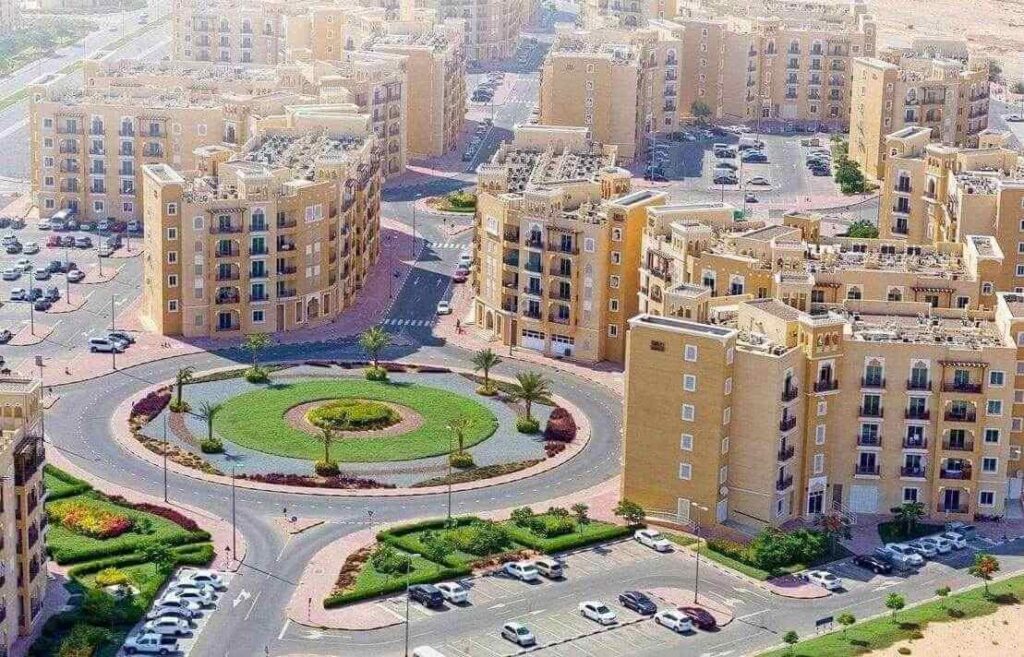
Nad Al Hamar sits in eastern Dubai, tucked between some of the city’s most recognisable landmarks without directly touching any of them – which is precisely its appeal. The neighbourhood’s boundaries are defined by four major roads:
| Boundary | Road | Connects To |
|---|---|---|
| North | Rebat Street (D83) | Deira and western Dubai |
| South | Ras Al Khor Road (E44) | Downtown Dubai, Business Bay |
| East | Sheikh Mohammed Bin Zayed Road (E311) | Dubailand, Academic City |
| West | Nad Al Hamar Road | Dubai International Airport |
This grid places Nad Al Hamar within a short drive of Dubai Festival City, Dubai Creek, Ras Al Khor Wildlife Sanctuary, Mirdif, and International City. It also sits close enough to Dubai International Airport that residents flying frequently for business often cite the commute as a deciding factor when choosing the area.
Historically a villa subdivision favoured by Emirati families, the neighbourhood has diversified over the past decade into a mixed residential zone that includes freehold apartment clusters, gated villa compounds, and pockets of commercial and light-industrial use toward its lower stretches.
Getting Around: Roads, Metro, and Buses
Nad Al Hamar is built around road access rather than rail access, and understanding this trade-off is essential before committing to the area.
Road Connectivity
The neighbourhood benefits from direct access to two of Dubai’s busiest arterial roads: Sheikh Mohammed Bin Zayed Road (E311) and Ras Al Khor Road (E44). Together, these give residents a fast route into Downtown Dubai, Business Bay, and Dubai Marina, as well as onward connections toward Sharjah and Dubailand. Rebat Street links the community to Deira in the north.
Public Transport
There is no metro station inside Nad Al Hamar itself, and this is the single biggest lifestyle consideration for anyone weighing up the area. The nearest stations are Rashidiya (Red Line) and Centrepoint, both requiring either a lengthy walk, a short taxi ride, or a connecting bus. RTA bus routes including 53, 64, 24, F62, and X64 run through the neighbourhood’s main streets and link up with the Red Line, but frequency and coverage inside the community itself remain limited compared with metro-adjacent districts like Business Bay or Downtown Dubai.
In practical terms: Nad Al Hamar works very well for residents who drive, and less well for those who rely entirely on public transport. Uber and Careem are widely used for short hops to the nearest metro stations or malls.
Property Types: Villas, Apartments, and What’s Coming
Nad Al Hamar’s residential stock splits fairly cleanly into two categories, with a third emerging.
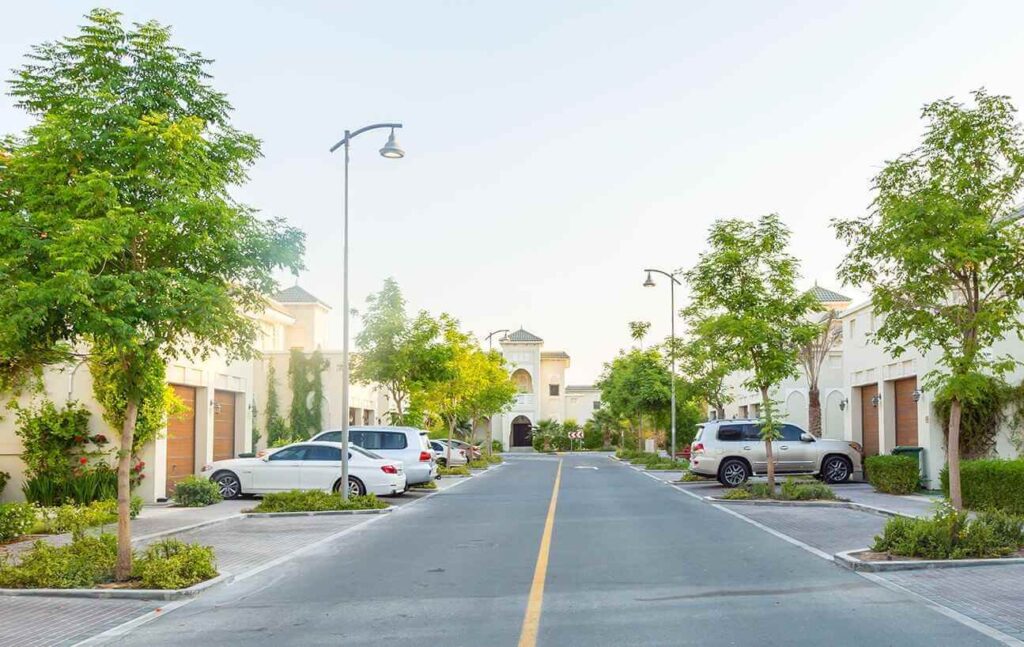
Villas dominate the neighbourhood’s interior streets. These range from mid-size family homes to larger properties with private gardens, high boundary walls, and gated entrances – a layout that has historically appealed to Emirati and long-term expatriate families seeking privacy over density.
Apartments cluster along the main roads, generally in low- to mid-rise buildings, and tend to attract young professionals and smaller households who want the neighbourhood’s calmer character without villa-level maintenance or cost.
Nad Al Hamar Gardens, a mixed-use freehold development by Wasl Properties, represents the area’s most significant recent shift. Positioned on the southeastern edge of the community facing Sheikh Mohammed Bin Zayed Road, the project is planned around a mix of residential plots, mixed-use plots, retail showroom plots, and school plots – signalling a move toward more structured, master-planned freehold living within a neighbourhood that has traditionally grown organically.
For investors, this combination of established rental demand and new freehold supply is one of the more interesting stories in Dubai’s secondary residential market for 2026 – a community shifting gradually from an under-the-radar option toward a fully developed residential hub.
Parks, Green Spaces, and Everyday Amenities
Green space is one of Nad Al Hamar’s defining features relative to Dubai’s more built-up districts. Nad Al Hamar Park, situated along 47th Street, offers jogging tracks, open lawns, sandy areas suited to informal sports, and shaded seating – a genuine neighbourhood gathering point rather than a token green patch. Beyond the main park, smaller landscaped pockets run along internal roads, and many villas maintain private gardens, reinforcing the area’s suburban character.
For retail and dining, Nad Al Hamar Avenues provides a walkable strip of shops, salons, and casual restaurants, while an Aswaaq supermarket branch covers day-to-day grocery needs without requiring a drive to a larger mall. Residents wanting a bigger shopping trip typically head to Dubai Festival City Mall, roughly a ten-to-fifteen-minute drive away, or Mirdif City Centre in the other direction.
Families looking for weekend activities benefit from the neighbourhood’s proximity to two major eastern Dubai attractions: IMG Worlds of Adventure, one of the region’s largest indoor theme parks, and Ras Al Khor Wildlife Sanctuary, a protected wetland reserve known for flamingo viewing and birdwatching hides – both within a short drive.
Schools and Nurseries
Nad Al Hamar’s family-oriented profile is reflected in its education options, which range from nurseries to established K-12 schools within and around the community. Local options include The City School International and neighbourhood nurseries such as Blue Bird Nursery, while the broader catchment area – extending into nearby Mirdif and Al Warqaa – adds further choice for parents seeking British, Indian, or American curricula. As with much of eastern Dubai, families often factor in a short daily commute to reach the highest-rated schools rather than expecting every curriculum option on the doorstep.
Healthcare in Nad Al Hamar
The community is served locally by the Nad Al Hamar Health Centre for routine care and pharmacy needs, alongside smaller clinics such as City Centre Clinic. For more specialised or emergency treatment, residents typically head to Mediclinic Welcare Hospital in nearby Al Garhoud, a short drive from the neighbourhood. This pattern – solid local primary care paired with nearby hospital access – mirrors how most low-rise Dubai communities structure healthcare provision.
Who Nad Al Hamar Suits Best
Nad Al Hamar is not designed to compete with Downtown Dubai or Dubai Marina on lifestyle branding, and it doesn’t try to. It suits a specific resident profile well:
- Families wanting a spacious villa or townhouse with a garden, rather than a high-rise apartment
- Residents who prioritise a quiet, low-density, gated environment over walkability
- Professionals working near the airport, Deira, Downtown, Business Bay, Ras Al Khor, or Academic City, who can absorb a short daily drive
- Buyers and tenants comfortable relying on a car or taxi rather than walking to a metro station
- Investors looking at emerging freehold pockets, such as Nad Al Hamar Gardens, with room for rental and capital growth as infrastructure catches up
It suits these residents less well: anyone who wants to walk to the metro, live near the beach, or be close to Dubai’s nightlife and dining scenes – those needs are better served by districts like Dubai Marina, JBR, or Downtown Dubai.
Nad Al Hamar vs. Nearby Communities
| Feature | Nad Al Hamar | Mirdif | Downtown Dubai |
|---|---|---|---|
| Housing type | Villas + low-rise apartments | Villas + townhouses | High-rise apartments |
| Metro access | None inside community | Limited | Direct (multiple lines) |
| Atmosphere | Quiet, suburban | Family-suburban, more established | Urban, high-density |
| Green space | Nad Al Hamar Park, private gardens | Uptown Mirdif, Mushrif Park | Burj Park, The Green Planet |
| Best suited to | Families, drivers, value seekers | Established families | Professionals, tourists, urban lifestyle |
2026 Outlook: A Neighbourhood in Transition
Nad Al Hamar’s story for 2026 is one of gradual formalisation rather than dramatic transformation. Road network upgrades continue in and around the community, freehold development is expanding through projects like Nad Al Hamar Gardens, and retail and community facilities are slowly catching up with the area’s residential growth. The neighbourhood is unlikely to gain a metro connection in the near term, so its identity as a car-dependent, low-density suburb will likely persist – which, for its target resident, is the point rather than the drawback.
For context on how eastern and central Dubai corridors connect, readers following EmiratesBreaking.com’s broader Dubai transport and neighbourhood coverage may also find our guides to Dubai Creek and Business Bay useful for comparing connectivity across the city.
FAQs
1. Where exactly is Nad Al Hamar in Dubai?
Nad Al Hamar is in eastern Dubai, bordered by Ras Al Khor Road (E44) to the south, Sheikh Mohammed Bin Zayed Road (E311) to the east, and Rebat Street (D83) to the north, close to Dubai Festival City and Mirdif.
2. Is Nad Al Hamar a good place to live?
It suits families and professionals who want a quiet, low-rise, villa-focused environment with strong road connectivity, though it’s better for drivers than for anyone dependent on the metro.
3. Does Nad Al Hamar have a metro station?
No. There is no metro station within the community itself; the nearest stations are Rashidiya and Centrepoint on the Red Line, both requiring a short drive, taxi, or connecting bus.
4. What is Nad Al Hamar Gardens?
Nad Al Hamar Gardens is a mixed-use freehold development by Wasl Properties on the community’s southeastern edge, planned with residential, mixed-use, retail, and school plots facing Sheikh Mohammed Bin Zayed Road.
5. Is Nad Al Hamar freehold or leasehold?
The area is a mix, with newer developments such as Nad Al Hamar Gardens introducing freehold ownership alongside the community’s traditional leasehold villa and apartment stock.
6. What types of properties are available in Nad Al Hamar?
The neighbourhood offers a mix of villas – often with private gardens and gated entrances – along the interior streets, and apartments clustered near the main roads.
7. What schools are near Nad Al Hamar?
Options include The City School International and nearby nurseries such as Blue Bird Nursery, with additional schools accessible in neighbouring Mirdif and Al Warqaa.
8. What is there to do near Nad Al Hamar?
Nearby attractions include IMG Worlds of Adventure, Ras Al Khor Wildlife Sanctuary, and Dubai Festival City Mall, all within a short drive.
9. How far is Nad Al Hamar from Downtown Dubai?
Using Ras Al Khor Road, the drive to Downtown Dubai typically takes around 15–20 minutes depending on traffic.
10. What hospitals serve Nad Al Hamar?
The Nad Al Hamar Health Centre covers routine care locally, with Mediclinic Welcare Hospital in nearby Al Garhoud serving more specialised or emergency needs.
11. Is Nad Al Hamar close to Dubai Airport?
Yes. Nad Al Hamar Road, forming the community’s western boundary, provides direct access toward Dubai International Airport, making it a popular choice for frequent flyers.
12. How does Nad Al Hamar compare to Mirdif?
Both are low-rise, family-oriented communities, but Mirdif is more established with wider retail and school options, while Nad Al Hamar offers comparatively better value and ongoing freehold development.
Conclusion
Nad Al Hamar doesn’t chase Dubai’s headline attractions, and that’s exactly why it works for the residents it attracts. Between its villa-lined streets, expanding freehold options like Nad Al Hamar Gardens, and unusually strong road access to the rest of the city, it fills a genuine gap for anyone who wants space and quiet without moving far from Dubai’s core. The trade-off – no metro on the doorstep – is well understood by the people who choose to live there, and it’s unlikely to change the community’s fundamentally suburban character any time soon. For families and value-conscious investors willing to drive rather than walk to the train, Nad Al Hamar remains one of eastern Dubai’s more underrated long-term bets.

Sara is a UAE-based banking and accounting expert with over 4 years of professional experience in the financial sector. Her expertise spans retail banking, financial reporting, compliance, and practical money management topics relevant to individuals and businesses in the UAE.
She contributes clear, accurate, and well-researched financial content, simplifying complex banking and accounting concepts for everyday readers. Sara’s writing reflects strong industry knowledge, regulatory awareness, and a commitment to financial accuracy and transparency.